Barber coinage is the family of silver dimes, quarters and half dollars designed by US Mint Chief Engraver Charles E. Barber and struck from 1892 to 1916, with the half dollar ending in 1915. The key dates are the 1894-S and 1895-O dimes, the 1896-S, 1901-S and 1913-S quarters, and, among halves, the 1892-O Micro O variety and the low-mintage Philadelphia issues of 1913, 1914 and 1915. What any Barber coin is worth turns on three things together: date, mintmark and grade.
This guide sets out the key dates for each denomination with their mintages, explains why a low mintage does not always mean a rare coin, and covers what to check before a jar of old silver is sold by weight.
What Barber coinage is
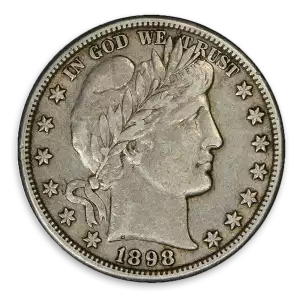
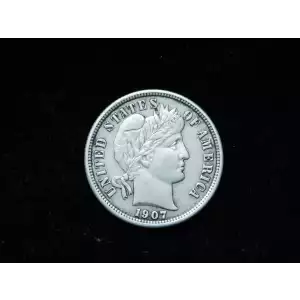
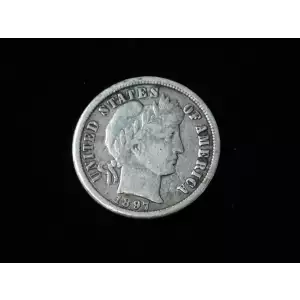
All three denominations share one portrait: Liberty facing right, wearing a Phrygian cap and a laurel wreath, with a headband inscribed LIBERTY. The quarter and half carry a heraldic eagle on the reverse and stars around the obverse. The dime keeps a simple wreath on the reverse and, as PCGS CoinFacts notes, has no stars around its obverse and no IN GOD WE TRUST motto.
Barber coins were struck in 90% silver and 10% copper at four mints: Philadelphia (no mintmark), New Orleans (O), San Francisco (S) and, from 1906, Denver (D). The mintmark is the small letter identifying the mint, and on Barber coins it sits on the reverse: below the wreath on the dime, and below the eagle on the quarter and half dollar.
| Denomination | Years struck | Standard weight | Silver content | Series that replaced it |
|---|---|---|---|---|
| Dime | 1892–1916 | 2.50 g | 0.0723 troy oz | Mercury dime, 1916 |
| Quarter | 1892–1916 | 6.25 g | 0.1808 troy oz | Standing Liberty quarter, 1916 |
| Half dollar | 1892–1915 | 12.50 g | 0.3617 troy oz | Walking Liberty half, 1916 |
The weights above are the statutory standards set by the Coinage Act of 1873, which fixed the half dollar at 12.5 grams and the quarter and dime at one half and one fifth of that. PCGS lists the Barber quarter at 6.30 g; both figures appear in the literature, and the fine-silver column here follows the statute. Silver content is the standard weight multiplied by 90% and converted to troy ounces, so a worn coin weighs slightly less and these are upper figures. How that silver content turns into a melt value is explained in our guide to coin melt value.
Barber dime key dates
The Barber dime has one famous rarity and a handful of scarce branch-mint dates. The table gives each date's mintage as recorded by PCGS CoinFacts.
| Date and mint | Mintage | Why collectors watch it |
|---|---|---|
| 1894-S | 24 | Listed by PCGS as a proof; about nine believed to exist |
| 1895-O | 440,000 | The date collector's biggest challenge after the 1894-S (Q. David Bowers) |
| 1896-S | 575,056 | About 1,500 estimated survivors in all grades |
| 1901-S | 593,022 | "The smallest mintage of any Dime between 1896 and 1913" (Ron Guth) |
| 1903-S | 613,300 | Smallest 1903 mintage by a wide margin |
The 1894-S is not a coin anyone finds in circulation. PCGS records 24 struck at San Francisco, and William A. Burd's research on its CoinFacts entry concludes that "just nine of these coins actually exist, and even one or two of those is suspect." Why they were struck is still unresolved.
For a date collector, the practical key is the 1895-O. Q. David Bowers, in the PCGS series overview, calls it "the date collector's biggest challenge" after the 1894-S. Ron Guth notes that most certified examples are circulated and that Mint State pieces are "very scarce." The 1901-S, which Guth describes as having "the smallest mintage of any Dime between 1896 and 1913," is the next checkpoint.
Barber quarter key dates
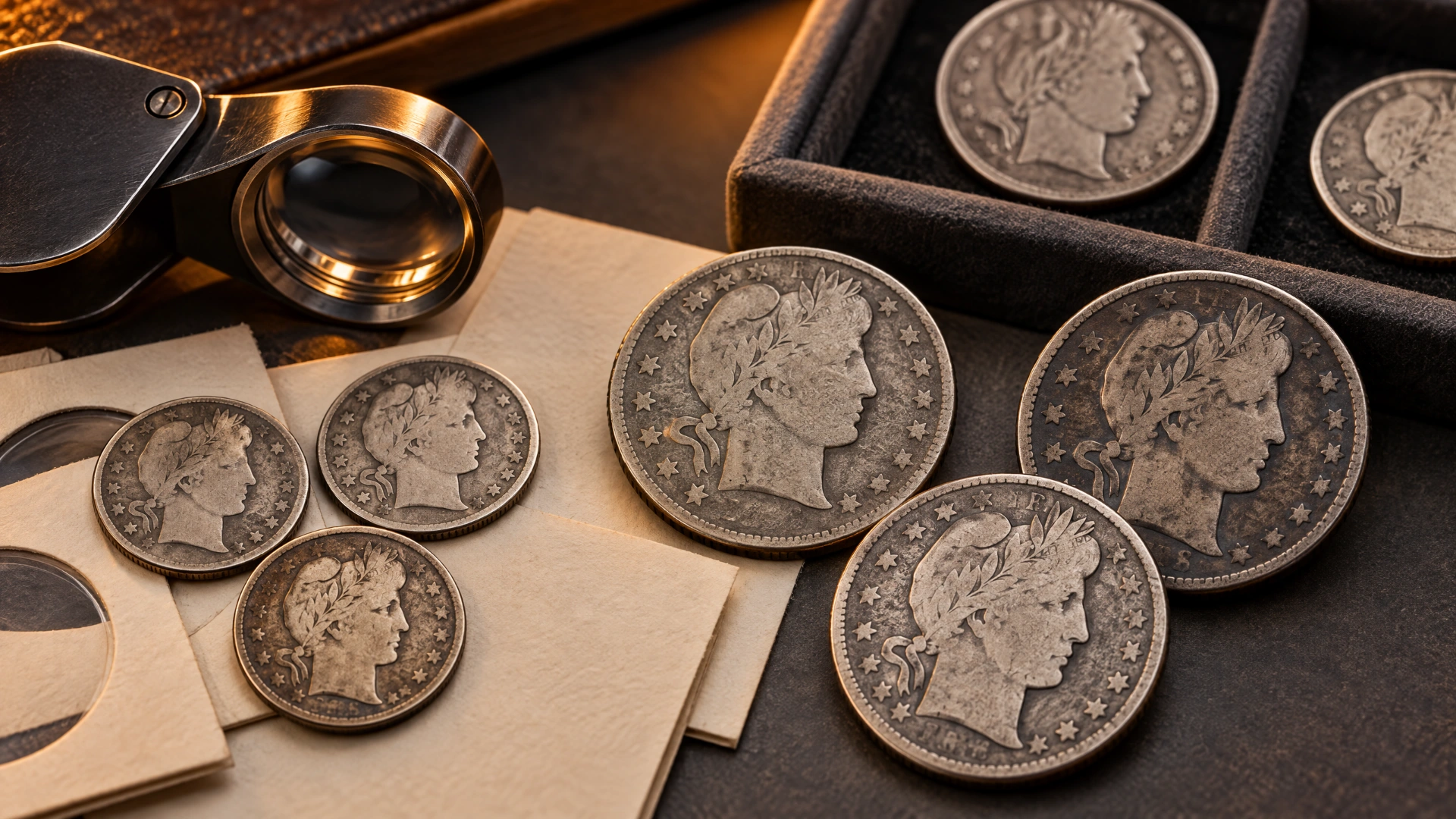
The Barber quarter has three recognized keys, all from San Francisco: the 1896-S, the 1901-S and the 1913-S.
| Date and mint | Mintage | How PCGS commentary describes it |
|---|---|---|
| 1896-S | 188,039 | "a well-recognized rarity in all grades" (Ron Guth) |
| 1901-S | 72,664 | "the rarest regular issue (non-variety) silver coin of the 20th century" (David Hall) |
| 1913-S | 40,000 | "second rarest to the 1901-S" and "about on par with the 1896-S" (Ron Guth) |
Look at the mintages and something seems wrong: the 1913-S had fewer coins struck than the 1901-S, yet PCGS commentary ranks the 1901-S as the rarer coin. Mintage counts what left the press; survival depends on what happened afterward. Guth notes on the 1913-S page that collectors of the time saved some quality examples, estimating 50 to 75 in Mint State. On the 1901-S page, David Hall estimates 10 to 20 in Gem MS65 or better, a narrower band than Guth's all-Mint-State count, so the two figures are not directly comparable.
That gap between mintage and survival is what a population report measures. Our explainer on PCGS and NGC population reports shows how to read one.
Barber half dollar key dates
Among regular dates, the Barber half has no single stopper on the scale of the 1901-S quarter, which makes a date set more approachable. Bowers's PCGS overview names the 1892-O, 1892-S, 1893-S, 1897-O, 1897-S, 1914 and 1915 as the tougher dates to locate. The mintages below are from a PCGS article by Joshua McMorrow-Hernandez.
| Date and mint | Mintage |
|---|---|
| 1892-O | 390,000 |
| 1893-S | 740,000 |
| 1897-O | 632,000 |
| 1897-S | 933,900 |
| 1913 | 188,000 |
| 1914 | 124,230 |
| 1915 | 138,000 |
The 1914 has the lowest business-strike mintage of the Barber half series. Like the 1913 and 1915, it is a Philadelphia coin, which surprises collectors who expect key dates to carry a branch-mint letter. PCGS commentary on the 1914 quotes David Akers: business strikes "are not as rare as that low mintage figure would indicate," but Gems are "among the rarest in the entire series."
One of the hardest Barber halves to find is a variety, not a date. The 1892-O Micro O was struck with a mintmark punch Ron Guth describes as "meant for a quarter dollar rather than the half dollar." Gordon Wrubel's commentary on the same page identifies it by an O whose left wall is very thin and right wall very thick, and estimates that fewer than 100 exist in all grades. Any 1892-O half is worth a close look at the mintmark under magnification.
Why grade matters so much in this series
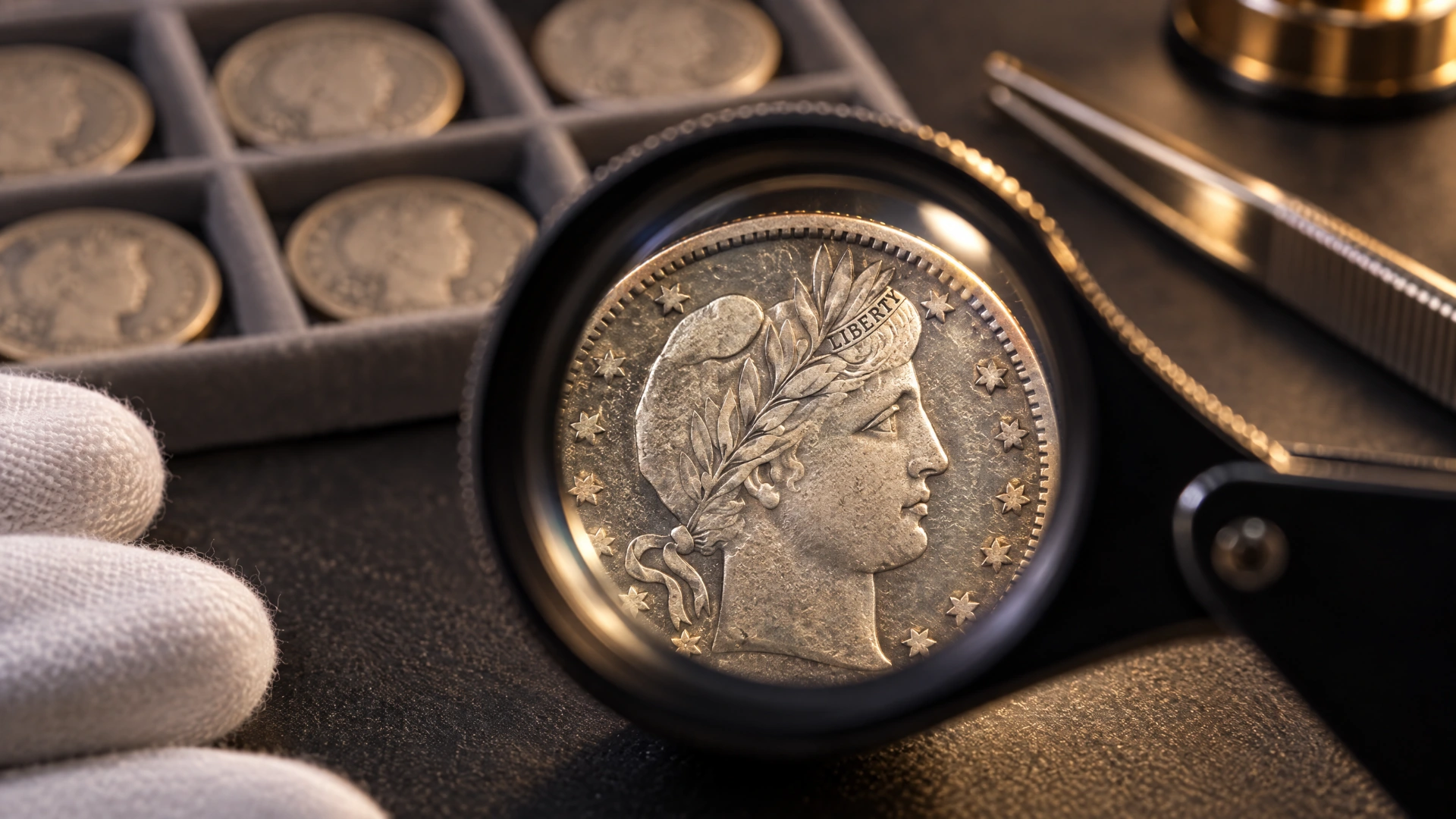
Barber coins circulated hard for decades, and most survivors are well worn. Bowers's PCGS overviews describe the pattern for quarters and halves: coins in Good to Fine are easy to find, Very Fine is scarce, Extremely Fine is rare, and Uncirculated pieces are rarer still.
The quickest grading check on a circulated Barber is the headband. NGC's grading guide for Barber quarters notes that "the number of letters visible in LIBERTY has traditionally been one of the criteria for grading circulated Barber quarters." It adds a caution: on coins struck from later master hubs the headband is less sharply incised and wears faster, so a later date showing fewer letters is not necessarily more worn than an earlier one.
Grading is an opinion, and on a key date the difference between two adjacent grades can be significant. For that reason, key-date Barbers are commonly traded in PCGS or NGC holders, where the grade is stated by the service rather than by the seller.
Counterfeits and altered mintmarks
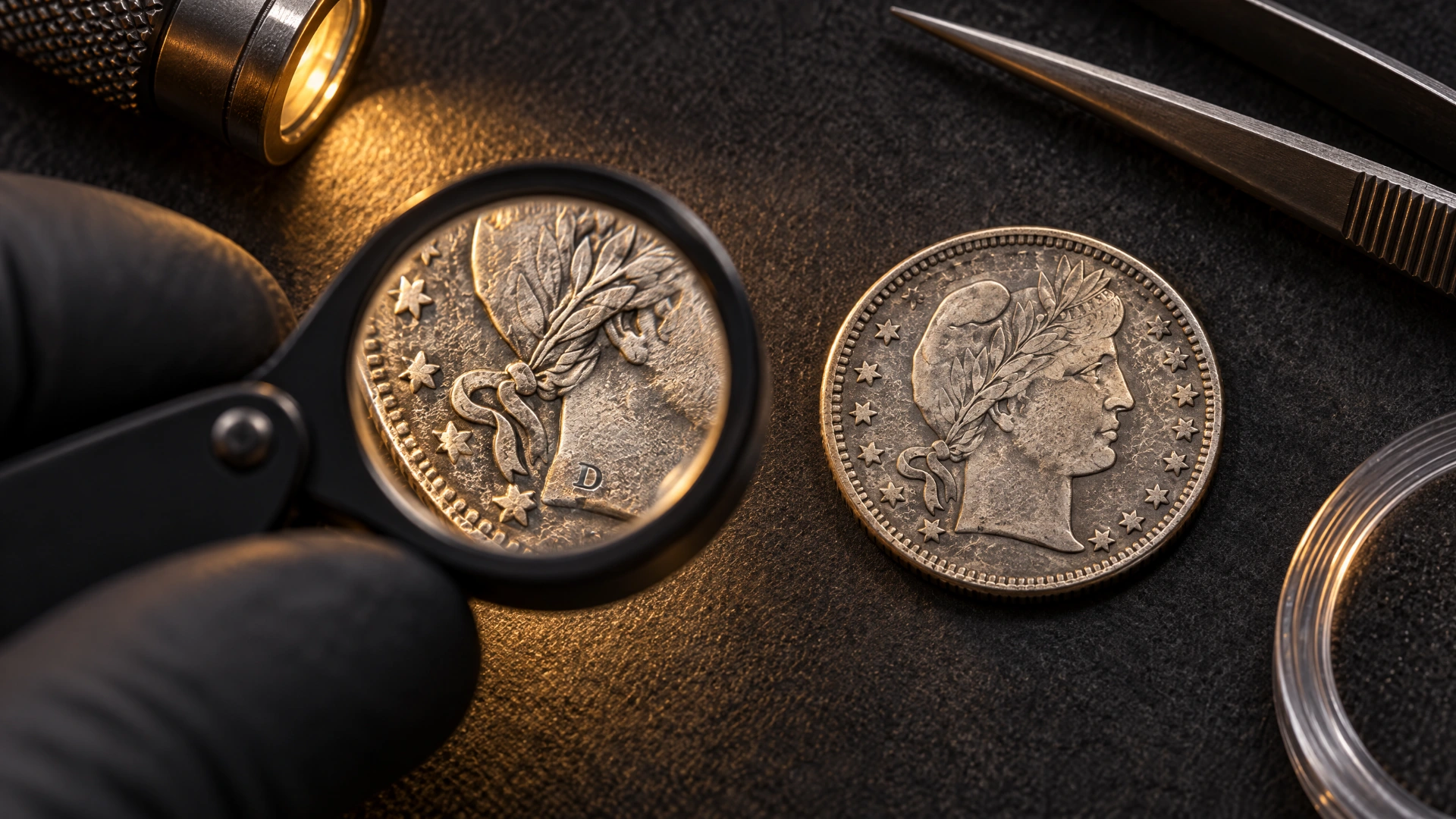
The keys attract fakes, and the two main types need different checks. The first is a struck counterfeit, a coin made entirely from false dies. NGC has published a counterfeit alert on the 1896-S quarter describing fakes with fuzzy stars and letters, rough fields without mint luster, and wrongly shaped date digits.
The second is an altered coin: a genuine common date with a mintmark added, or with a date digit changed. On the 1896-S quarter, Ron Guth notes that every genuine example shows the S above the space between the R and D of QUARTER DOLLAR, in one of two known die positions, and that a mintmark elsewhere may indicate a counterfeit or an added mark. A Philadelphia 1896 quarter with an S attached is exactly the coin that check is designed to catch.
A loupe helps, but a key-date Barber in a raw state deserves a second opinion before money changes hands, in either direction.
What sets a Barber coin's value
A Barber coin's value comes from four things, roughly in this order: the date and mintmark, the grade, the surface quality, and whether it is certified. Common dates in worn grades are typically traded close to their silver value, which moves with the spot price every day. Key dates, and any date in high grade, are priced as collectibles, and that price reflects condition far more than silver.
Surface quality is where many Barbers lose value. A cleaned, scratched or holed coin is worth less than an original coin of the same date and wear, and grading services note these problems on the holder or decline to assign a numeric grade. If you have old silver coins, do not clean them.
For current collector values by date and grade, the PCGS Price Guide lists figures across the series. Treat any guide as a reference point, not an offer: retail, wholesale and auction prices for the same coin differ.
Sorting Barbers from a jar of old silver
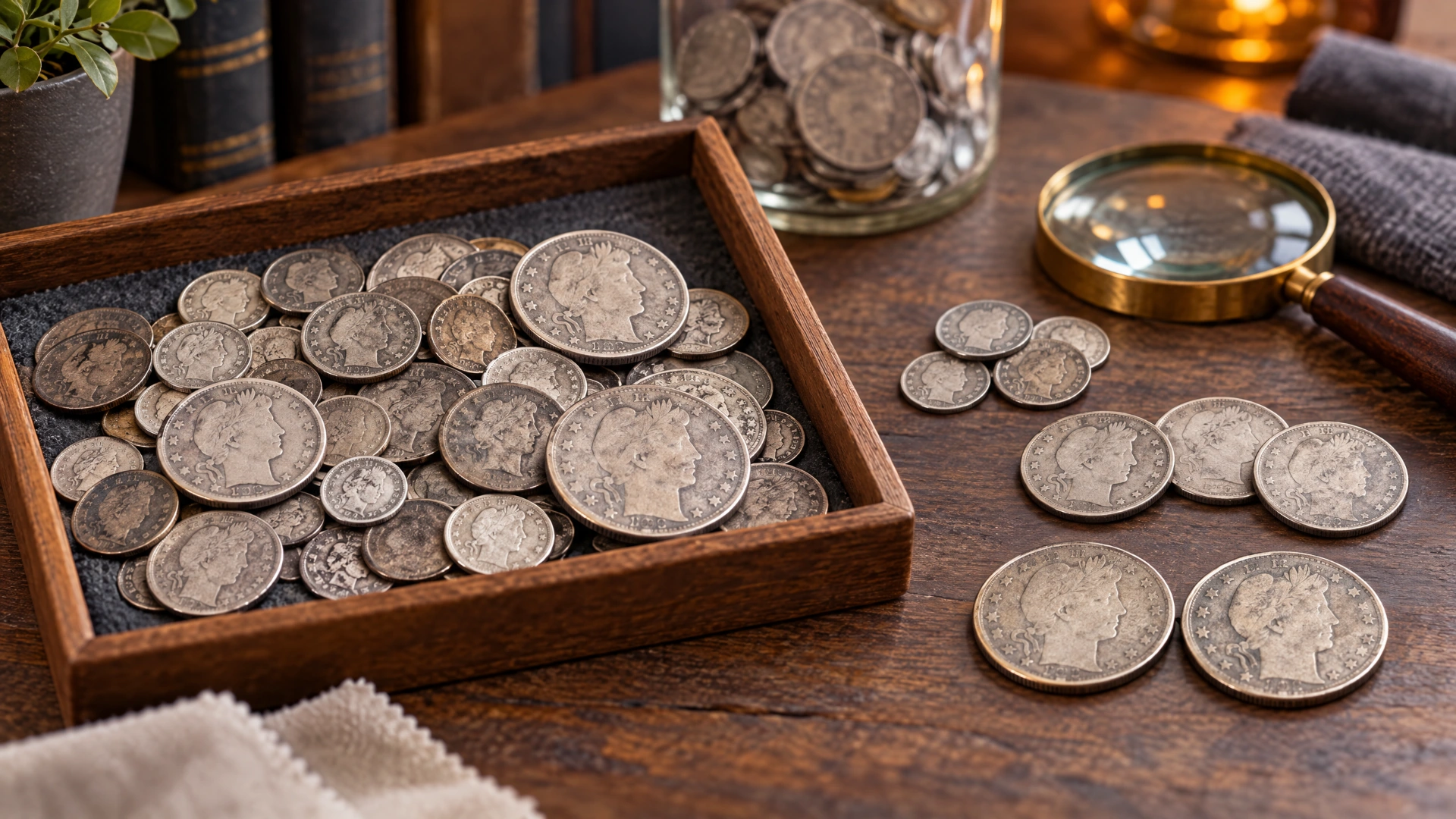
Barber coins often turn up not as a collection but mixed into inherited silver: rolls, jars or bags of pre-1965 dimes, quarters and halves. Before anything like that is priced by weight, each Barber is worth checking against the tables above. It takes a few minutes, and the key dates are few enough to memorize.
- Sort by denomination, then read the date and the mintmark on the reverse of each coin.
- Set aside any 1895-O, 1896-S, 1901-S or 1903-S dime; any 1896-S, 1901-S or 1913-S quarter; and any 1892-O, 1892-S, 1893-S, 1897-O, 1897-S, 1913, 1914 or 1915 half.
- Count the visible letters in LIBERTY on the headband, keeping in mind that later dates wear there faster.
- Leave the coins as they are. No cleaning, no polishing, no removing them from old holders.
Copper State Coin & Bullion offers a complimentary appraisal when you are selling, so you can bring a sorted pile, or an unsorted one, and have it looked at before you decide. If you need formal documentation for insurance or an estate, that is a separate, paid insurance appraisal. Because A.R.S. § 44-1601 excludes coins from Arizona's definition of a "precious item," on the face of the statute, the dealer rules covered in our Arizona precious metals dealer law article do not govern a coin sale the way they govern jewelry.
If you are building a set rather than selling one, our rare US coins page lists what is currently in stock, and the want list service lets you tell us which dates you are still missing.
This article is educational and reflects general information about precious metals and collectible coins. It is not investment, tax or legal advice, and Copper State Coin & Bullion is not a registered investment adviser, broker-dealer or tax professional. Metal prices fluctuate and past performance does not indicate future results. Consult a qualified professional about your own situation.
Frequently asked questions
What are the key dates for Barber dimes?
The 1894-S is the famous rarity: 24 struck, and William A. Burd's research on PCGS CoinFacts concludes that just nine actually exist. For collectors, the practical keys are the 1895-O (440,000 minted), 1896-S (575,056), 1901-S (593,022) and 1903-S (613,300). Ron Guth describes Mint State 1895-O dimes as "very scarce."
What is a Barber quarter worth?
It depends on the date, mintmark and grade. Common dates in worn grades typically trade close to silver value, based on 0.1808 troy ounces of silver. The 1896-S, 1901-S and 1913-S are key dates priced as collectibles. The PCGS Price Guide lists current values by date and grade, and an appraisal gives a figure for your specific coin.
Which Barber half dollars are key dates?
Q. David Bowers's PCGS series overview names the 1892-O, 1892-S, 1893-S, 1897-O, 1897-S, 1914 and 1915 as the tougher dates. The 1914 has the lowest mintage of the Barber halves, at 124,230. The 1892-O Micro O variety is scarcer still: Gordon Wrubel estimates fewer than 100 exist in all grades.
Where is the mintmark on a Barber coin?
On the reverse. On the dime it sits below the wreath; on the quarter and half dollar, below the eagle, just above the denomination. Philadelphia coins have no mintmark. The other letters are O for New Orleans, S for San Francisco and D for Denver, which struck Barber coins from 1906.
Should I clean my Barber coins before selling them?
No. Cleaning leaves marks that reduce a coin's collector value, and grading services note cleaning on the holder or decline to assign a numeric grade. Bring coins as they are. At Copper State Coin & Bullion, the appraisal for sellers is complimentary.
Bring your Barber coins to Peoria or Phoenix
With over 40 years of numismatic and bullion experience, Copper State Coin & Bullion buys and sells Barber coins at both counters, from single key dates to jars of mixed silver. Stop in at either store, or call ahead with questions.
Copper State Coin & Bullion — Peoria
8360 W. Thunderbird Road C#103
Peoria, AZ 85381
(623) 432-3953
Mon–Fri 9:00 a.m.–5:00 p.m. · Sat 9:00 a.m.–4:00 p.m. · Sun closed
Copper State Coin & Bullion — Phoenix
4550 E Bell Road Suite 188
Phoenix, AZ 85032
(602) 377-1944
Mon–Fri 9:00 a.m.–5:00 p.m. · Sat 9:00 a.m.–4:00 p.m. · Sun closed