Lincoln wheat cents are the one-cent coins the US Mint struck from 1909 through 1958, with Abraham Lincoln on the front and two ears of wheat on the back. Billions were made, and most dates are common. The value in the series sits in a short list of coins: the 1909-S VDB, the 1909-S, the 1914-D, the 1922 "No D", the 1931-S and the 1955 doubled die, plus two famous mint errors, the 1943 bronze cent and the 1944 steel cent.
This guide explains how each of those coins came about, what the mintage figures say, how the 1943 steel cent fits in, and how to tell a real key date from an altered one. It gives no dollar figures, because a wheat penny's value depends on date and mint mark, grade, color, variety and certification together, and we explain how those work instead.
What a Lincoln Wheat Cent Is
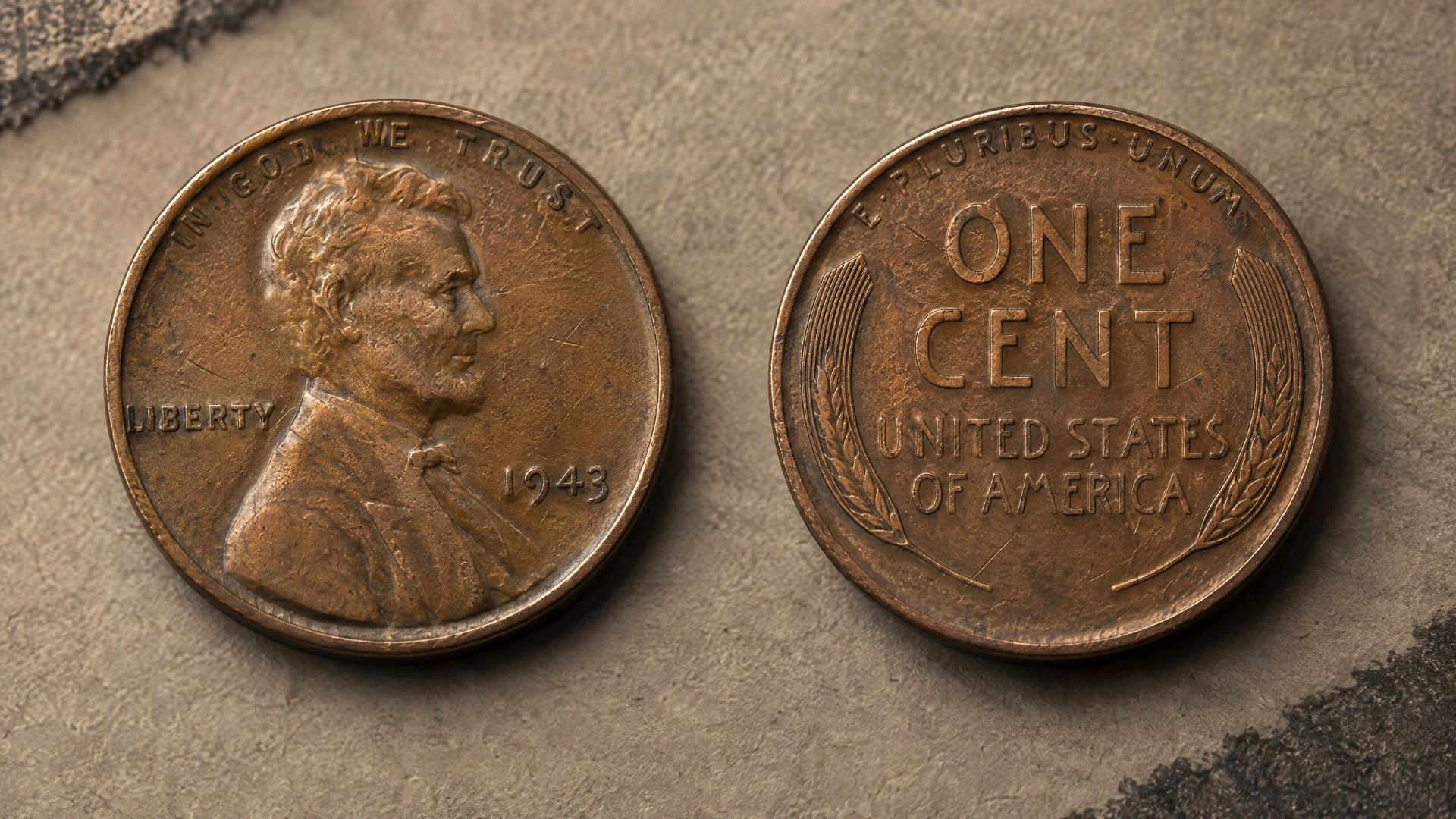
A Lincoln wheat cent is a one-cent coin designed by Victor David Brenner and issued in 1909 for the centennial of Lincoln's birth. NGC's Coin Explorer history of the series notes that it was the first regular-issue US coin to honor an actual person, breaking a tradition that went back to George Washington's presidency.
The obverse shows Lincoln facing right, with LIBERTY on the left, the date on the right and, for the first time on a cent, IN GOD WE TRUST. The reverse shows two wheat ears framing ONE CENT, with E PLURIBUS UNUM and UNITED STATES OF AMERICA. The wheat design ran until 1958; from 1959 the reverse changed to the Lincoln Memorial, which is why collectors call the earlier coins "wheaties" or "wheat pennies".
Most wheat cents are bronze, weighing 3.11 g and measuring 19 mm, according to NGC's catalog entries. The exceptions are the 1943 steel cents and the brass cents of 1944 to 1946, an alloy NGC says was first tried in 1942, both covered below. NGC also points out where wear shows first: Lincoln's cheekbone and jaw on the front, and the tips of the wheat on the back.
The VDB Story and the 1909-S VDB
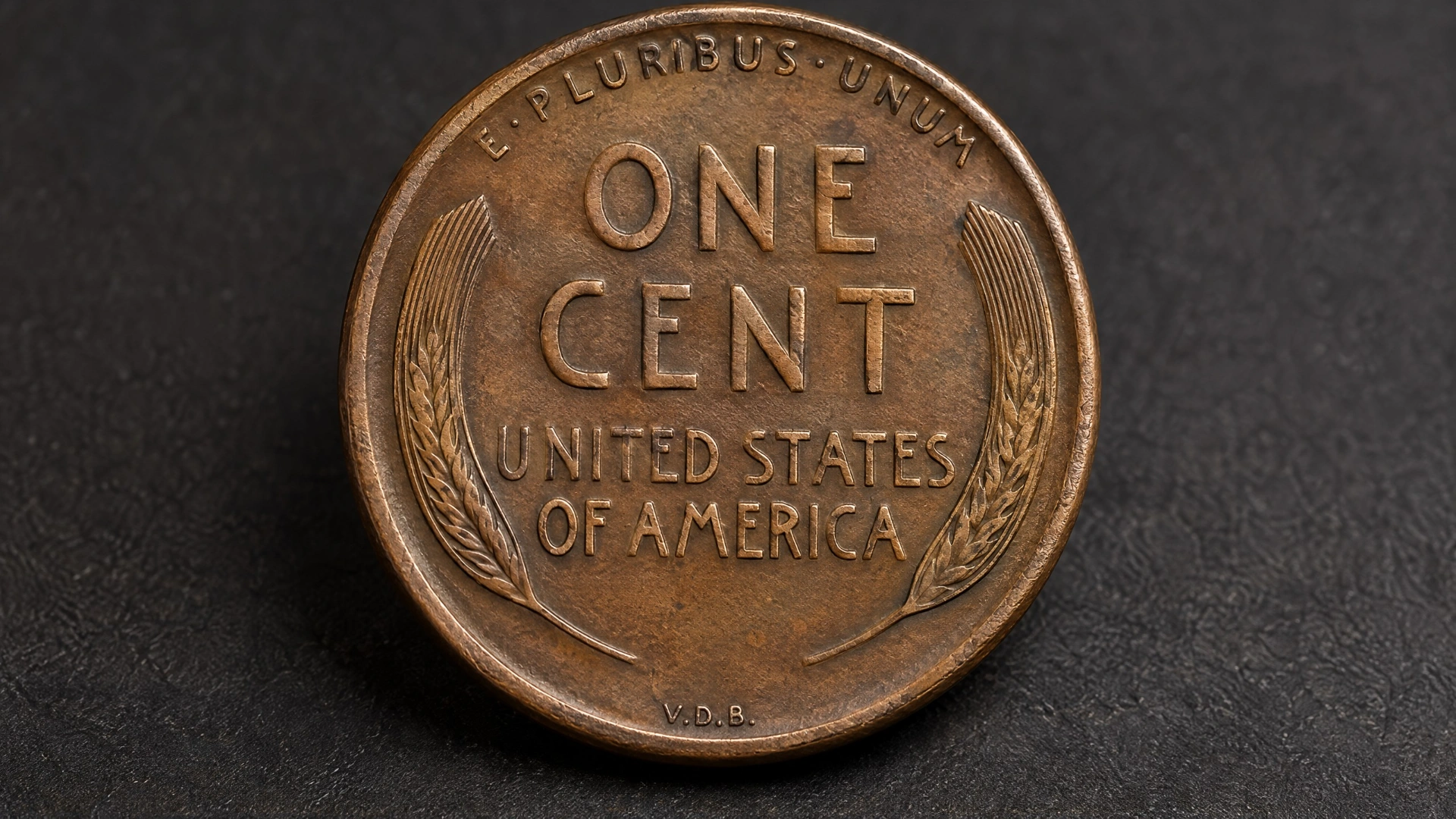
The first Lincoln cents, released in August 1909, carried Brenner's initials, V.D.B., at the bottom of the reverse. NGC's history of the series describes a public outcry against the initials, its entry for the 1909 VDB describes a newspaper campaign, and the Mint quickly removed them.
That short run created what NGC calls the most coveted coin in the series. According to NGC's series history, the San Francisco Mint struck only 484,000 cents with the initials, and NGC's entry for the 1909-S VDB calls it the lowest mintage of any Lincoln cent issued for circulation. Philadelphia's 1909 VDB is a different story: NGC notes it was widely hoarded at the time, so Mint State examples, meaning coins with no wear from circulation, are common.
Brenner's initials came back in 1918, much smaller, on the shoulder of Lincoln's bust on the obverse. That detail matters for authentication, as the altered-coin section below shows.
Lincoln Wheat Cent Key Dates, With Mintages
A key date is a coin in a series with a low mintage or low survival that most collectors need to complete a set. On the wheat cent, NGC's series history notes that only two dates struck for circulation came in under one million coins, not counting varieties such as the 1955 doubled die: the 1909-S VDB and the 1931-S.
| Coin | Mintage | Why it matters |
|---|---|---|
| 1909-S VDB | 484,000 | Lowest circulation mintage in the series; NGC notes it is often counterfeited or altered |
| 1909-S | 1,825,000 | No initials. NGC describes it as harder to find in Mint State than the 1909-S VDB, because few people saved Lincoln cents until the 1930s |
| 1914-D | 1,193,000 | Not the lowest mintage, but NGC says it has a smaller surviving population than the 1909-S VDB or 1931-S |
| 1922 "No D" | Part of Denver's 1922 output | No cents were struck in Philadelphia in 1922, so a genuine 1922 cent with no mint mark came from Denver dies |
| 1931-S | 866,000 | Most stayed unissued until 1935, then were bought up by the roll, so NGC rates it fairly plentiful in Mint State but genuinely rare below Very Fine |
| 1955 Doubled Die Obverse | About 24,000 (estimate) | NGC calls it the most dramatic doubled die in US coinage; the mintage is a reconstruction that can't be proved |
Mintages are from NGC's Coin Explorer entries for the 1909-S and the 1955 doubled die, and from its series history. A mintage counts coins struck, not coins that survive, which is why the 1914-D can be scarcer than coins with lower mintages. NGC also names the 1910-S to 1915-S and the 1924-D as scarce issues worth watching for.
The 1922 "No D" deserves a closer look. NGC's entry explains that worn dies at Denver, possibly with grease filling the mint mark, produced cents with no visible D. Three die pairings show it, and collectors most want the one with a strong, sharp reverse. It is technically a die state, a stage in a die's wear, rather than a true variety.
The 1943 Steel Cent, and the 1943 That Isn't Steel
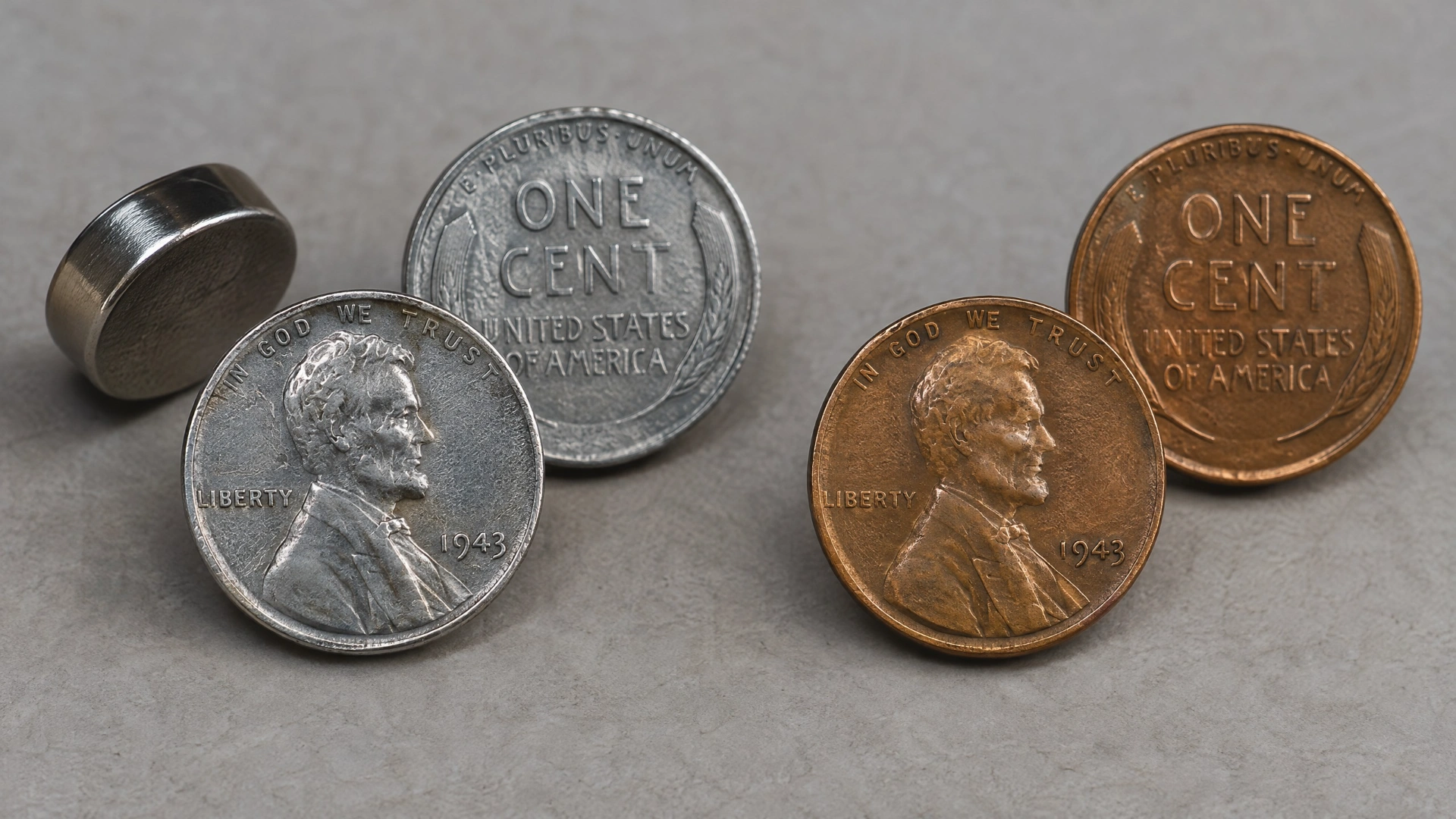
The 1943 steel cent is a Lincoln cent struck on zinc-coated steel instead of bronze, because copper was needed for the war. NGC's entry for the 1943 gives the weight as 2.7 g and the Philadelphia mintage as 684,628,670; its Denver and San Francisco entries add 217,660,000 and 191,550,000.
With nearly 1.1 billion struck, an ordinary 1943 steel cent is not rare. NGC notes that vast numbers were saved as novelties. They also caused problems in use: they were mistaken for dimes when new, and being magnetic, they failed to work in vending machines. From 1944 through 1946 the Mint switched to a brass alloy, partly made from salvaged cartridge cases, according to NGC's series history.
The coin people are really looking for is a 1943 cent struck in bronze by mistake. The usual explanation is that a few bronze blanks left over from 1942 stayed in the machinery when steel production began. NGC reports that about 17 Philadelphia examples are confirmed, and that the first reported find, in 1947, came from 16-year-old Don Lutes Jr.'s school cafeteria change. The mirror-image error also exists: 1944 cents struck on leftover steel blanks, which NGC describes as less rare than the 1943 bronze but still highly sought.
The magnet test, and what it can't tell you
A magnet is the first check on any 1943 cent. As NGC explained when it certified a 1943-S bronze cent, ordinary zinc-coated steel cents stick to a magnet, while the bronze ones, an alloy of 95% copper and 5% tin and zinc, do not. The same 2008 report notes that at least one bronze 1943 cent is known from each of the three mints that struck cents that year.
A magnet only rules a coin out. A 1943 cent that sticks is a steel cent, whatever its color. One that doesn't stick still has to be authenticated, because the magnet tests the metal, not the date. The Mint has dealt with the excitement before: a 1999 US Mint release describes thousands of calls prompted by an inaccurate news report about the 1943 cent.
How Altered Key Dates Are Spotted
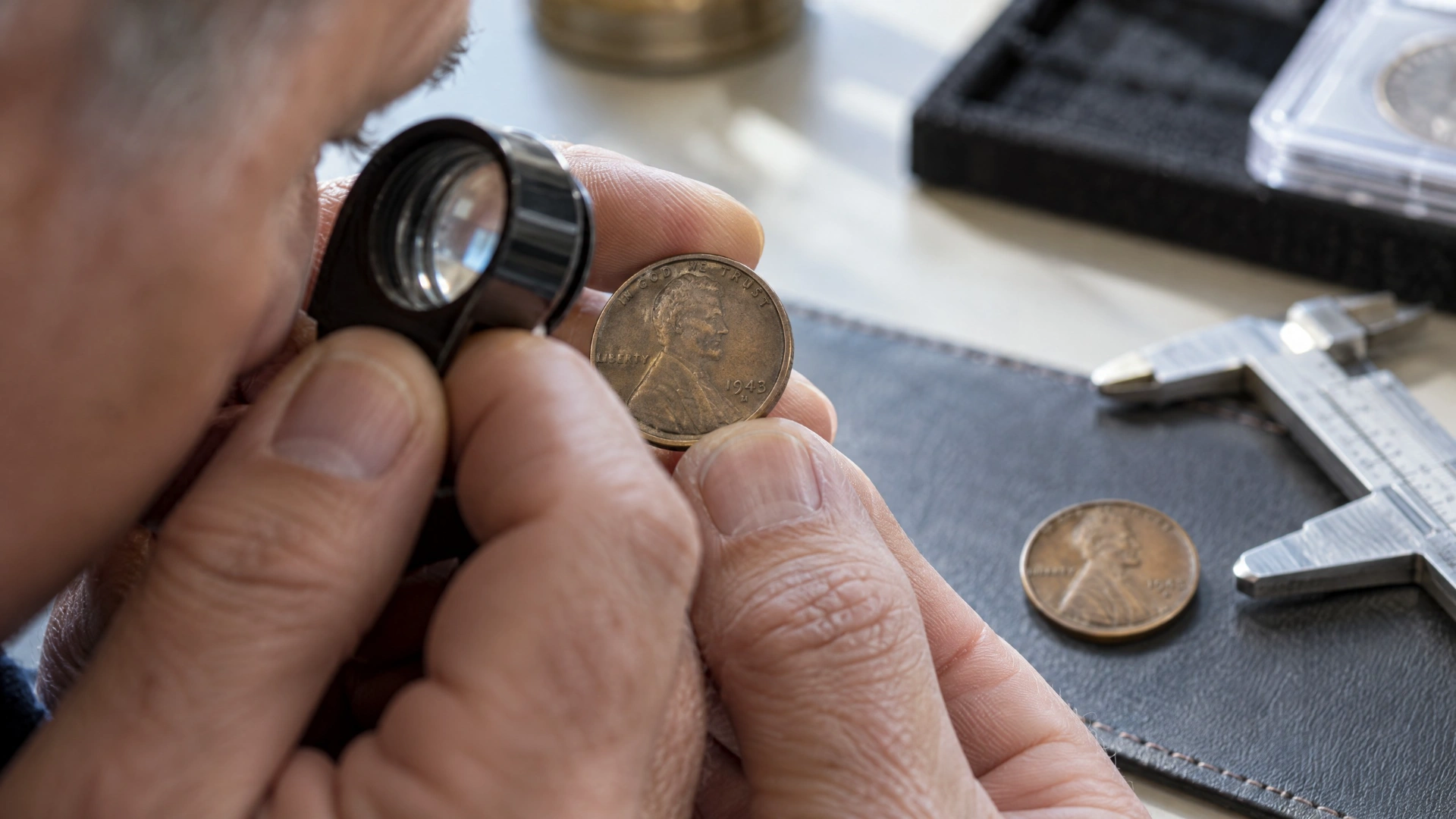
Altered key dates are usually common coins with a mint mark added or a date changed, and NGC's entries describe the tells:
- 1914-D made from a 1944-D. Shaving the first 4 of a 1944-D can make it read 1914-D. A 1944 cent has the V.D.B. initials on Lincoln's shoulder; a 1914 does not, because they weren't restored until 1918
- A D added to a Philadelphia 1914, the other common fake of that date
- 1931-S made from a 1931 Philadelphia cent with an S added, or from another 1930s San Francisco cent with the date changed
- 1909-S VDB. NGC notes that four obverse dies are known from the position of the S, and knowing them is key to authenticating this often counterfeited coin
Our guide to what mint marks mean covers where the mint mark sits on a Lincoln cent and across other US series. For the key dates above, NGC's own advice on the 1931-S is to seek a certified coin, meaning one authenticated and graded by a third-party service.
What Decides Wheat Penny Value
Wheat penny value comes from five things together, and no single one decides it:
- Date and mint mark. A 1909-S VDB and a 1909 VDB share a design, but not a mintage
- Grade. Grading is an opinion on a 70-point scale, so a coin is "graded MS-65 by NGC", not "an MS-65 coin"
- Color. Copper coins are designated Red, Red-Brown or Brown, and the designation is part of how a copper coin is priced. Our Indian Head cent guide explains how those designations work on copper
- Variety. A doubled die, meaning a die that took a doubled image when it was made, or a repunched mint mark can separate two coins of the same date
- Certification. On the key dates, a certified coin has already been authenticated by a third party, which matters because NGC flags several of them as commonly targeted by counterfeiters
A mintage tells you how many were struck; a population report tells you how many have been graded. To put a figure on a specific coin, our guide to how to research a coin's value walks through the price guides and auction records to check, and why the date of every figure matters.
Wheat Cents at Copper State
In a roll or a bag of wheat cents, the 1943s sort themselves: the magnet check above separates steel from everything else in seconds. Our guide to bulk coin lots and rolls covers what to look for in the rest when the coins come by the hundred. If you are thinking of selling a key date, our selling page sets out the terms: the appraisal is free, there's no appointment, and there's no obligation to sell.
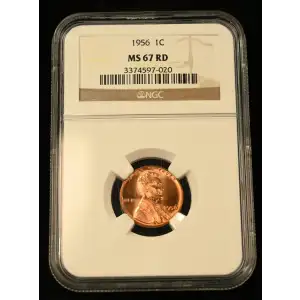
Our half cents and cents listings include graded wheat cents, and circulated steel cents are listed separately.

This article is educational and reflects general information about precious metals and collectible coins. It is not investment, tax or legal advice, and Copper State Coin & Bullion is not a registered investment adviser, broker-dealer or tax professional. Metal prices fluctuate and past performance does not indicate future results. Consult a qualified professional about your own situation.
Frequently Asked Questions
How much is a wheat penny worth?
It depends on five things together: date and mint mark, grade, color, variety and certification. Most dates were struck in large numbers, while key dates like the 1909-S VDB and the 1914-D, and errors like the 1943 bronze cent, sit in a different range entirely. Check a dated price guide or recent auction records for the exact coin and grade.
What are the key dates for Lincoln wheat cents?
The main key dates are the 1909-S VDB, with a mintage of 484,000, the 1909-S, the 1914-D, the 1922 "No D" and the 1931-S, with a mintage of 866,000. The 1955 doubled die obverse is the major variety. The 1943 bronze and 1944 steel cents are mint errors rather than regular issues.
Is a 1943 steel penny rare?
No. Nearly 1.1 billion 1943 steel cents were struck across Philadelphia, Denver and San Francisco, so they are common, and NGC notes vast numbers were saved in Mint State. The rare 1943 is the bronze cent struck by mistake, with about 17 Philadelphia examples confirmed. Steel cents can rust when exposed to moisture, so keeping one bright takes care.
How can I tell if my 1943 penny is copper?
Start with a magnet. A steel 1943 cent sticks to a magnet, and a bronze one does not. If yours doesn't stick, it still needs authenticating, because a magnet tests the metal, not the date. A third-party grading service can confirm whether it is genuine.
What does VDB mean on a penny?
V.D.B. are the initials of Victor David Brenner, who designed the Lincoln cent. They appeared on the reverse of the first 1909 cents and were removed soon after, following public objections. They returned in 1918, much smaller, on Lincoln's shoulder on the obverse. The 1909-S VDB is the series' lowest-mintage circulation issue.
Bring Your Wheat Cents to Peoria or Phoenix
We bring over 40 years of numismatic and bullion experience to the counter. Bring in a jar of wheat cents, or the single coin you suspect is a key date. Both stores are open six days a week, and no appointment is needed at either.
Peoria
Copper State Coin & Bullion
8360 W. Thunderbird Road C#103
Peoria, AZ 85381
(623) 432-3953
Mon-Fri 9:00-17:00, Sat 9:00-16:00, Sun closed
Phoenix
Copper State Coin & Bullion
4550 E Bell Road Suite 188
Phoenix, AZ 85032
(602) 377-1944
Mon-Fri 9:00-17:00, Sat 9:00-16:00, Sun closed