A coin want list is a written list of the specific coins you are looking for, handed to a dealer who watches incoming material and contacts you when a match turns up. It is how collectors find the dates, grades and varieties that are not sitting in any case on the day they walk in. At Copper State Coin & Bullion the service is stated simply on our homepage: "Send us your want list and our team will inform you promptly after we locate any item in the list."
The quality of the list decides how well it works. A vague list gets vague results; a precise one tells a dealer exactly what to set aside. This guide covers what a want list is, how to write one a dealer can act on, and what to ask any dealer before you hand one over.
What a Coin Want List Is, and What It Isn't
A want list is a standing request, not an order: the dealer looks and tells you when something matches, and what happens next depends on the terms you agreed. That is the main difference from a special order, which is a retail purchase of a stock item the shop does not have on hand but can get from a supplier. Some dealers take special orders for coins in current production, such as a current-year bullion coin; nobody can special order a particular 1909-S VDB cent in a particular grade, because nobody manufactures them anymore.
In practice, a want list is a coin sourcing service: the dealer does the searching and contacts you when a match turns up. The difference from a special order sets expectations. A want list has no delivery date. Some items turn up within weeks, some take much longer, and a few may never appear in the grade and price you asked for. A dealer who promises otherwise on a scarce coin is promising something they do not control.
Why the Coin You Want Isn't in the Case
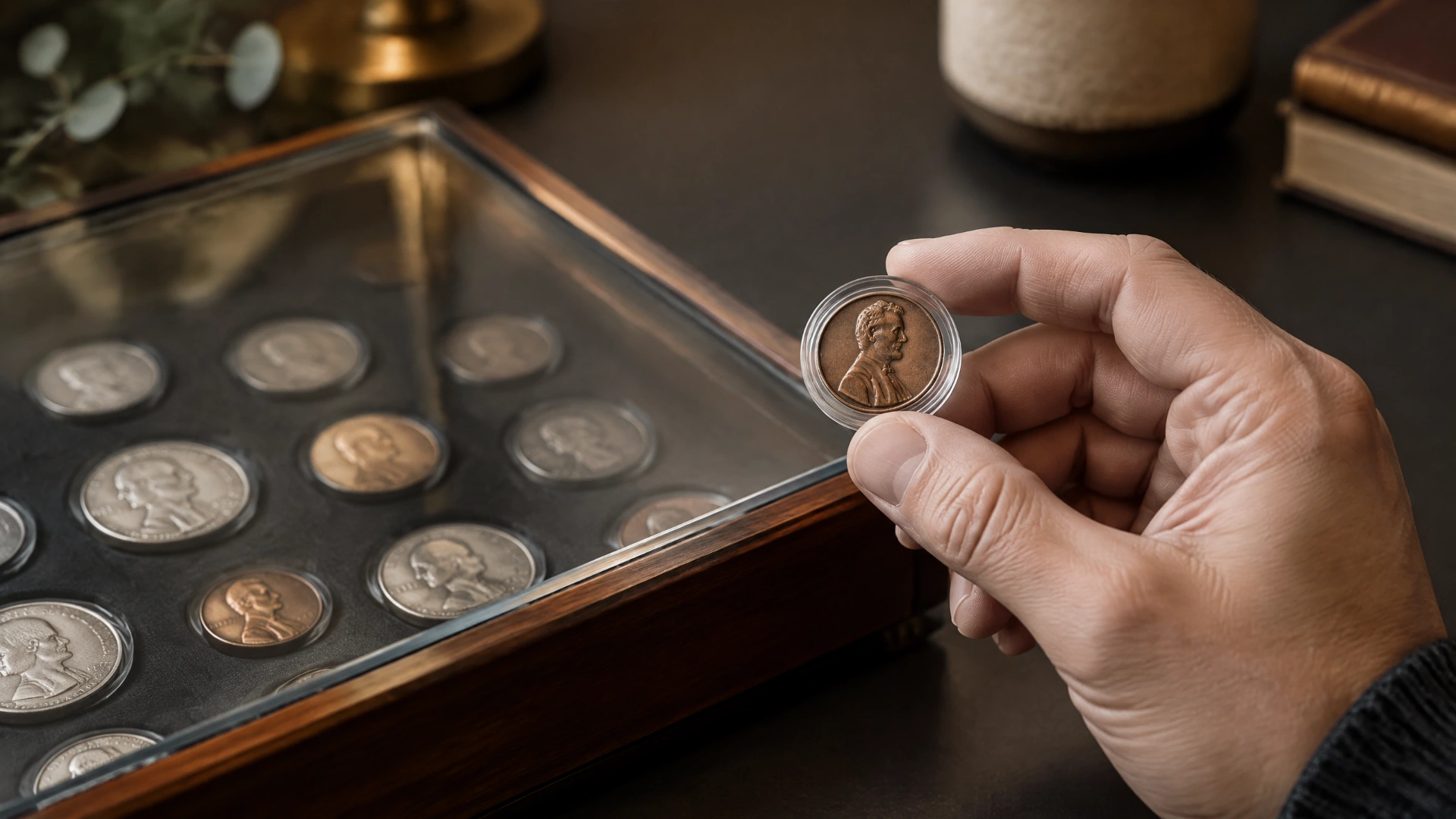
A dealer's case holds what has come in recently, not everything that exists. Rare-coin inventory arrives one collection, one estate and one walk-in seller at a time, and the most wanted pieces often sell before they reach a case at all.
Scarcity is the other half. The 1909-S VDB Lincoln cent, a classic want-list coin, had a mintage of 484,000, according to PCGS CoinFacts. That is small for a series struck by the hundreds of millions, and only a fraction of those coins survive in any given grade. When a collector asks for that date in a specific grade, certified by a specific service, the pool shrinks again.
Population is the number of coins a grading service has certified at each grade, and it is a better guide to how often a coin surfaces than mintage alone. Our article on what a PCGS or NGC population report tells you explains how to read those numbers, and why they are cumulative counts rather than a census of coins in existence.
How to Write a Want List a Dealer Can Act On
A useful want list names the exact coin, the grade range, the certification you will accept and the most you are willing to pay. Each of those fields removes guesswork, and each one you leave blank means a phone call later about a coin you may not want.
| Field | What to write | Why it matters |
|---|---|---|
| Series and denomination | "Lincoln cent," "Morgan dollar," "Walking Liberty half dollar" | Names the family of coins |
| Date and mintmark | "1909-S VDB," "1916-D," "1893-CC" | The date and mint are what make one coin scarce and another common |
| Variety, if any | The variety name or attribution number | A die variety can trade very differently from the regular issue of the same date |
| Grade range | "VF-30 to XF-45," "MS-63 or better" | A range gives the dealer room to find a coin; a single grade narrows the search |
| Certification | "PCGS or NGC only," "raw is fine" | Certified and uncertified coins are sourced and priced differently |
| Color or surface, where it applies | "RB or better," "no cleaned coins," "original skin" | For copper and toned silver, surface can matter as much as grade |
| Price ceiling | Your maximum, and whether it is firm | Stops a search for coins you would not buy at the price they trade |
| Contact and timing | How to reach you and how quickly you can decide | Scarce coins do not wait long |
Grade: give a range, not a wish
A grade is a grading service's or dealer's opinion of a coin's condition on the 70-point Sheldon scale. NGC describes it as "the internationally accepted Sheldon grading scale of 1 to 70," with 60 as "the threshold for a coin to be considered Uncirculated." Because grading is an opinion, two coins graded MS-63 by the same service can look quite different, which is why a range plus a note about eye appeal usually finds a better coin than a single number. Our coin grading guide for beginners covers the scale in more detail.
Copper color designations
For copper coins, the color designation belongs on the list. PCGS designates Red (RD) for Mint State copper coins showing 95% or more of their original mint red color, Red Brown (RB) for those showing between 5% and 95%, and Brown (BN) for coins with less than 5%. "MS-64 RB or better" is a very different request from "MS-64 RD."
Paper money needs its own fields
Currency collectors should write the note type, series year, and catalog number where they know it, plus the grade. Paper money graded by PMG may also carry an EPQ designation; PMG defines an EPQ note as one that is, "in the opinion of PMG graders, completely original" and has not "been physically, chemically or materially processed to give the appearance of a higher grade." If originality matters to you, say "EPQ only." Want lists on this site cover notes as well as coins, and our paper money department is a good place to see what a listing looks like.
How Dealers Source Coins Against a List
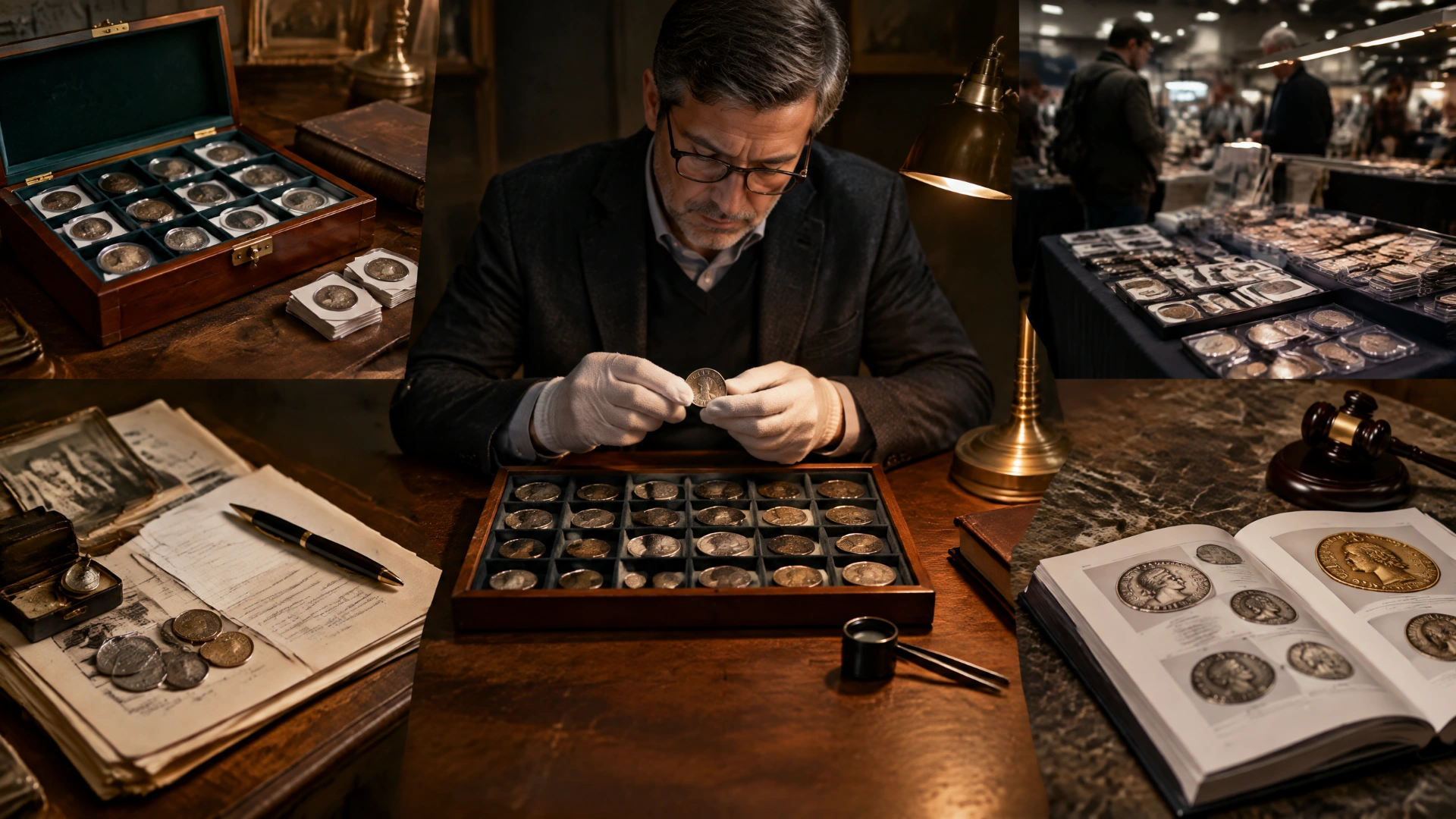
Dealers fill want lists from the same channels that fill their cases: coins bought over the counter, estate and collection purchases, other dealers, coin shows and auctions. What a list changes is that a matching coin prompts a call to you instead of simply going into the case.
That is also why a local dealer's want list and an online search do different jobs. An online search shows you what is listed for sale right now, anywhere, and is excellent for common material and for checking recent prices. A want list with a local shop catches coins that never get listed at all, because they come across a counter in a collection and are spoken for before anyone photographs them. The two work well together, and our piece on how in-person dealers and online marketplaces compare weighs where each one is stronger.
What to Ask Any Dealer Before You Hand Over a List
Before you submit a want list anywhere, ask how the dealer handles it, because terms vary from shop to shop. These questions apply to any dealer, including us:
- Is there a fee or a deposit? Ask whether either applies, and when.
- How long does the list stay active? Ask whether it expires or needs refreshing.
- How will you be contacted, and how long do you have to decide? A scarce coin may only be held briefly.
- Can you see the coin before you commit? In person, by photographs, or both.
- Are you obligated to buy when a match turns up? Confirm the answer before you send the list.
- How is the price set? Ask what the price is based on, so you can compare it against dated sources such as grading-service price guides and recent auction records.
Get the answers in writing, or at least in an email you can find later. A clear arrangement protects both sides.
Keeping a Want List Realistic
A realistic want list matches the grade you ask for with the price you set, using current, dated prices rather than figures from memory. Coin prices move, and a ceiling set years ago may no longer find anything in the grade you want.
Check a dated source before you write a ceiling: a grading service's price guide, recent auction records for the same date, grade and certification, or a dealer's current inventory. Note the date next to the figure. When a coin surfaces above your ceiling, the dated note tells you whether the market moved or the list was optimistic.
Keep the list short enough to be useful. A dealer can keep a dozen specific wants in mind far more easily than a hundred. Put the coins you want most at the top, and update the list when you fill a hole in your set.
How Copper State Handles Want Lists
Our want list service covers more than coins. The homepage invites collectors "looking for a specific collectible coin, note, memorabilia, precious metal, jewelry, or watch" to send a want list, and "our team will inform you promptly after we locate any item in the list." Our numismatic departments cover rare US coins by denomination, commemoratives, colonials, territorial coins, patterns, world coins and paper money, and our rare US coins and numismatic coins pages show what is in stock now.
To send a list, use the contact form on our contact page, which takes a free-text message. Include the fields from the table above, and ask us any of the questions in the previous section before you send it. Copper State has over 40 years of numismatic and bullion experience behind the counter, and our homepage lists affiliations with PCGS, NGC, PMG, the Certified Coin Exchange and ICTA.
This article is educational and reflects general information about precious metals and collectible coins. It is not investment, tax or legal advice, and Copper State Coin & Bullion is not a registered investment adviser, broker-dealer or tax professional. Metal prices fluctuate and past performance does not indicate future results. Consult a qualified professional about your own situation.
Frequently Asked Questions
What is a coin want list service?
A coin want list service is a dealer's standing agreement to look for specific coins on your behalf and contact you when a match appears. You list the date, mintmark, grade range, certification and price ceiling. The dealer watches incoming collections and trade sources and contacts you when a coin is found; ask whether you are obligated to buy.
Is a want list the same as a special order?
No. A special order is a retail purchase of a current stock item a dealer can get from a supplier, like a new bullion coin. A want list is a search for a specific collectible coin that may or may not surface, so it carries no delivery date. Ask the dealer what happens once a match is found.
How long does it take to find a coin on a want list?
It depends on the coin. Common dates in mid grades can turn up quickly, while a scarce date in a high grade may take months or longer, and some never appear at the price you set. A realistic grade range and a current, dated price ceiling make a match more likely.
How do I find a rare coin dealer in Arizona who takes want lists?
Ask directly whether the shop keeps want lists, and how it handles them: fees, deposits, how long lists stay active and how you are contacted. Copper State Coin & Bullion takes want lists; you can reach either store at 8360 W. Thunderbird Road C#103, Peoria, (623) 432-3953, and 4550 E Bell Road Suite 188, Phoenix, (602) 377-1944.
Can a want list include paper money?
Yes. Our want list service covers collectible notes as well as coins, along with memorabilia, precious metal, jewelry and watches. For currency, list the note type, series year, catalog number if known, and grade. If you want notes PMG considers completely original, write "EPQ only."
Should I put a price on my want list?
Yes. A price ceiling tells the dealer which coins are worth calling you about. Base it on a dated source, such as a grading-service price guide or recent auction records for the same date, grade and certification, and note the date beside the figure so you can tell later whether the market moved.
Send Us Your Want List
Write down the coin, the grade range, the certification and your ceiling, then send the list through our contact page. "Our team will inform you promptly after we locate any item in the list." Open Monday through Saturday at both locations.
Peoria
Copper State Coin & Bullion
8360 W. Thunderbird Road C#103
Peoria, AZ 85381
(623) 432-3953
Mon–Fri 9:00 a.m.–5:00 p.m. · Sat 9:00 a.m.–4:00 p.m. · Sun closed
Phoenix
Copper State Coin & Bullion
4550 E Bell Road Suite 188
Phoenix, AZ 85032
(602) 377-1944
Mon–Fri 9:00 a.m.–5:00 p.m. · Sat 9:00 a.m.–4:00 p.m. · Sun closed