If you bring secondhand gold or silver jewelry, flatware or holloware into an Arizona shop to sell, state law requires the shop to take your photo identification, write down a specific list of details about you and the item, report the purchase to local law enforcement at least weekly, hold the item unaltered for ten calendar days, and pay you by check. That is A.R.S. § 44-1602, part of the Arizona precious metals dealer law at Title 44, Chapter 11, Article 1 — “Dealers of Precious Items” — and none of it is the shop’s own policy.
The second half of the answer turns on the statute’s definitions rather than on its requirements. Arizona’s definition of a “precious item” is narrower than the phrase suggests, and on the face of the text it does not reach coins. So the same counter can be governed by two different sets of rules depending on which pocket you empty first.
This article is educational and reflects general information about precious metals and collectible coins. It is not investment, tax or legal advice, and Copper State Coin & Bullion is not a registered investment adviser, broker-dealer or tax professional. Metal prices fluctuate and past performance does not indicate future results. Consult a qualified professional about your own situation.
What Arizona Precious Metals Dealer Law Actually Requires
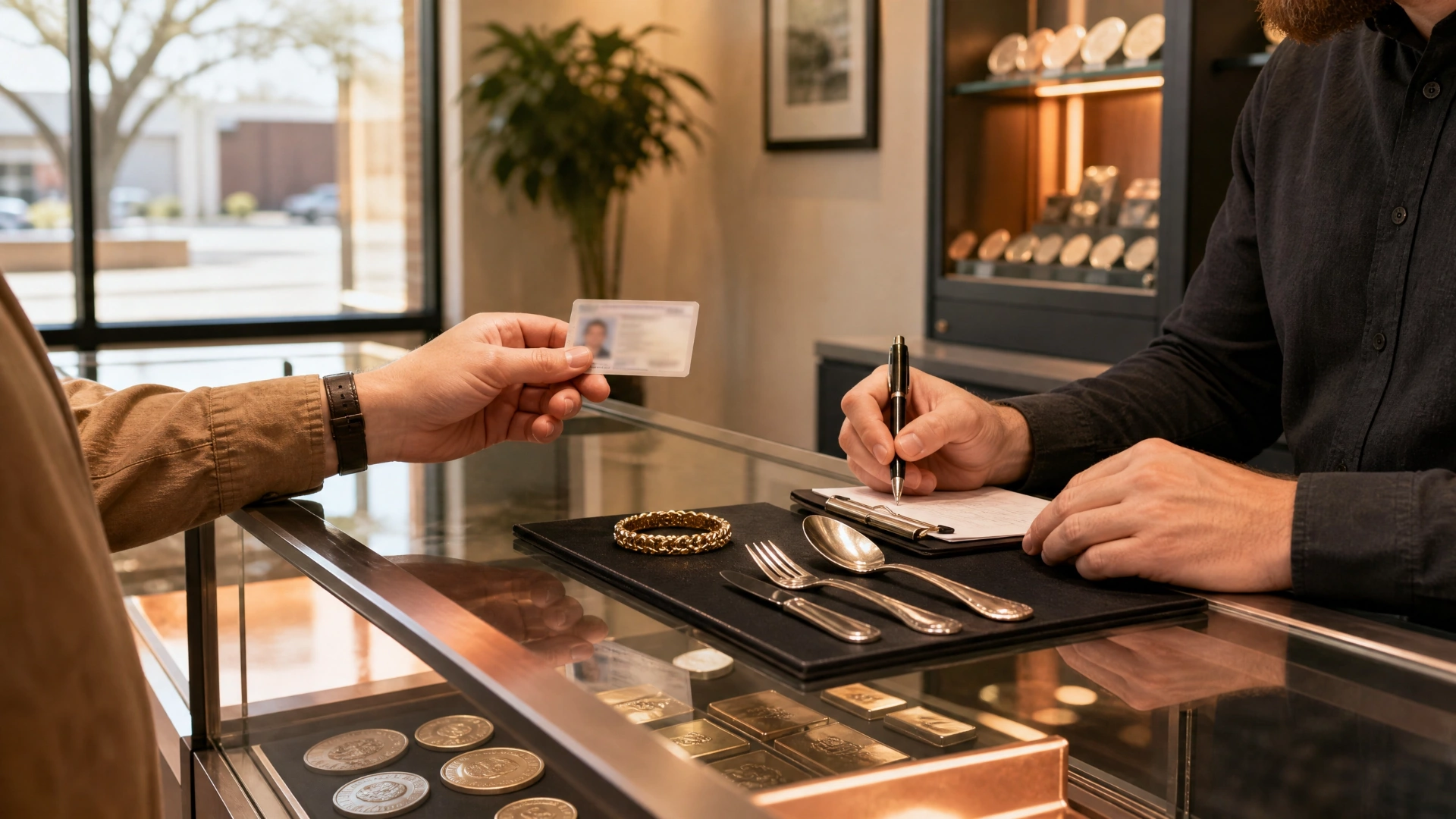
Section 44-1602 reads as a checklist for the dealer, and every item on it is a legal obligation rather than a preference.
- Photo identification. The seller must produce a “valid motor vehicle operator’s license, valid motor vehicle nonoperating identification license, valid armed forces identification card or other valid photo identification.”
- A written record. The dealer records the seller’s name, current address, date of birth, signature and physical description — height, weight, race, complexion and hair color — along with the identification serial number, a description of the item, any brand name and serial number, the date and time it was received, and the amount paid.
- Six months of retention. Those records are kept for six months from the date of purchase.
- A weekly report to police. The dealer delivers a complete list of purchases to the local law enforcement agency “at least once each week in which he makes a purchase.”
- A ten-day hold. Purchased items are held for ten calendar days after the list goes to law enforcement, unaltered.
- Payment by check only, “made payable to a named payee who is the actual intended seller.”
- No purchases from minors unless a parent or guardian is present.
- At the shop, in most cases. Dealers may only purchase at their permanent place of business, as listed on their sales tax license — subject to the narrow exceptions in § 44-1603, which lifts the article entirely for gem and mineral shows “regularly scheduled within this state for at least three consecutive years,” for like-kind partial trades, and for purchases from merchants, manufacturers or wholesale dealers.
- The statute on the wall. A copy of § 44-1602 must be displayed prominently and conspicuously on the premises.
A violation is a class 1 misdemeanor.
How § 44-1601 Defines a “Precious Item” — and Where Coins Sit
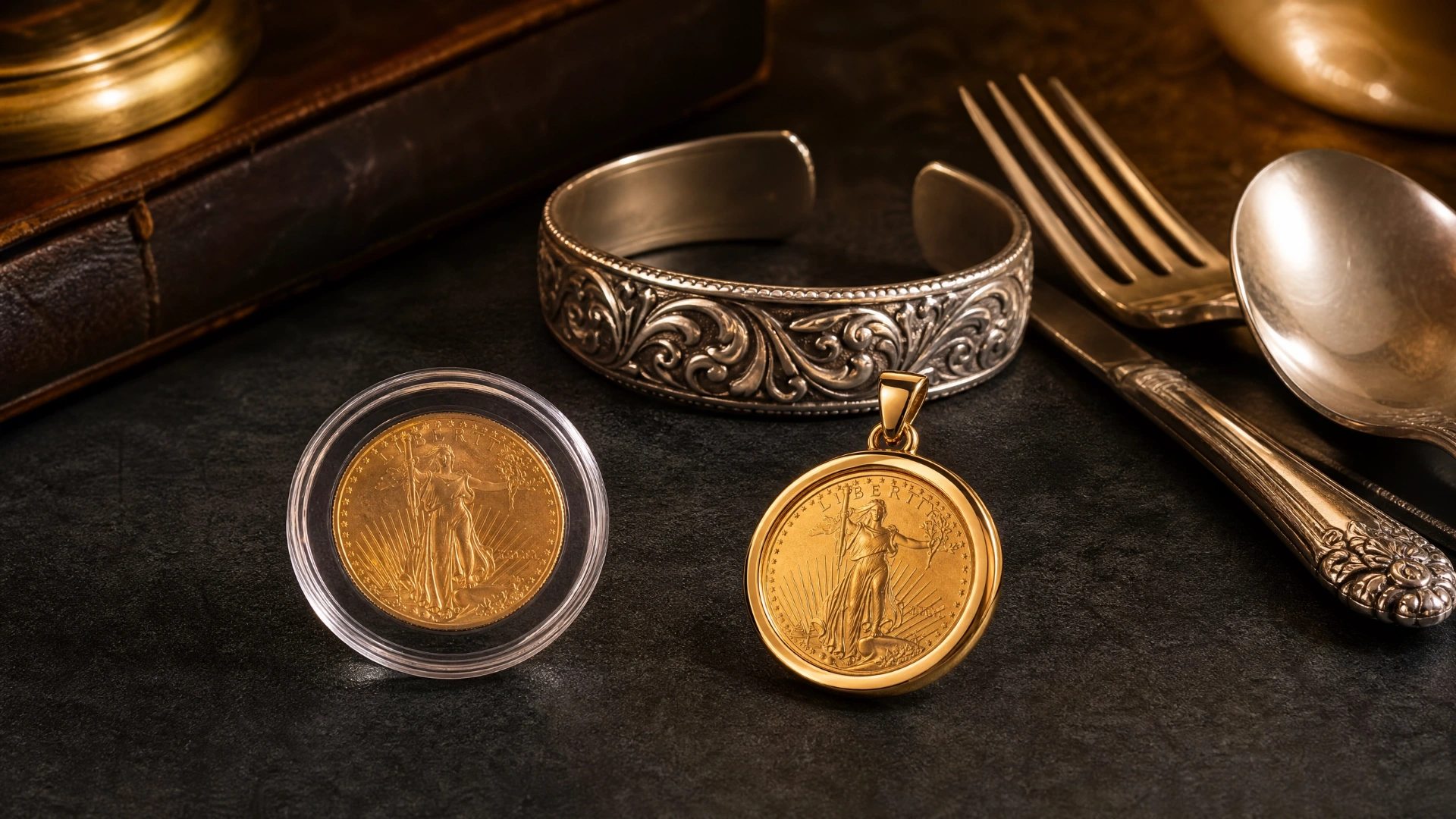
Everything above hangs on the phrase “precious item,” which A.R.S. § 44-1601 defines. A precious item is “secondhand gold, silver, platinum or jewelry, flatware or holloware containing gold, silver or platinum,” plus “secondhand precious or semiprecious stones whether mounted or unmounted” and “secondhand pearls.”
Then comes the sentence that changes the picture: “Precious item does not include coins and unmounted gemstones accompanied by a certificate from an independent, internationally recognized gem grading laboratory.”
The exclusion is a single sentence covering two things, and the certificate clause can be read as qualifying only the gemstones or as qualifying both. On the first reading — the more natural one, since a gem grading laboratory does not certify coins — coins are excluded outright, and the § 44-1602 machinery would not attach to a coin purchase under the Dealers of Precious Items article. We found no Arizona appellate decision or Attorney General opinion resolving the point, and nothing here is legal advice about a particular transaction.
Two qualifications belong with that reading. It is a statement about that article only: § 44-1604 lets a city or county impose stricter requirements, and a shop may in any case record identification for coin purchases as a matter of its own practice.
| What you bring in | Is it a “precious item” under § 44-1601? | Does § 44-1602 apply? |
|---|---|---|
| Secondhand gold or silver jewelry | Yes | Yes |
| Sterling flatware or holloware | Yes | Yes |
| Loose or mounted precious and semiprecious stones | Yes, with a narrow exception for certified unmounted stones | Yes |
| Secondhand pearls | Yes | Yes |
| Coins — bullion, circulated or graded | Excluded on the face of the statute | Not on the face of the statute — see the note above on the certificate clause |
| A coin mounted in a bezel as a pendant | It is jewelry containing gold or silver | Yes |
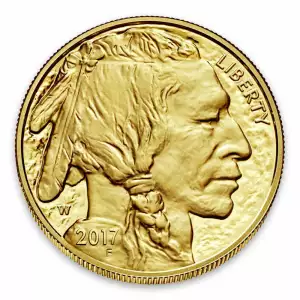
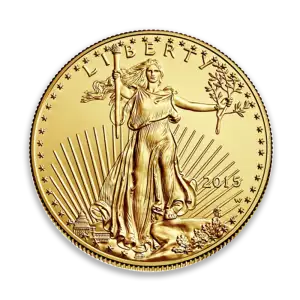
That last row is the one that catches people. A Gold Eagle in a flip and the same Gold Eagle soldered into a necklace are, legally, two different transactions.
Why Payment Is by Check, and Not by Choice
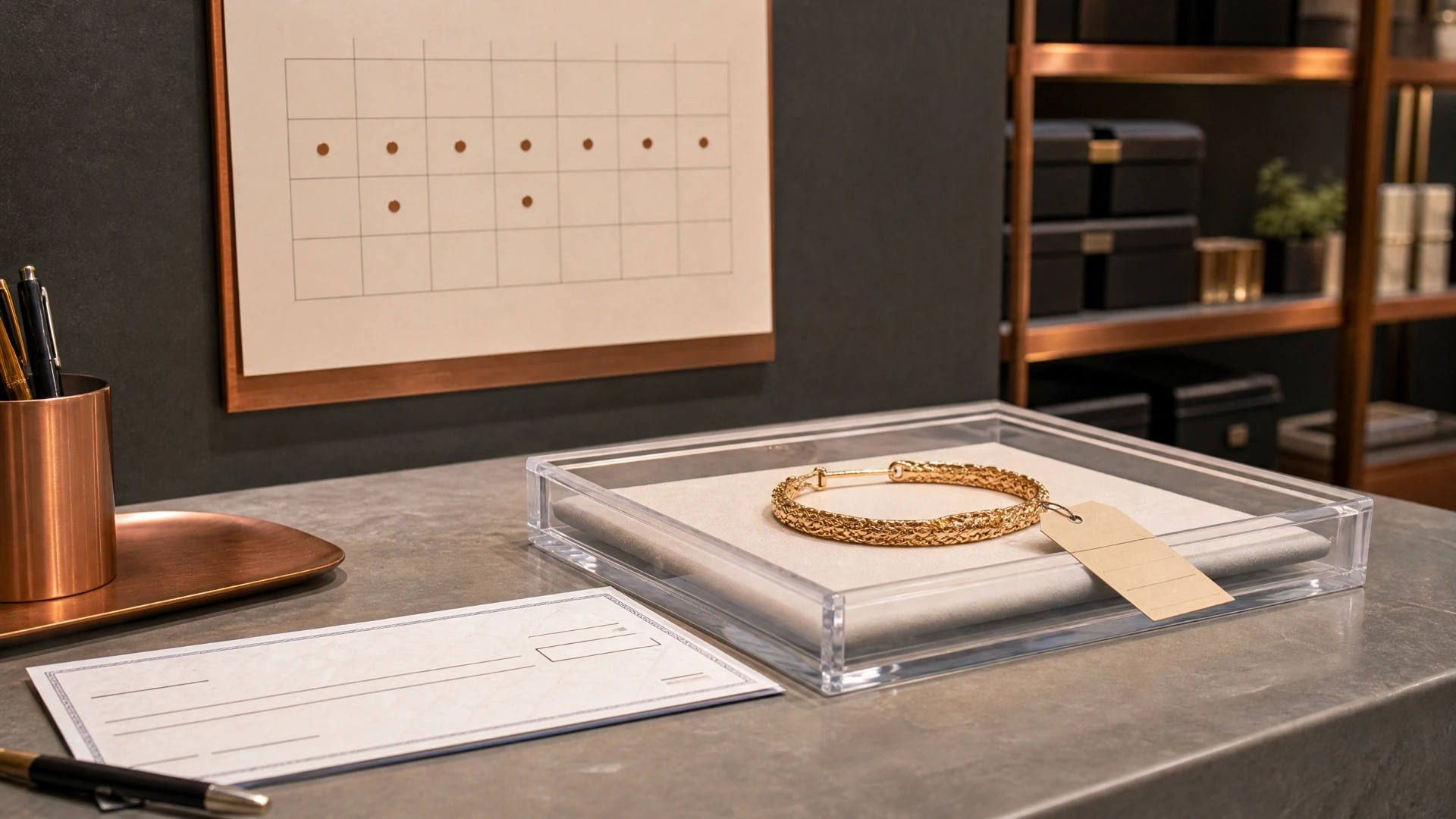
The check requirement is the part customers push back on most, and the reasoning becomes obvious once you read the wording. Payment must be by check “made payable to a named payee who is the actual intended seller.”
Everything in this article is built around one problem: stolen jewelry is easy to move and hard to trace once it is melted. A check creates a paper trail with a name on it. Combined with the recorded identification, the weekly report to police and the ten-day hold, it means a stolen bracelet arrives at a shop, sits there identifiable, and is recorded against a real person before anyone can alter it.
None of that is a comment on the customer standing at the counter. The overwhelming majority of people selling grandmother’s flatware are doing exactly what it looks like. The statute is written for the exceptions, and it does not give the dealer any discretion to apply it selectively.
The Ten-Day Hold Does Not Delay Your Payment
The ten-day period runs against the dealer, not the seller. It stops the shop from altering, melting or reselling the item for ten calendar days after the purchase list reaches law enforcement.
It has no bearing on when you are paid. The transaction concludes at the counter; the hold is what happens to the item afterwards.
For a seller, the practical effect is different: it explains why a shop cannot make you an offer that depends on flipping the piece immediately, and why estate lots take longer to work through than a bullion trade.
Arizona City Rules Stack on Top of State Rules
A.R.S. § 44-1604 settles how state and local law interact, and it is unusually clear: the article “does not supersede any city, town or county ordinance,” both sets of provisions apply together, and a local ordinance that “conflicts with or provides less stringent requirements than are provided in this article shall not be enforceable.”
In practice that means the floor is state law and a municipality can build above it. The City of Phoenix, for example, separately licenses secondhand dealers through the City Clerk’s License Services. A shop’s obligations in one Valley city are not automatically identical to its obligations in the next one, and that is the reason a coin purchase’s treatment is a question about local ordinances as well as about Article 1.
Where Federal Rules Come In
Two federal points sit alongside the state ones and are frequently confused with them.
Cash payments over $10,000. A business that receives more than $10,000 in cash in one transaction, or in related transactions, must file IRS Form 8300 within 15 days. This applies when a customer pays a business — buying coins with a bag of cash, not selling them. It is a federal reporting obligation on the shop.
Capital gains. The IRS taxes collectibles at a higher maximum capital-gains rate than most assets, and its guidance illustrates the category with coins. Topic no. 409 states that “net capital gains from selling collectibles (such as coins or art) are taxed at a maximum 28% rate.” Whether a particular product is treated as a collectible, and what is actually owed, depends on the rules the IRS applies and on holding period, basis and individual circumstances — a conversation for a tax professional rather than a coin dealer.
What to Bring
If you are selling jewelry, flatware, holloware or stones, bring unexpired government photo identification. Without it the transaction cannot lawfully proceed, whatever either party would prefer.
If you are selling coins or currency, the statutory apparatus above is not what applies on the face of Article 1 — but bring identification anyway. A dealer may keep its own records regardless of what the statute requires, and having identification with you avoids a second trip. Nothing here changes the position on stolen property: dealers decline material they cannot account for, and § 44-1602 applies in full the moment a coin is mounted in jewelry.
Beyond identification, our first-visit checklist covers what to bring and how to sort it. One point worth repeating here: leave the cleaning alone and bring the piece as it is. Whether a surface has been cleaned, and what that means for the piece, is part of what an evaluation determines.
At our Phoenix and Peoria counters, bring in what you have and we will tell you what we would pay for it. Over 40 years of numismatic and bullion experience mostly shows up as speed: recognizing what a piece is, and what it is not, before the conversation about price starts.
Frequently Asked Questions
Why does an Arizona coin shop need my driver’s license?
Because A.R.S. § 44-1602 requires it when the shop buys a “precious item” — secondhand gold, silver or platinum jewelry, flatware, holloware, precious stones or pearls. The dealer must record the identification serial number along with your name, address, date of birth, signature and physical description. A dealer who skips it commits a class 1 misdemeanor.
Does the same rule apply when I sell coins?
On the face of the statute, no. A.R.S. § 44-1601 says “precious item does not include coins and unmounted gemstones accompanied by a certificate from an independent, internationally recognized gem grading laboratory,” so the § 44-1602 requirements do not attach to a coin purchase. The wording leaves room for argument, we found no Arizona appellate decision or Attorney General opinion settling it, and a city ordinance may require more.
Why can’t an Arizona dealer pay me in cash for jewelry?
The statute permits payment “by check only, made payable to a named payee who is the actual intended seller.” It is a traceability requirement aimed at stolen property, not a judgment about any individual seller, and the dealer has no discretion to waive it.
Do I have to wait ten days to get paid?
No. The ten-day hold restricts what the dealer may do with the item — it cannot be altered, melted or resold for ten calendar days after the purchase list is delivered to local law enforcement. Payment to the seller is made at the transaction.
Can I sell precious items to a dealer at a hotel buying event?
Generally not, unless an exemption applies. Hotel and pop-up buying events are convenient, often run at weekends, and bring a buyer to towns without a dealer — but Arizona confines a precious-item purchase to the dealer’s permanent place of business. Section 44-1603 lifts the article for a narrow set of settings, chiefly gem and mineral shows regularly scheduled in this state for at least three consecutive years.
Do I need an appointment to have coins or jewelry looked at?
Our Phoenix and Peoria stores are open Monday to Friday from 9:00am to 5:00pm and Saturday from 9:00am to 4:00pm, closed Sunday. For larger collections and estate lots, call ahead so we can set aside the time.
Bring It In for an Appraisal
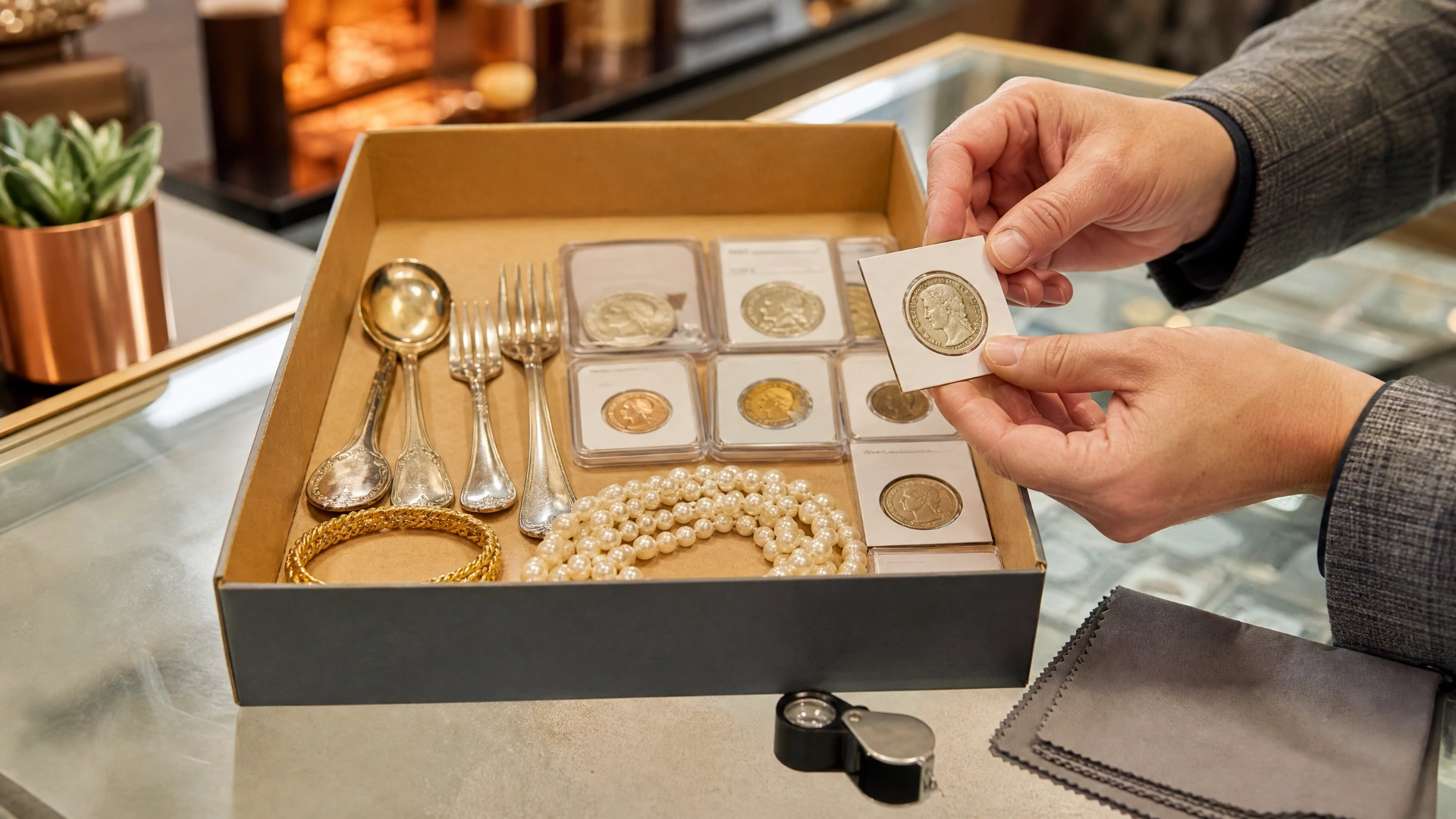
Whether you are holding a shoebox of sterling, an inherited coin collection or one piece you cannot identify, bring it to either counter and we will tell you what it is and what we would pay. Bring it in and we will tell you what we would pay for it.
Copper State Coin & Bullion — Peoria
8360 W. Thunderbird Road C#103
Peoria, AZ 85381
(623) 432-3953
Copper State Coin & Bullion — Phoenix
4550 E Bell Road Suite 188
Phoenix, AZ 85032
(602) 377-1944
Both locations: Monday–Friday 9:00am–5:00pm · Saturday 9:00am–4:00pm · Sunday closed
copperstatecoin.com