Visiting a coin shop for the first time in Phoenix or Peoria can feel intimidating, but it doesn’t have to. With a simple checklist, a basic understanding of what happens at a coin shop, and a few questions in your pocket, you can walk in confidently and enjoy the experience.
Quick Answer
If it’s your first time visiting a coin shop in Phoenix or Peoria, start by defining your goal (browse, buy, or show coins), bring a realistic budget, and leave any coins you’re bringing uncleaned. Expect a friendly greeting, a short conversation about what you’re looking for, and a guided look at coins or a quick review of what you brought in. Focus on learning, asking basic questions, and following simple coin shop etiquette like handling coins only by the edge and asking before you touch. Over time, you can build a relationship with a trustworthy coin dealer who helps you grow and eventually sell your collection.
Key Takeaways
- Know your goal before you walk in (browsing, buying, or bringing coins).
- Learn basic definitions: bullion, grading, and spot price.
- Bring coins as they are (do not clean), plus a budget and a short list of questions.
- Good etiquette and honest questions help build trust with a coin dealer.
- Avoid common beginner mistakes like cleaning coins, overpaying without a plan, and being afraid to ask simple questions.
Core Definitions for New Phoenix & Peoria Coin Collectors
What Is Bullion?
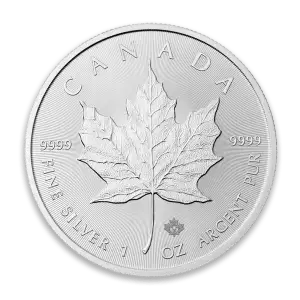
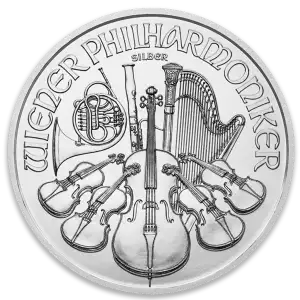
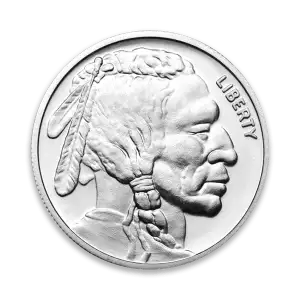
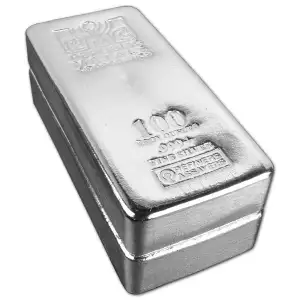
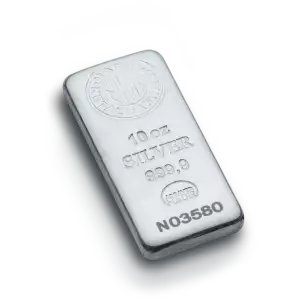
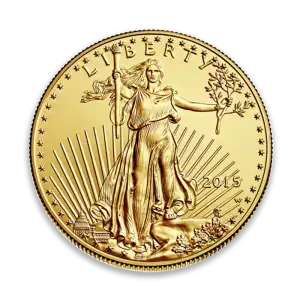
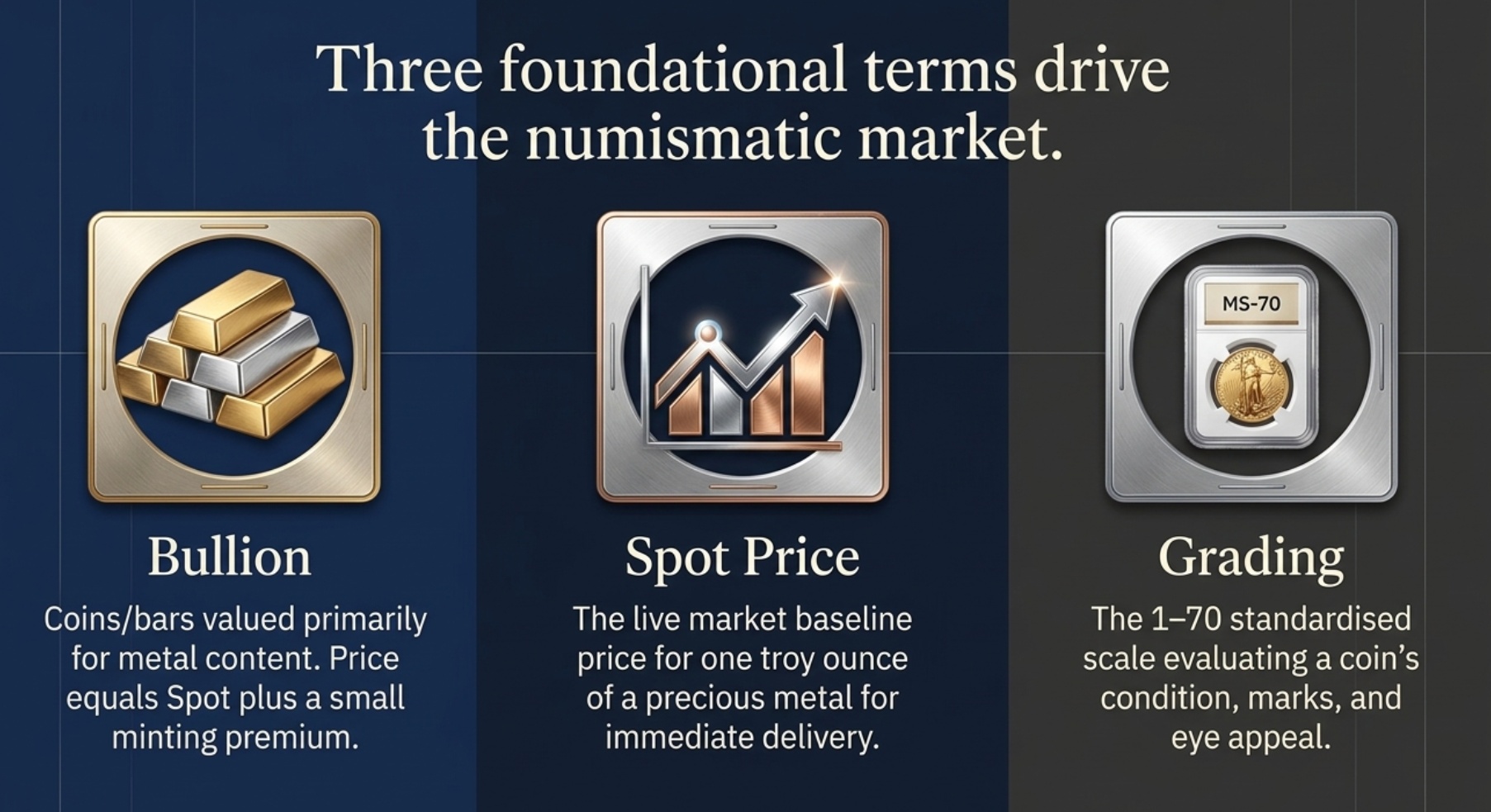
Bullion refers to coins, bars, or rounds made primarily for their metal content, not for their rarity or collector appeal. The price is tied closely to the current spot price of gold, silver, or other metals, plus a small premium for minting and distribution.
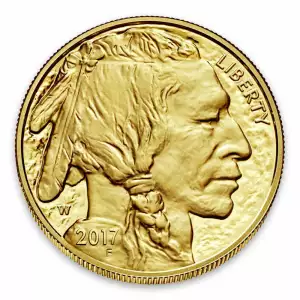
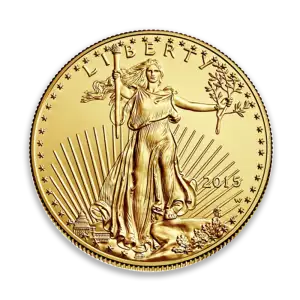
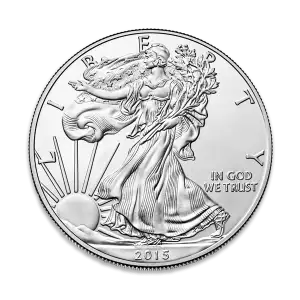
Typical bullion examples: American Gold Eagles, 1 oz silver rounds, and standard gold or silver bars.
What Is Coin Grading?
Grading is the process of evaluating a coin’s condition and assigning it a grade on a standardized scale, usually from 1 to 70. Higher grades mean fewer marks and better eye appeal, and they often command higher prices, especially for collectible coins.
Professional grading services (like PCGS or NGC) also authenticate coins and seal them in protective holders.
What Is Spot Price?
Spot price is the live market price for one troy ounce of a precious metal like gold or silver for immediate delivery. Dealers use spot price as the baseline when they set buy and sell prices for bullion products, adjusting up or down based on product type, brand, and demand.
1. Know Your Goal Before You Walk In
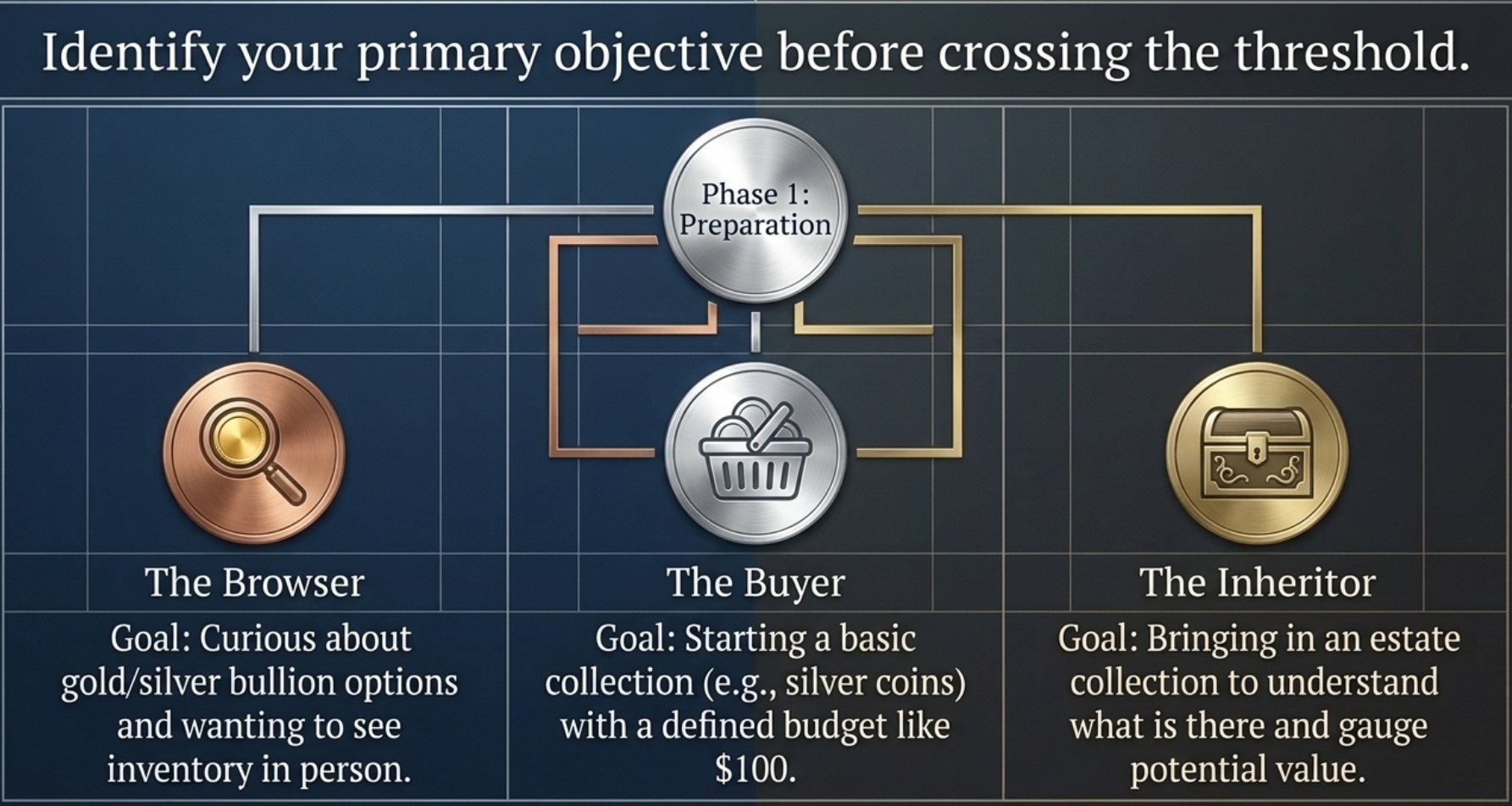
Before your first time visiting a coin shop in Phoenix or Peoria, decide what you want from the visit. This helps the staff understand how to guide you and makes the experience less overwhelming.
Examples of clear goals:
- “I’d like to start a basic silver coin collection with about $100 today.”
- “I inherited these coins and want to know what I have and what they might be worth.”
- “I’m curious about gold and silver bullion and want to see options in person.”
2. Do a Little Homework (But Don’t Overthink It)
You don’t need to be an expert on your first visit, but a small amount of prep goes a long way.
Suggested pre-visit reading:
- A “Bullion vs. Numismatic Coins” article to understand what you’re looking at in the cases.
- A “Coin Grading Guide for Beginners” so you know why condition and grading matter.
- A “What Do Mint Marks Mean” guide so basic labels make sense.
- For a deeper dive, many Phoenix & Peoria beginners start with a guide to affordable starter coins.
Aim for 20–30 minutes of reading; the rest you can (and should) ask about in the shop.
3. What to Bring When You Visit a Coin Dealer for the First Time
If You Are Buying…
If you’re going mainly to buy:
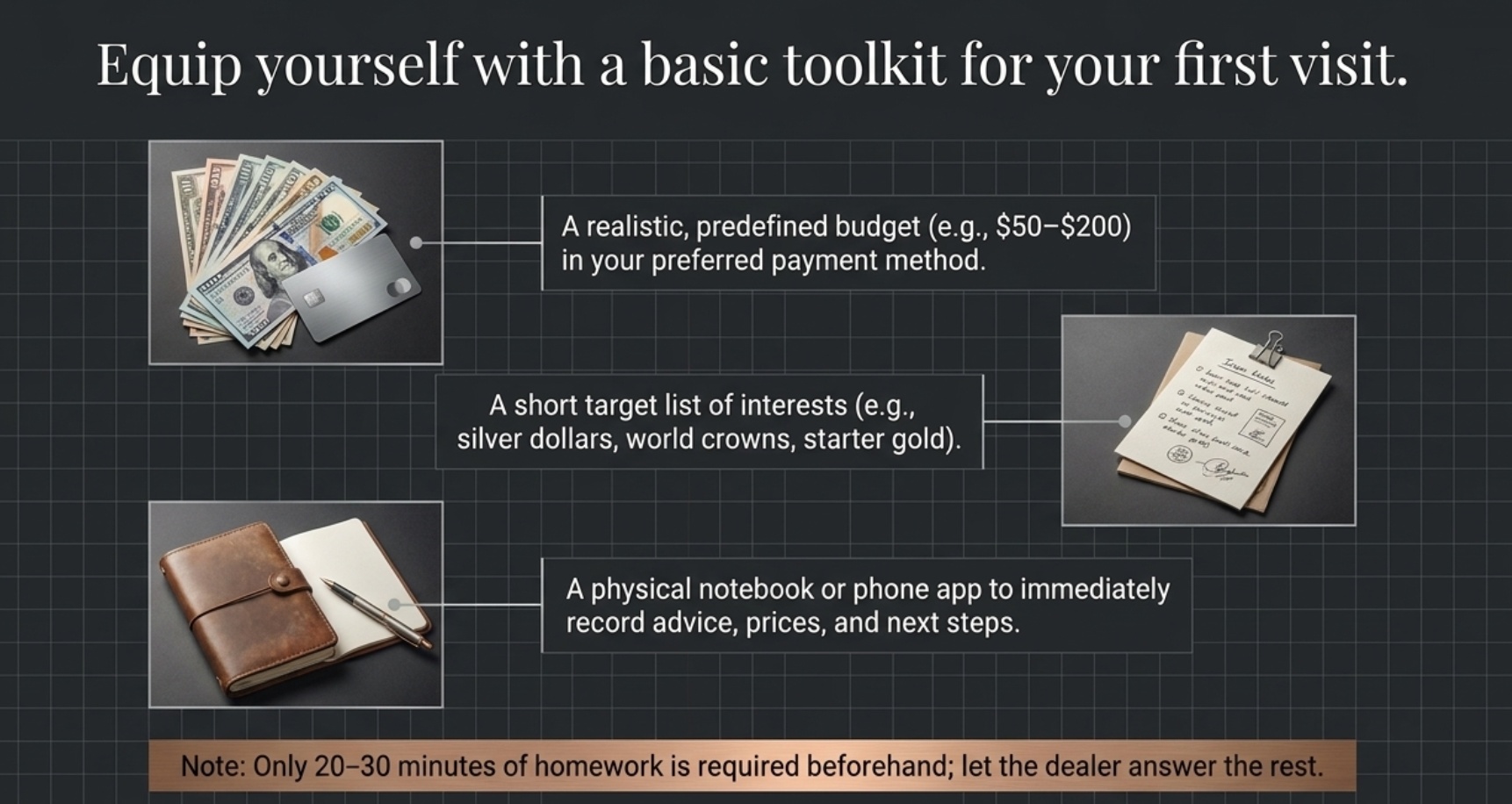
- A realistic budget (for example, 50–200 dollars) in your preferred payment method.
- A short list of interests: “silver dollars,” “world crowns,” “starter gold coin,” etc.
- A small notebook or phone notes to record advice, prices, and next-step ideas.
If You Inherited Coins…
If you inherited coins and aren’t sure what you have:
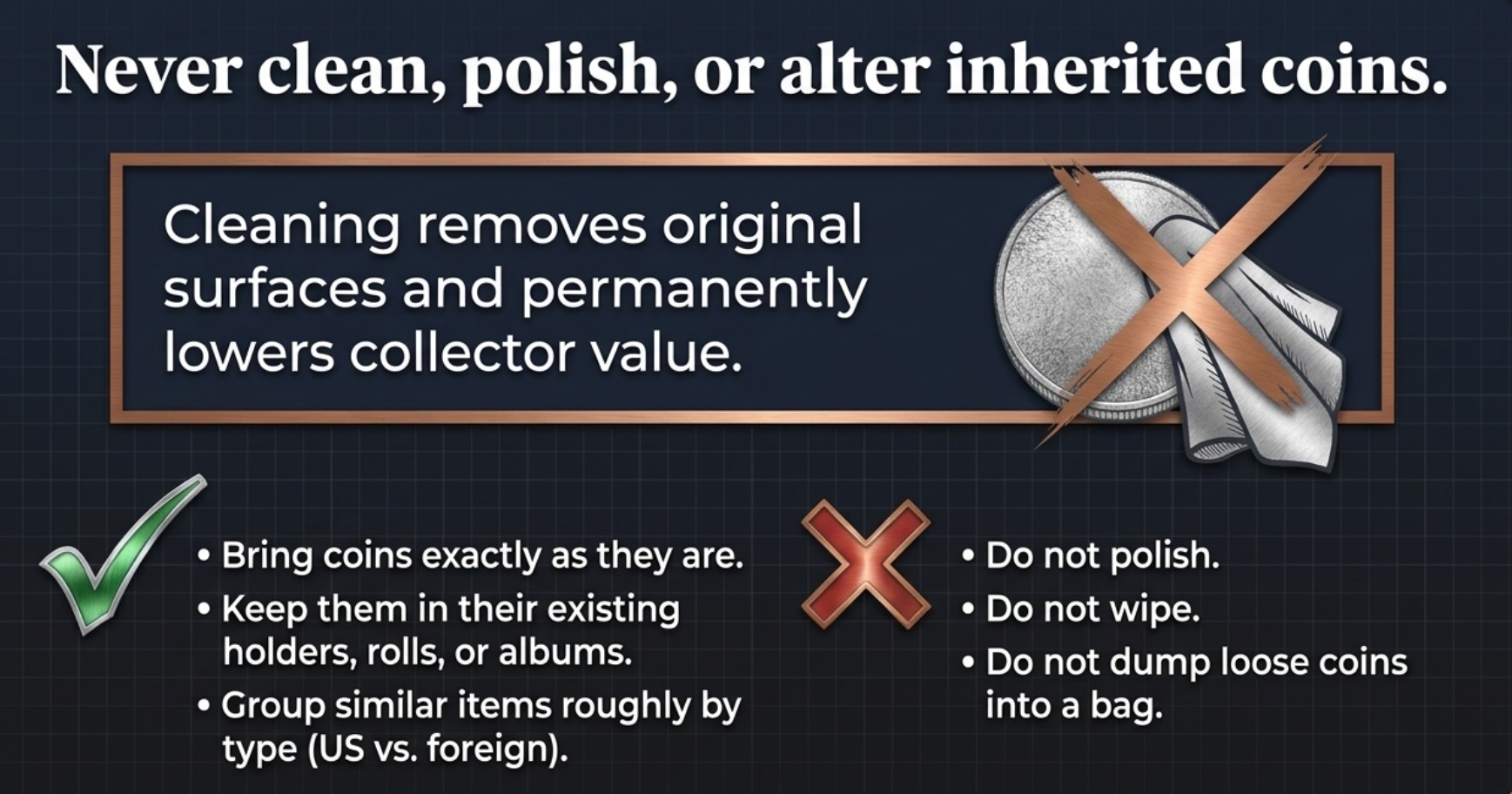
- Bring the coins as they are—do not clean or polish them.
- Keep coins in their existing holders, rolls, or albums rather than dumping them into a bag.
- Group similar items (for example, US coins together, foreign coins together) to make it easier for the dealer to give you a quick overview.
4. How to Act When You Are New to Coin Collecting
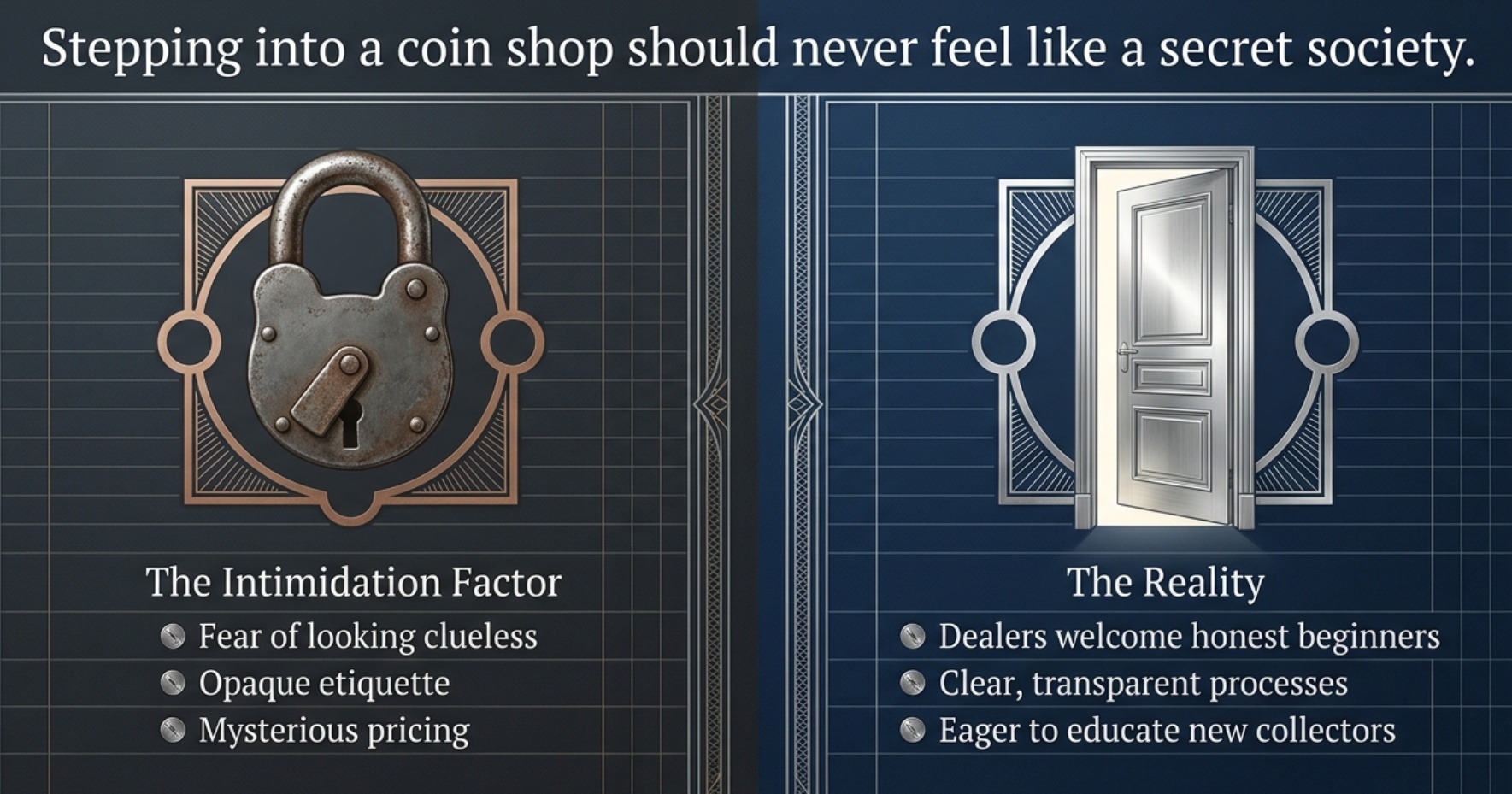
New collectors often worry about “looking clueless,” but most dealers are used to helping beginners and appreciate honesty.
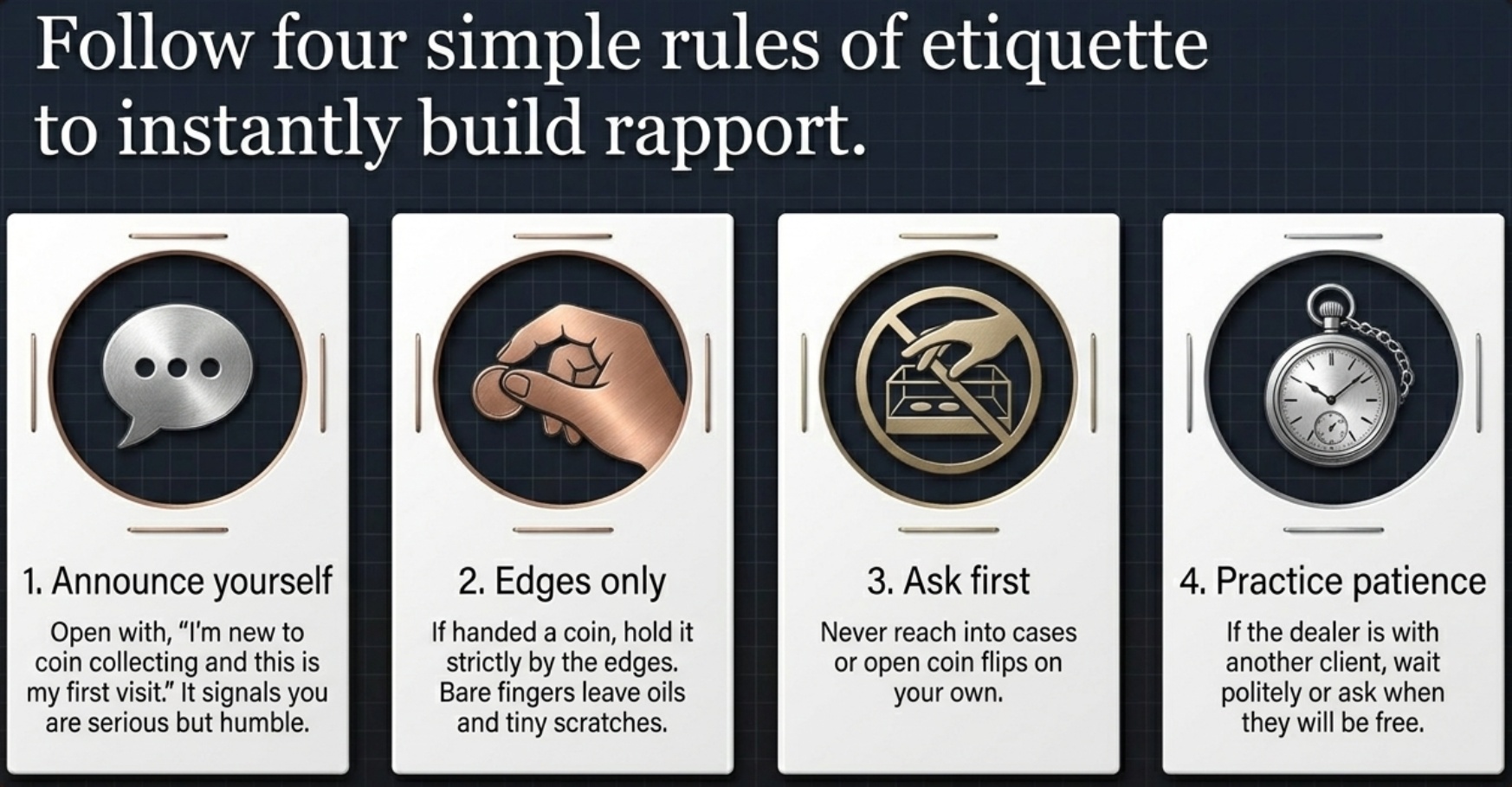
Basic coin shop etiquette:
- Tell the staff it’s your first time visiting a coin shop in Phoenix or Peoria.
- Ask before handling anything; never reach into cases or open flips on your own.
- Hold coins only by the edge if the dealer hands them to you.
- Be patient; if they’re helping another customer, wait politely or ask when they’ll be free.
A simple opener like “I’m new to coin collecting and this is my first visit—can you show me where to start?” signals that you’re serious but humble.
5. Questions to Ask at a Coin Shop on Your First Visit
Having a few questions ready helps you learn faster and build trust.
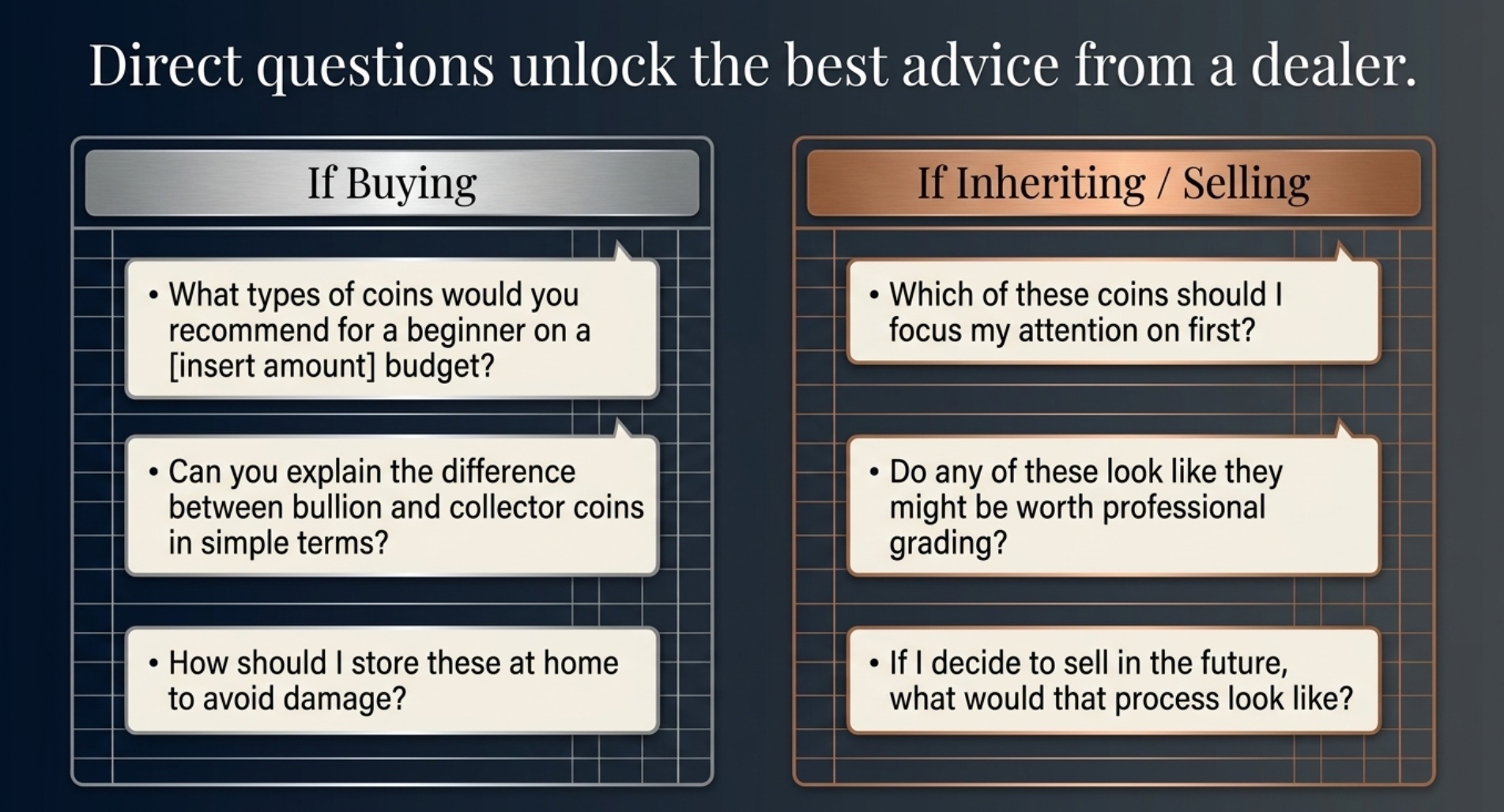
Good questions if you’re looking to buy:
- “What types of coins would you recommend for a beginner on a $X budget?”
- “Can you explain the difference between bullion and collector coins in simple terms?”
- “How should I store coins at home to avoid damage?”
Good questions if you brought coins in:
- “Which of these coins should I focus on first?”
- “Do any of these look like they might be worth grading?”
- “If I decide to sell in the future, what would that process look like?”
6. Common Beginner Mistakes at Coin Shops (and How to Avoid Them)
Common Mistakes Table
| Mistake | Why it’s a problem | How to avoid it |
|---|---|---|
| Cleaning coins before visiting | Removes original surfaces, often lowers value | Never clean coins; let the dealer see them as-is |
| Handling coin surfaces with bare fingers | Oils and tiny scratches can permanently damage coins | Hold coins only by the edge; ask for a demonstration |
| Buying random coins with no plan | Leads to a scattered, unsatisfying collection | Start with a simple goal or series and a clear budget |
| Being afraid to ask basic questions | Slows learning and increases risk of overpaying or mis-buying | Tell the dealer you’re new and ask the questions you’re thinking |
| Focusing only on “cheapest” coins | Cheap coins can be poor quality or poor fit for your goals | Balance price with quality, relevance, and advice from the dealer |
These mistakes are common, but they’re easy to avoid when you go in with a plan and use your first visit as a learning opportunity.
7. What New Coin Collectors Should Know About Pricing
Pricing can feel mysterious at first, but there are clear patterns you can understand quickly.
Simple Pricing Overview
| Type of item | Main pricing driver | What to watch as a beginner |
|---|---|---|
| Bullion coins/bars | Spot price + product premium | How far the buy/sell prices are from spot |
| Common collector coins | Grade, demand, recent sales | Condition and whether the series is popular |
| Key-date/rare coins | Rarity + grade + market demand | Ask the dealer to explain why a specific coin is priced higher |
For bullion, expect prices to move as the gold and silver markets move; for collectible coins, expect more variation based on condition, series, and current demand. As a new collector, prioritize understanding the “why” behind prices rather than chasing the cheapest tags.
8. What Happens at a Coin Shop on Your First Visit?
When you wonder “what happens at a coin shop?” on your first visit, the answer is usually: less drama and more conversation than you might think.
A typical first visit in Phoenix or Peoria might include:
- A friendly greeting and a quick question about how the shop can help you.
- A short conversation about your goals, budget, or the coins you brought in.
- A guided look at cases or a quick preliminary review of your coins on the counter.
- Some basic education: explaining terms, pricing, and next steps.
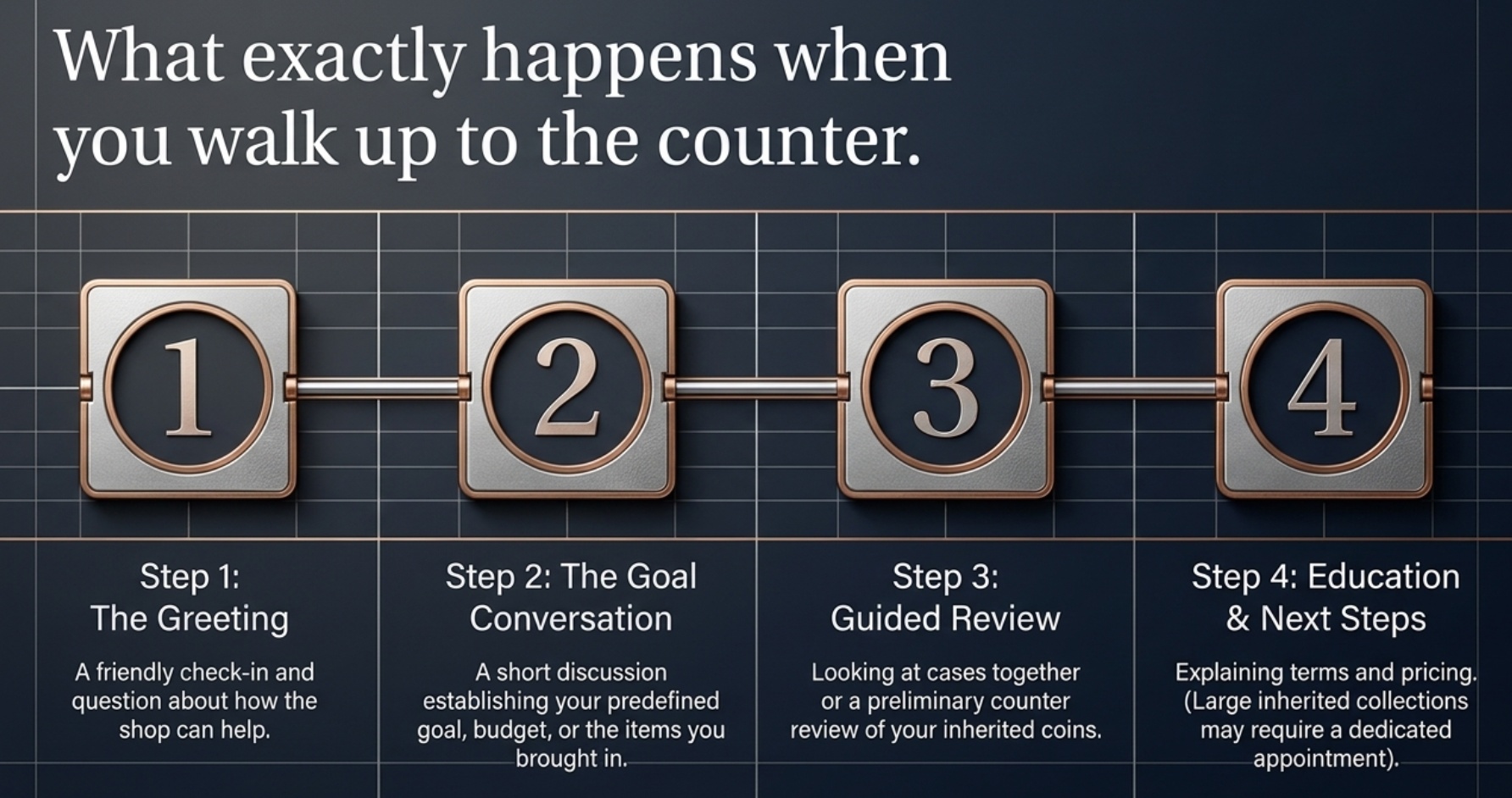
For larger inherited collections, expect the dealer to suggest setting aside more time, possibly with an appointment, to go through everything properly.
9. Is a Coin Dealer Trustworthy? How to Build a Relationship
Coin collecting works best when you have a trustworthy local coin dealer you can return to over time.
Signs a coin dealer is trustworthy:
- A permanent, professional shop with clear contact details.
- Consistently good reviews and word-of-mouth.
- Willingness to explain prices, grades, and their buying/selling process.
To build a relationship with a local coin dealer:
- Visit periodically, not just once.
- Be honest about your level of experience and your budget.
- Communicate what you’re collecting so they can keep an eye out for you.
- Use tools like a “send us your want list” option if the shop provides one.
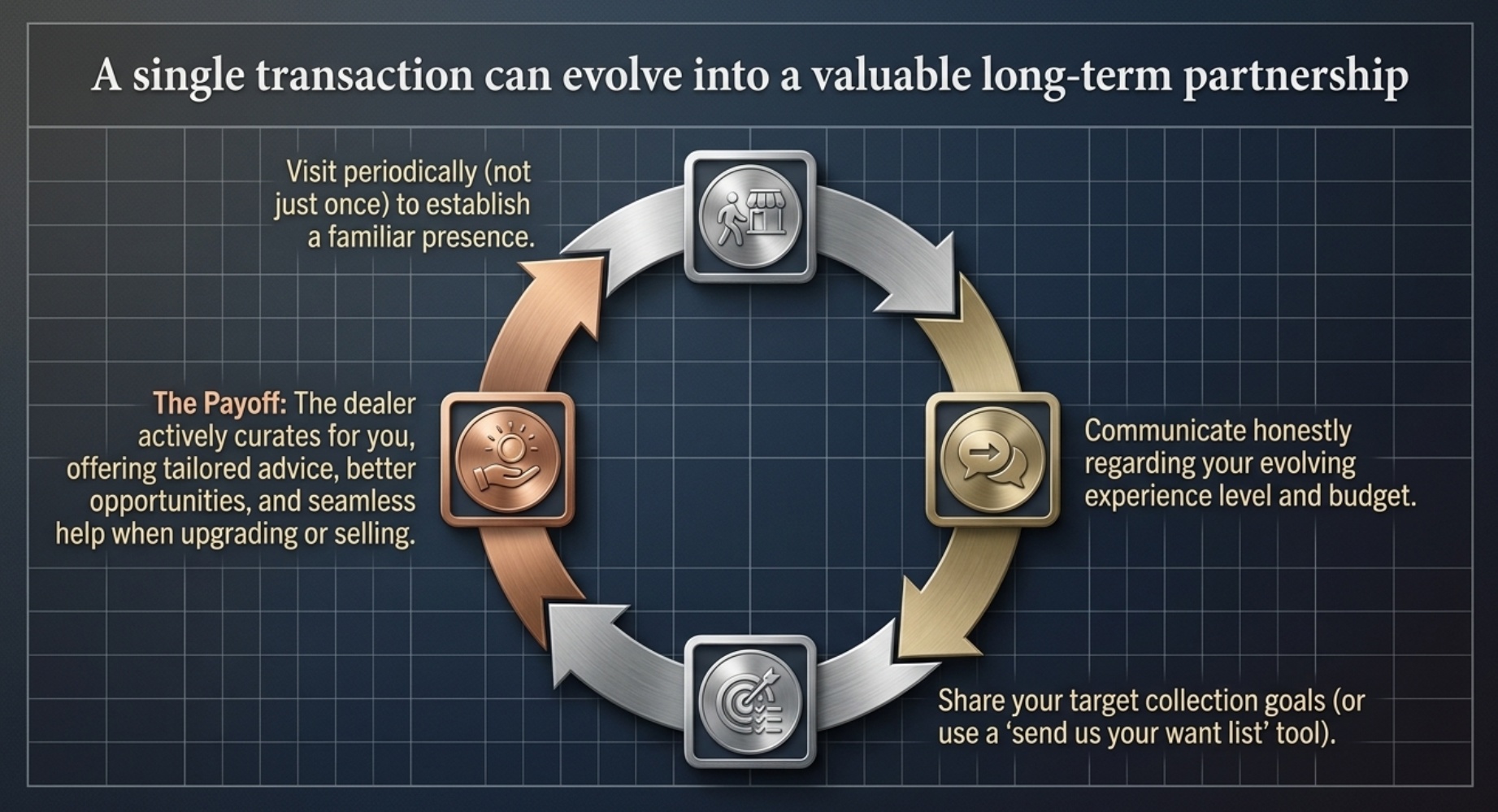
Over time, this relationship can lead to better opportunities, tailored advice, and help when you’re ready to sell or upgrade your collection.
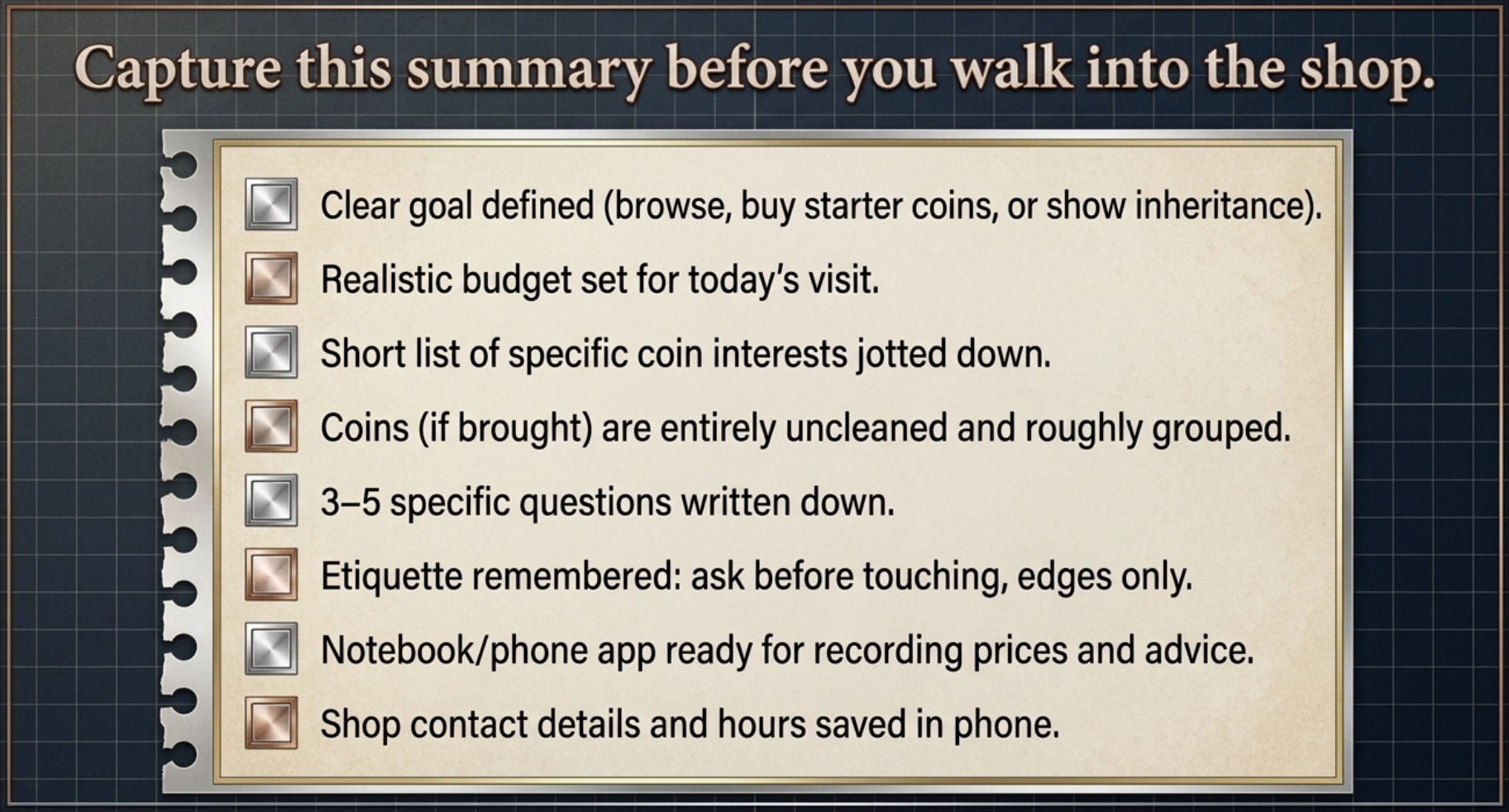
10. Phoenix & Peoria Coin Collectors’ Checklist (Bring This on Your First Visit)
Here’s your quick, printable checklist for your first shop visit:
- Clear goal: browse, buy starter coins, or show an inheritance.
- Budget: how much you’re comfortable spending today.
- Interests: a short list (US type coins, silver bullion, world coins, etc.).
- Coins (if any): brought as-is, not cleaned, grouped roughly by type.
- Questions: 3–5 written down so you don’t forget under pressure.
- Etiquette reminder: ask before touching, hold coins by the edge only.
- Notes: notebook or phone app to record advice and prices.
- Contact details: shop address, phone, and hours saved in your phone.
FAQ: First Time Visiting a Coin Shop in Phoenix & Peoria
What should I bring the first time I visit a coin shop in Phoenix or Peoria?
Bring a realistic budget, any coins you want the dealer to see (in their original holders, not cleaned), and a short list of questions or interests. A notebook or notes app helps you remember advice and prices later.
How should I act when I’m new to coin collecting and visiting a dealer for the first time?
Be honest that you’re new, ask before handling coins, and hold coins only by the edge if the dealer hands them to you. Stay polite, listen carefully, and treat the visit as a learning opportunity.
What are good questions to ask at a coin shop on my first visit?
Ask what they recommend for a beginner on your budget, the difference between bullion and collector coins, and how to store coins safely. If you bring coins in, ask which pieces matter most and whether any might be worth grading or special storage.
What are the most common beginner mistakes at coin shops, and how can I avoid them?
Beginners often clean coins before visiting, handle coin surfaces with bare fingers, and buy random coins without a plan. Avoid these by leaving coins uncleaned, handling only by the edge, and starting with a simple collecting goal and budget.
Do I need an appointment for my first visit to a local coin dealer?
Most shops welcome walk-ins for small visits and questions. For large inherited collections or detailed appraisals, it’s smart to call ahead or use the shop’s contact form so they can schedule enough time to focus on you.
Can I bring an inherited collection to a coin dealer even if I know nothing about it?
Yes. Dealers regularly help people with inherited coins who are brand-new to collecting. Bring everything as you found it, without cleaning, and let the dealer give you a first overview and suggestions for next steps.
How do I start building a good relationship with a local coin dealer?
Show up prepared and respectful, be open about your goals and budget, and visit regularly instead of only once. Let the dealer make a fair profit, communicate what you’re collecting, and consider sharing a written want list so they can watch for coins you’ll like.
If you’re a new coin collector in Phoenix or Peoria, your best next step is simple: take this checklist, choose a trusted local coin shop, and let your first visit be the start of a long, enjoyable collecting journey.