Coin Appraisals & Gold Buyers Explained
What is a coin appraisal? A coin appraisal is a professional evaluation of coins, bullion, or related items to estimate their market or replacement value based on metal content, condition, rarity, and current demand.
Where is it done? Appraisals are typically performed by experienced coin dealers or appraisers in coin shops, bullion dealers’ offices, or occasionally at shows and events, usually in a controlled, well-lit setting.
How is price determined? Appraisers look at factors such as gold and silver spot prices, numismatic (collector) value, grading standards, and recent sales data, then apply a consistent process to arrive at a fair market value and, if requested, a purchase offer.
Quick Answer: How Coin Appraisals and Gold Buying Usually Work
In general, coin appraisal services start with a visual inspection, sorting, and identification of coins or bullion, followed by research into pricing guides, spot prices, and recent sales. Most coin dealers then share a market-based value range and, if they are buying, a clear offer for what they would pay today. The process is usually straightforward and can often be completed in a single visit for typical collections.
What “Coin Appraisal” Actually Means
Most coin dealers distinguish between quick market-value appraisals for potential sellers and formal written appraisals for insurance or estate purposes. Understanding the difference helps you ask for the right service and avoid surprises on fees, detail level, and documentation.
Complimentary Market-Value Appraisals
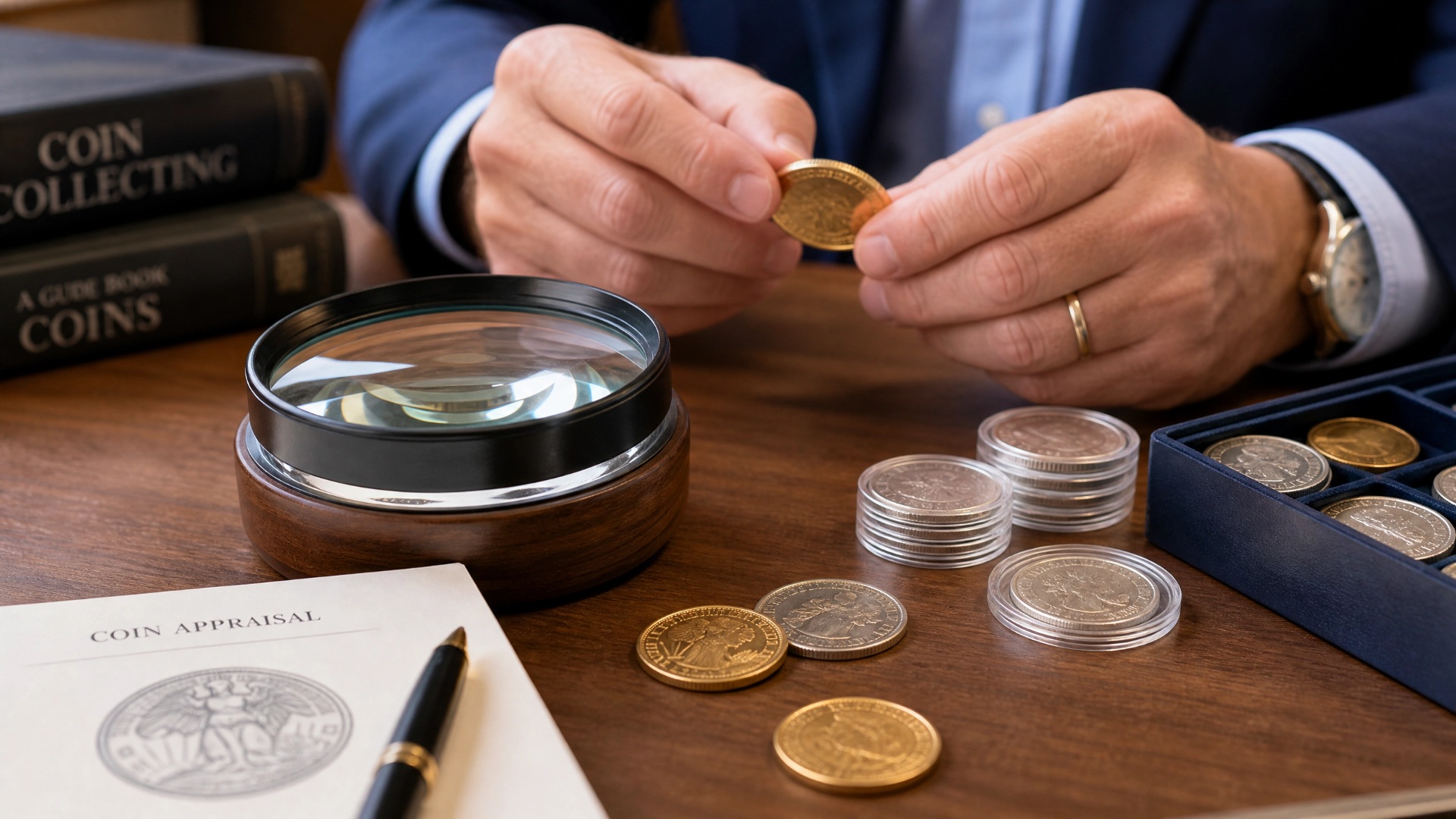
Complimentary appraisals are informal evaluations meant to answer “What is this worth today, and what would you pay for it?” They typically involve a dealer reviewing your coins at the counter, explaining what you have, and offering a realistic purchase price based on current market conditions. There is usually no charge for this type of appraisal when you are considering selling.
Formal Insurance and Estate Appraisals
Formal appraisals are written reports used for insurance, legal, or estate purposes. These documents describe each item, note condition and key attributes, and assign a value supported by market data and reference sources. Because they require more time and research, most appraisers charge a fee, either hourly or per collection, and the resulting report can be submitted to insurers or attorneys as needed.
Who Performs Coin Appraisals? (Experience & Process)
Quality coin appraisals are usually carried out by specialists with years of experience in numismatics and precious metals. Many professional appraisers have handled thousands of collections, are familiar with PCGS/NGC standards, and stay current with bullion prices and collector markets.
Typical Appraisal Process (Step by Step)
While details vary, most coin dealers follow a similar formal process:
- Intake: record basic information about the owner and collection, and clarify whether the goal is selling, insuring, or settling an estate.
- Sorting & identification: separate bullion from numismatic material, group coins by country, denomination, and potential value tiers.
- Grading & evaluation: assess condition using standard grading scales, note key dates/varieties, and identify coins that may benefit from third-party grading.
- Valuation: reference recent auction results, price guides, and spot prices to establish fair market or replacement values.
- Reporting & offer: share findings verbally for quick appraisals or in a written report for formal appraisals, and, if relevant, provide a purchase offer based on market value minus a reasonable dealer margin.
How Coin Appraisals Differ from Coin Grading
In general, coin grading and coin appraisal are related but distinct concepts. Grading focuses on a coin’s condition, while appraisal brings together grade, rarity, and market data to estimate value.
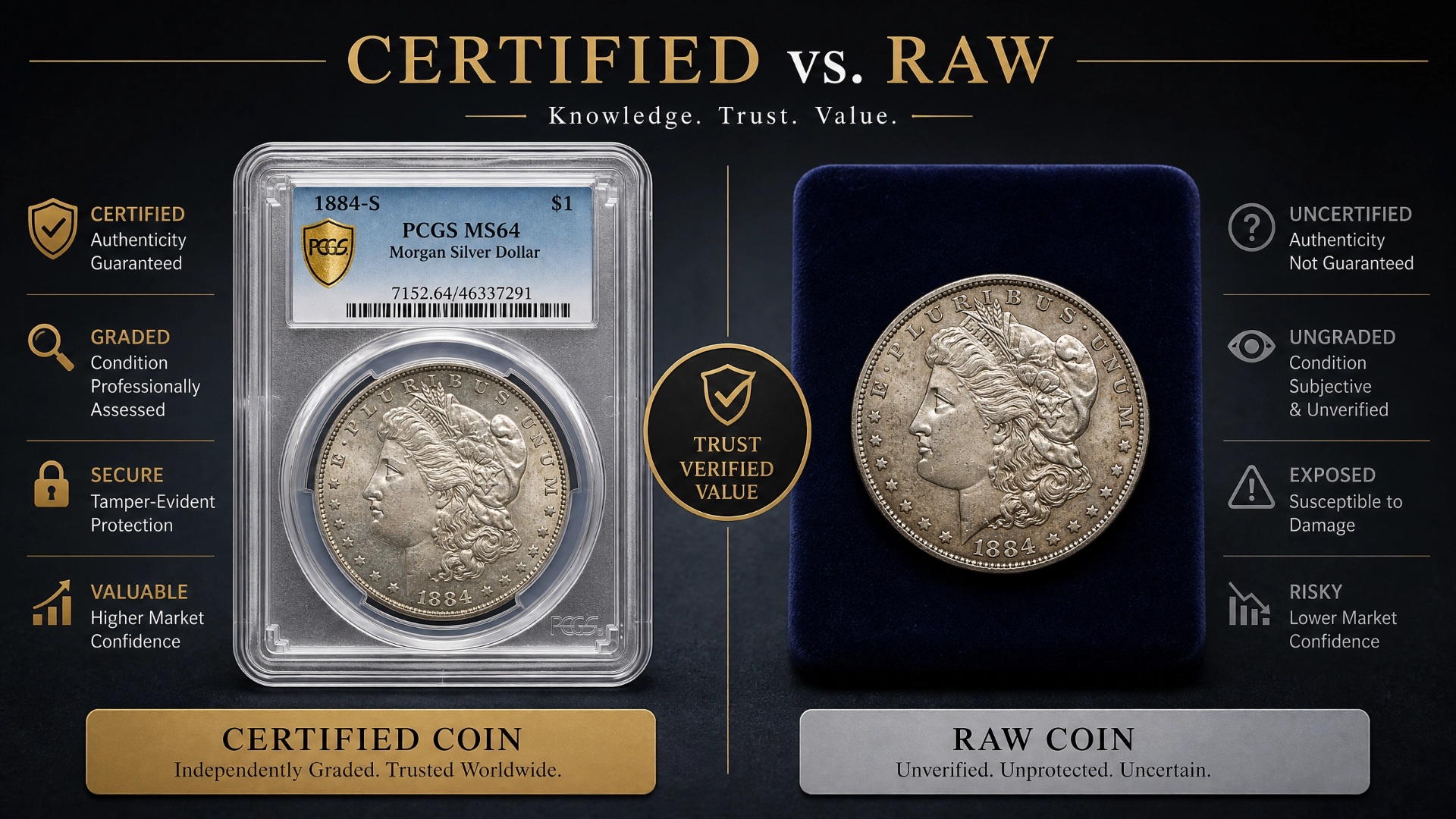
Coin grading basics: Professional services like PCGS and NGC assign grades on a 1–70 scale using detailed criteria for wear, luster, and eye appeal. A higher grade on the same coin type often translates into a significantly higher market value. Dealers and appraisers frequently reference PCGS/NGC standards, and may recommend submitting certain coins for certification if the potential value justifies the cost.
Appraisal vs grading: A dealer can appraise coins without having them graded, but grading can give additional confidence and liquidity for higher-end pieces. Appraisals factor in both certified and uncertified coins, using their best professional judgment about likely grade ranges.
Numismatic vs Bullion Value (and Why It Matters)
Most coin dealers distinguish between bullion value and numismatic value when appraising coins. Understanding this distinction helps you avoid the mistake of treating everything as scrap metal.
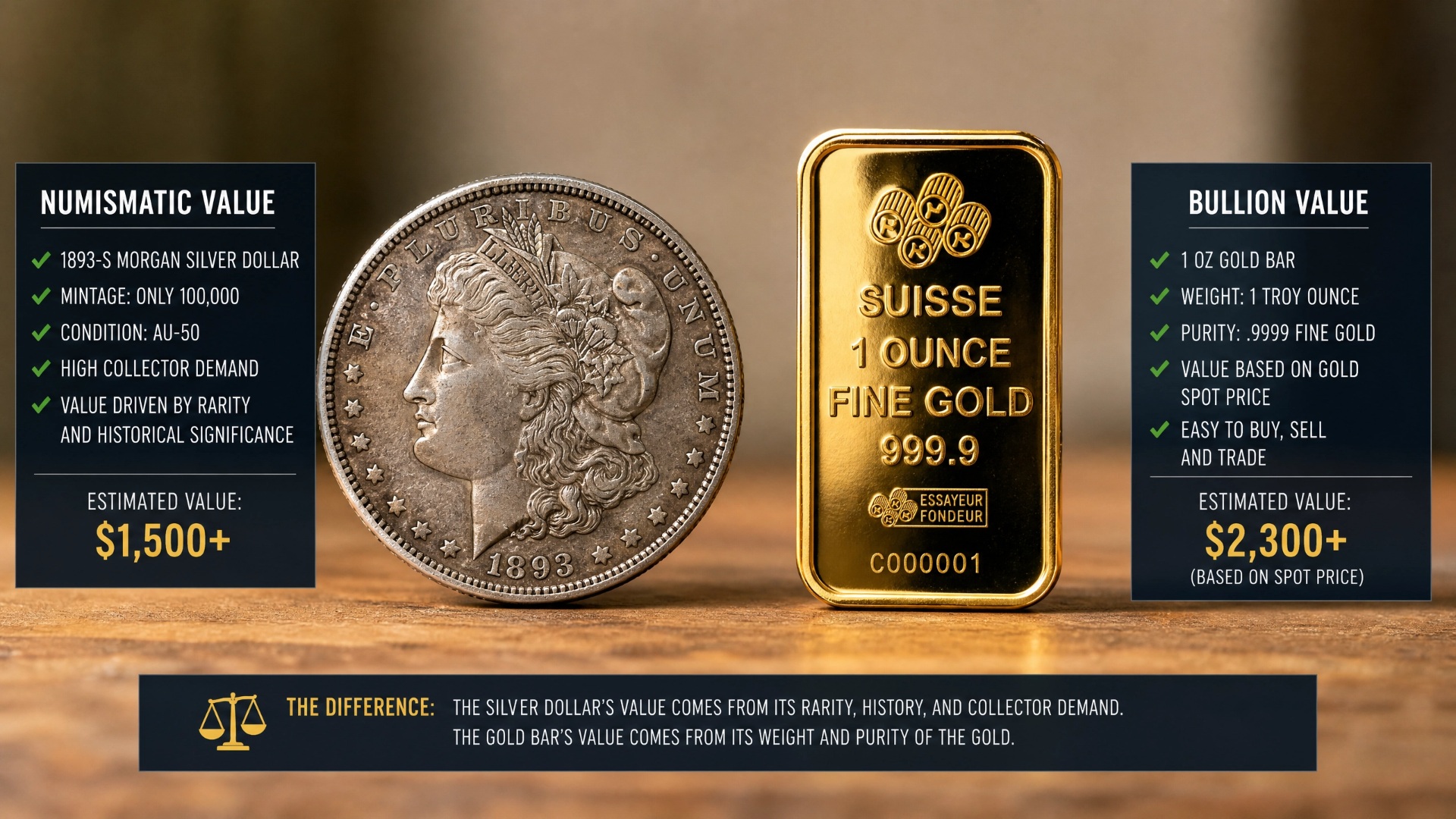
Numismatic vs Bullion – Definition Box
Bullion value: The value of a coin or bar based primarily on its precious metal content and spot price, with only a modest premium for brand or form.
In practice, bullion coins and bars are priced close to the underlying gold or silver spot price plus a small premium, while numismatic coins can sell for multiples of their melt value if they have the right combination of date, mintmark, and grade. A thorough appraisal ensures that coins with numismatic potential are not accidentally sold at bullion-only prices.
How Spot Price Affects Coin and Gold Appraisals
Spot price is the backbone of most appraisals involving gold and silver. It represents the current market price per troy ounce for immediate delivery and moves throughout the trading day.
When appraising bullion coins, bars, and many jewelry items, appraisers often calculate:
- Metal weight × purity × current spot price = intrinsic metal value.
- Adjustments for brand, form, and market demand (premiums or discounts).
For numismatic coins, spot price is still a factor, but catalog prices, auction records, and collector demand often play a larger role, especially for higher-grade or scarce items.
What Happens During a Typical Coin Appraisal Visit
Most coin appraisal visits follow a predictable pattern: intake, examination, explanation, and, when relevant, an offer. Knowing what to expect can make the process more comfortable, especially on a first visit.
Step-by-Step: From Arrival to Value Discussion
A typical process looks like this:
- You bring your coins, bullion, or jewelry in their existing holders, boxes, or albums.
- The appraiser asks about your goals—selling, insuring, or simply understanding what you have.
- Items are sorted and examined in a secure, well-lit area; better pieces are set aside for closer inspection.
- Using grading standards, price guides, and spot prices, the appraiser estimates market value.
- You receive a verbal summary for quick appraisals, or a written report for formal appraisals, along with an optional purchase offer.
At any point, you can ask questions, take notes, or decide to keep some or all items.
Common Mistakes People Make with Coin Appraisals and Gold Sales
Certain mistakes show up again and again when people bring coins and gold for appraisal. Avoiding them can protect both value and peace of mind.
| Mistake | Why it’s a problem | Better approach |
|---|---|---|
| Cleaning coins before appraisal | Scrubbing or polishing removes original surfaces and can sharply reduce numismatic value. | Leave coins as found; let the appraiser see them in original condition. |
| Selling without any appraisal | Accepting a quick cash offer without evaluation can mean giving up scarce coins at bullion-only prices. | Get at least a basic appraisal from a coin specialist before selling. |
| Ignoring numismatic value | Treating everything as scrap metal risks underpricing older or scarcer pieces. | Ask explicitly whether any items have collector value beyond melt. |
| Using only one type of buyer | Going straight to a pawn shop or random gold buyer may limit options and reduce offers. | Include at least one established coin dealer in your quote process. |
| Failing to group or list items | Loose, mixed bags slow evaluation and increase the chance of overlooking key coins. | Roughly sort items by type and bring a simple list if possible. |
Pawn Shop vs Coin Dealer vs Online Buyer
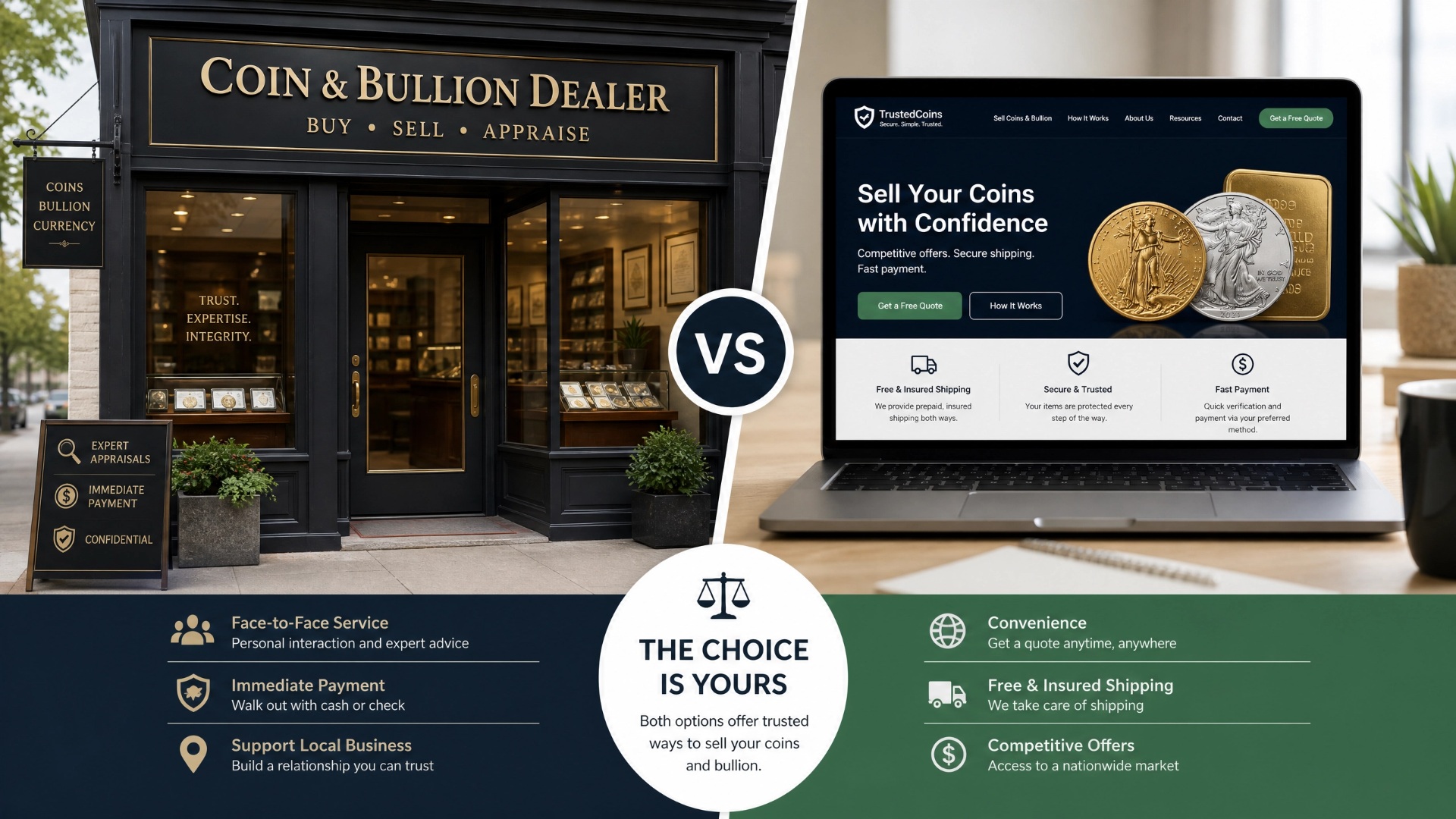
When looking to sell gold coins or get a coin appraisal, most people end up choosing between a pawn shop, a specialist coin dealer, or an online buyer. Each option has strengths and trade-offs.
| Buyer type | Pros | Cons | Best suited for |
|---|---|---|---|
| Pawn shop | Fast cash, plentiful locations, accepts a wide variety of items. | Often focuses on melt value, limited numismatic expertise, lower offers are common. | Small, common items when speed matters more than maximizing price. |
| Coin dealer | Specialized knowledge of coins and bullion, considers collector value, transparent price discussions. | May take longer for larger collections, usually pays below retail to allow for resale margin. | Coins, bullion, and collections where fair market value and expertise are important. |
| Online buyer | Convenient quotes, access to national markets, sometimes competitive bids for certain items. | Requires shipping valuables, less personal interaction, slower if communications or payments lag. | Items easily shipped and insured, sellers comfortable with mail-in processes. |
Many sellers find that discussing offers with at least one local coin dealer and, optionally, checking an online buyer gives a good perspective on value before deciding.
What to Bring When You Visit a Coin Appraisal or Gold Buying Desk
A little preparation goes a long way. Most dealers recommend bringing items as found, plus any relevant paperwork.
If You Are Bringing Coins or Bullion
- Bring coins and bars in their current holders, flips, albums, or tubes without cleaning or altering them.
- Roughly separate bullion from obvious collectible material if you can, but do not worry about perfect sorting.
- Take photos or make a simple list beforehand if the collection is large, especially for insurance or estate appraisals.
If You Are Bringing Jewelry or Other Precious Items
- Bring all items you are considering appraising or selling, even if you are unsure about metal content.
- Include any previous appraisals, receipts, or certifications; these can help confirm details and speed the process.
- Bring appropriate identification if you might sell, as many jurisdictions require it for precious metal transactions.
How to Evaluate Whether a Gold Buyer or Coin Dealer Is Trustworthy
Most coin dealers agree on a few basic signs of a reputable buyer: transparent processes, consistent presence, and positive community feedback.
Basic Trust Signals
- A stable, permanent location with posted hours and clear contact details.
- A professional website that explains services, background, and policies.
- Reviews that reference fair prices, respectful treatment, and clear explanations, not just “fast cash.”
Simple Questions to Ask
- “How do you determine your offers for coins and gold?”
- “Do you consider numismatic value, or only metal content?”
- “Can you provide a written appraisal if I need one for insurance?”
Clear, confident answers to these questions signal a professional operation. Evasive or high‑pressure responses are warning signs that you may want to look elsewhere.
FAQ: Coin Appraisals and Gold Buying
How do I get a coin appraisal?
Most people start by contacting a local coin dealer or appraiser and explaining what they have and why they want an appraisal. You then bring the items in, the appraiser examines them using grading standards and market data, and you receive a value estimate and, if appropriate, a purchase offer.
Do coin dealers offer free appraisals?
Many dealers offer complimentary, verbal market‑value appraisals when you are considering selling, which include a rough estimate and possible offer. More detailed, written appraisals for insurance or estates typically involve a fee to cover the additional research and documentation required.
What types of gold and coins do typical buyers purchase?
Most buyers handle gold bullion coins, silver coins, gold and silver bars, common and collectible US and world coins, and gold jewelry. Some also deal in paper money and select collectibles; it’s best to ask in advance if you have unusual items.
How can I tell if the price I’m offered is fair?
A fair offer is usually grounded in current spot prices, recognized price guides, and an honest assessment of condition and demand. Clear explanations, consistent reputation, and, if needed, a second opinion from another dealer or buyer can help confirm that the offer is reasonable.
Do I need an appointment for a coin appraisal?
Small groups of coins or jewelry can often be evaluated on a walk‑in basis, especially during less busy hours. For very large collections or formal written appraisals, scheduling an appointment is recommended to ensure the appraiser can dedicate enough uninterrupted time.
Can inherited coin collections and old gold jewelry be appraised together?
Yes. Appraisers commonly evaluate mixed collections that include coins, bullion, and jewelry. They separate items into categories, identify pieces with significant collector value, and help you decide which items to keep, insure, or sell based on your goals.
What’s the difference between a quick appraisal and a full insurance appraisal?
A quick appraisal is generally a verbal estimate focused on current market value and an optional purchase offer, useful when you may want to sell. A full insurance appraisal is a written document with detailed descriptions and justified values meant for insurers or legal purposes, and it requires more time and formal research.
If you are thinking about selling coins or gold - or simply want to understand what your collection is worth - the most effective next step is to gather your items in their current condition, review a short checklist of what to expect, and consult an experienced coin dealer who can walk you through an appraisal and answer your questions clearly and calmly.