Third‑party certification can increase the value and marketability of the right coins from the US and around the world, but it is not automatically worth it for every piece. The key is knowing when coin grading is worth it and when you should skip the fees and keep or sell your coins as‑is.
What Coin Certification Actually Means (US and World Coins)
Coin certification is when an independent grading company authenticates your coin, assigns it a standardized grade, and seals it in a protective holder that the global market recognizes and trusts.
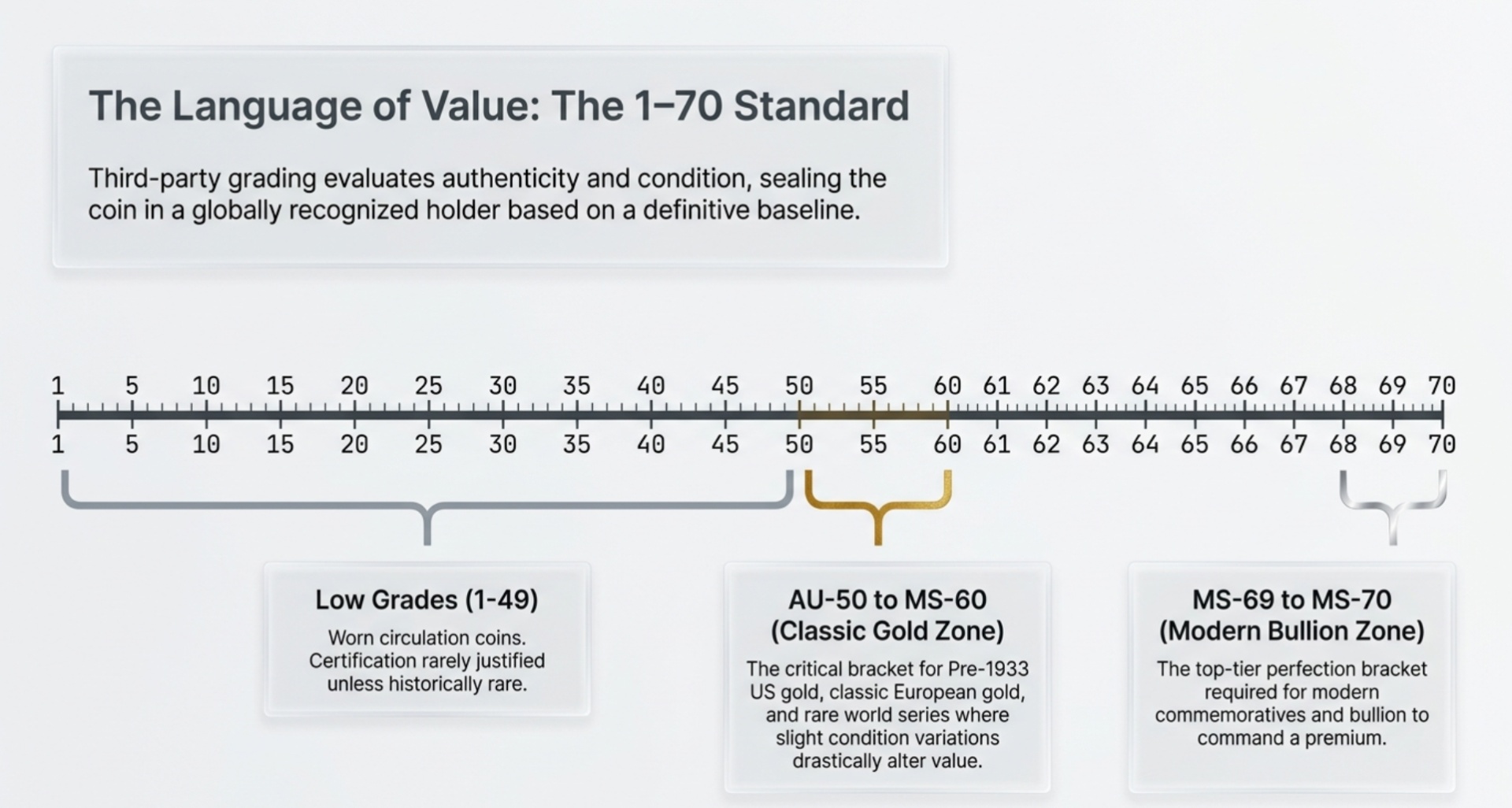
Third‑party grading is when an independent company like PCGS, NGC, or similar services evaluates your coin’s authenticity, condition, and overall eye appeal, then assigns it a grade on a 1–70 scale (Sheldon scale). This process is used for US coins, ancient coins, world coins, and many popular bullion and commemorative issues.
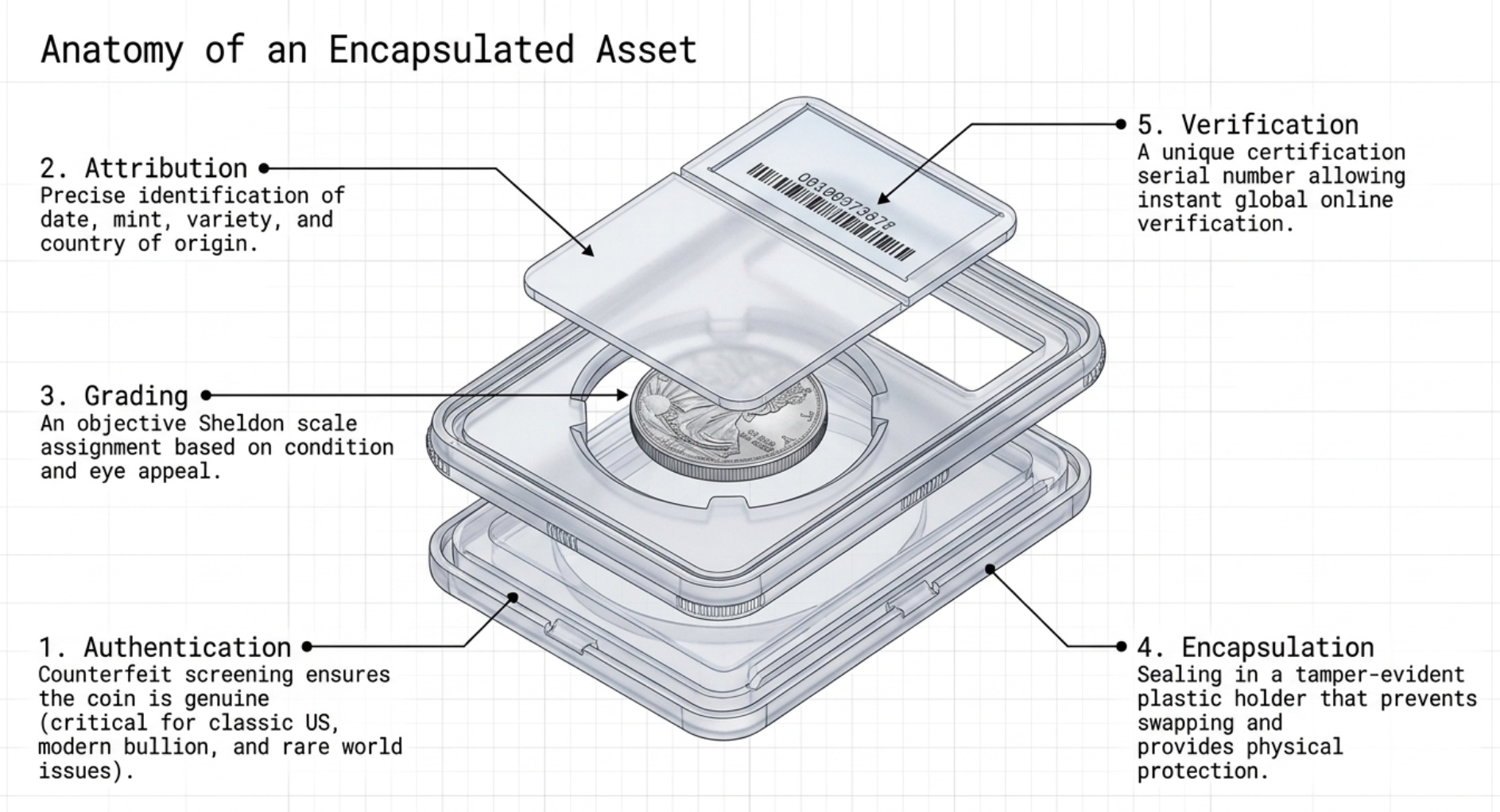
After grading, the company encapsulates the coin in a tamper‑evident plastic holder (a “slab”) with a label showing the grade, description, and a unique certification number you can verify online. Certified coins have that third‑party opinion attached; uncertified (“raw”) coins are sold in flips, capsules, rolls, albums, or loose, without a formal grade.
If you’re new to grading, this section should internally link to your beginner guide to coin grading (for example, a “Coin Grading Guide for Beginners” blog post).
Checklist: What certification usually includes
- Authentication (is the coin genuine?).
- Grading on a 1–70 scale.
- Attribution (date, mint, variety, country).
- Encapsulation in a labeled slab.
- Online verification via cert number.
Certified vs Raw Coins: What’s the Real Difference?
Certified coins offer verified authenticity and standardized grading, while raw coins require the buyer to trust the seller’s judgment and accept more risk—especially important when you’re deciding if you should grade coins before selling.
Certified coins typically offer:
- Recognized grade: Buyers and sellers across the world speak the same language when they see MS‑65, AU‑50, or PF‑69 from PCGS/NGC or similar services.
- Verified authenticity: The grading process includes counterfeit screening, which is crucial for US classic coins, modern bullion, and rare world issues.
- Tamper‑evident protection: The slab shows if someone tried to open or swap the coin and offers physical protection.
Raw coins:
- Are not automatically “bad”; many older US and world collections are still mostly raw.
- Require more skill from the buyer, who must judge authenticity and condition on their own.
- Often sell at more conservative prices because buyers price in the risk of over‑grading or hidden problems.
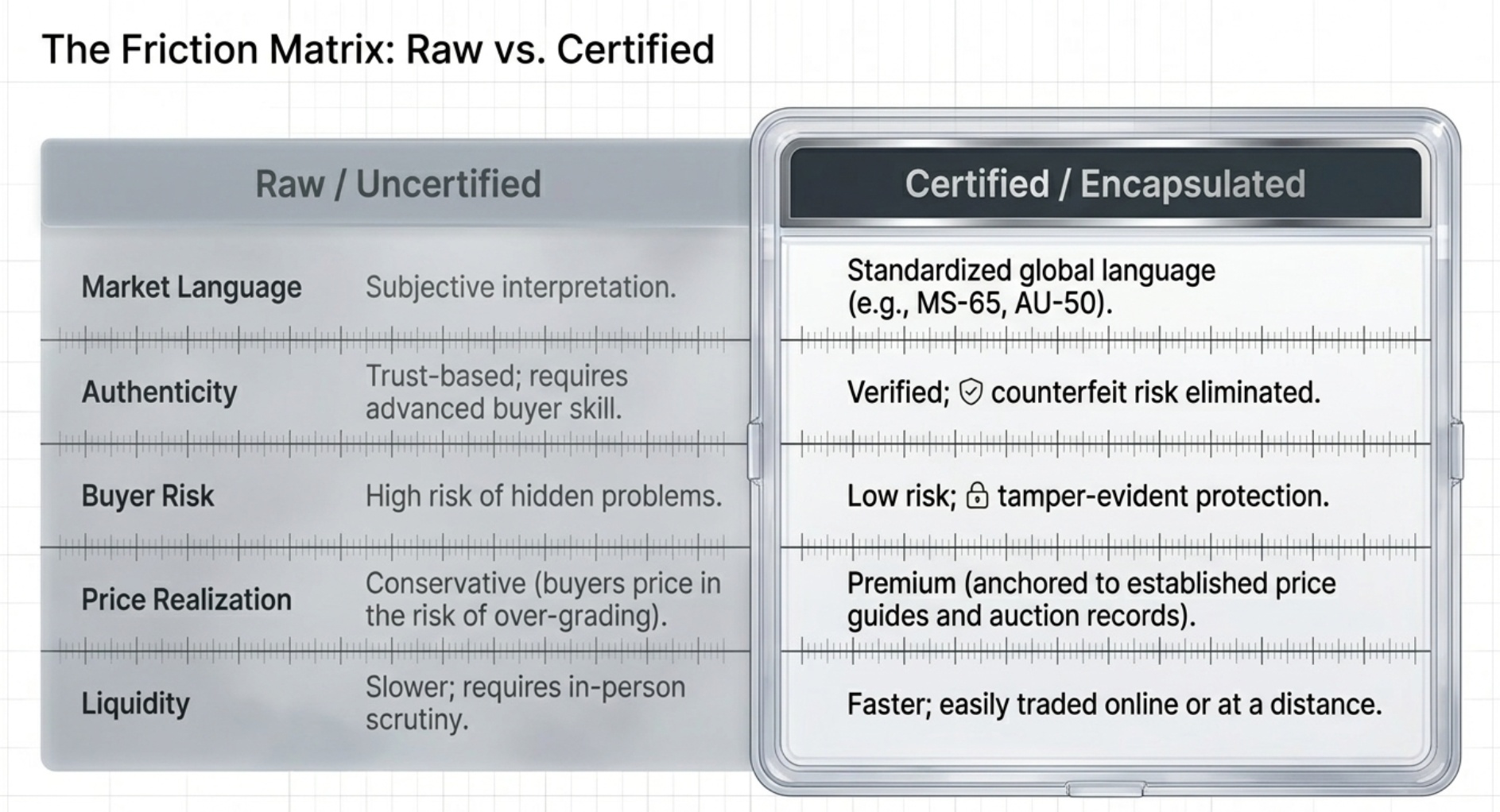
When you sell to a professional dealer, they can work with both certified and raw material, but raw coins generally require more scrutiny.
Decision framework: certified vs raw (simple)
- Coin is rare / high value / high grade → certification usually helps.
- Coin is common / low value / heavily worn → certification usually not worth it.
- Not sure → get a dealer’s opinion before paying grading fees.
Does Certification Increase Coin Value – and Is Coin Grading Worth It?
Coin grading is worth it when certification clearly boosts buyer confidence and resale value more than the total cost of fees, shipping, and time.
How Certification Adds Value for the Right Coins
For the right coins, PCGS, NGC, and other respected grading services can significantly increase both realized value and ease of sale. This usually applies to:
- Key‑date US coins and key dates in world series (for example, scarce crowns, talers, or colonial issues).
- Pre‑1933 US gold, classic European gold, and popular world gold coins in above‑average condition.
- Modern bullion and commemoratives that appear to be in top‑end Mint State or Proof condition.
- Rarities and varieties where authentication and precise grading are critical to price.
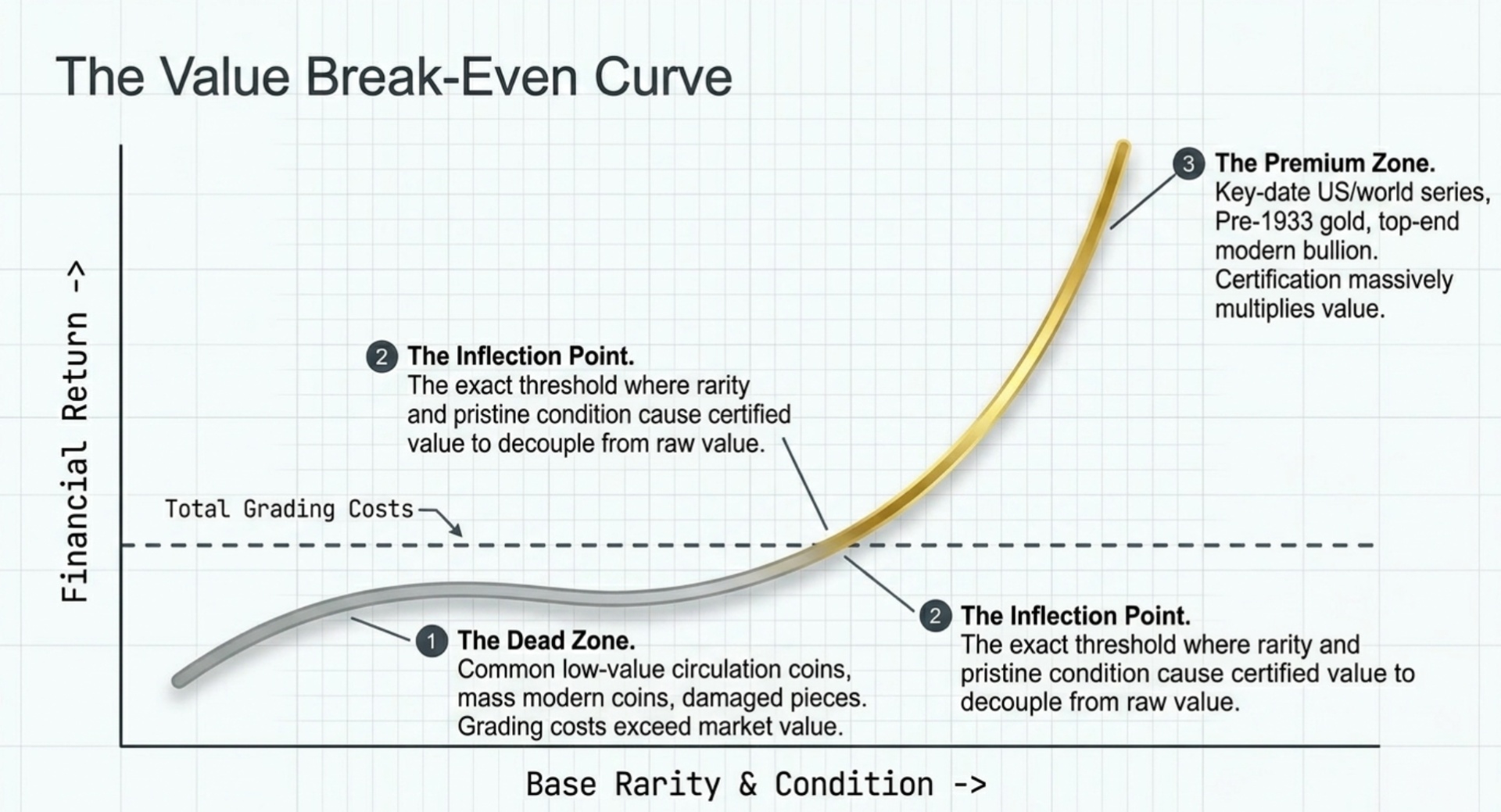
Because graded coins are tied to known standards and population data, price guides and auction records for certified material are much easier to interpret. That transparency often allows slabbed coins to sell faster and at stronger prices than comparable raw pieces.
When Certification Doesn’t Make Much Difference
Certification does not always make coin grading worth it. Cases where it may not be worth grading coins before selling include:
- Common US and world coins in low grades that sell near face or melt.
- Modern coins with massive mintages and typical condition.
- Coins with obvious problems (heavy cleaning, corrosion, large scratches).
In these scenarios, the cost of grading plus shipping can equal or exceed the coin’s total market value after certification.
Quick decision framework: Is coin grading worth it?
Ask yourself:
- What is my coin realistically worth right now as a raw coin?
- How much will grading + shipping + insurance cost me?
- Is there solid market evidence (price guides, auctions) that a certified example at that grade range sells high enough to justify the expense?
- Am I planning to sell this coin in the near future?
If the answer to (3) is “no” or only marginal, coin grading probably isn’t worth it for that piece.
Should You Use a Third‑Party Service to Grade Your Coins?
You should consider a third‑party grading service when a coin’s rarity, value, and condition justify the fees and you want maximum trust when you eventually sell.
Key Questions Before You Grade Coins
Before sending any US or world coin to a grading service, use a simple filter:
Pre‑grading checklist
- Is the coin rare or in strong demand (US or world)?
- Does it appear well above average in condition for its type and age?
- Is the realistic certified value high enough to cover grading and shipping costs with a comfortable margin?
- Am I planning to sell the coin, insure it, or include it in an estate plan?
- Could a dealer’s pre‑screening save me from grading marginal coins?
Grading is a financial decision as much as a collecting one. A quick in‑person review with an experienced dealer often prevents expensive mistakes.
How Serious Collectors View Certified vs Raw Coins
Serious collectors and investors in both US and world coins often prefer certified coins for higher‑end material because certification makes buying, selling, and insuring safer and easier.
- Registry set builders and advanced series collectors heavily favor PCGS/NGC coins.
- Many will still buy raw coins—but usually at prices that reflect risk and uncertainty.
- In some niches (ancients, certain world series) raw coins remain common, but certified examples can command a premium for rare and high‑grade pieces.
When Grading Makes Sense (In 30 Seconds)
Grading makes sense when your coin is genuinely scarce or high grade, the expected certified value clearly exceeds the total cost of grading, and you plan to sell or insure it.
30‑second rule of thumb
- Coin is rare, in strong demand, or looks unusually nice for its type.
- Market prices for certified examples at that grade range are comfortably above grading + shipping costs.
- You plan to sell to a serious collector, through a dealer, or want documented value for insurance or estate.
- A local expert agrees it’s a good candidate.
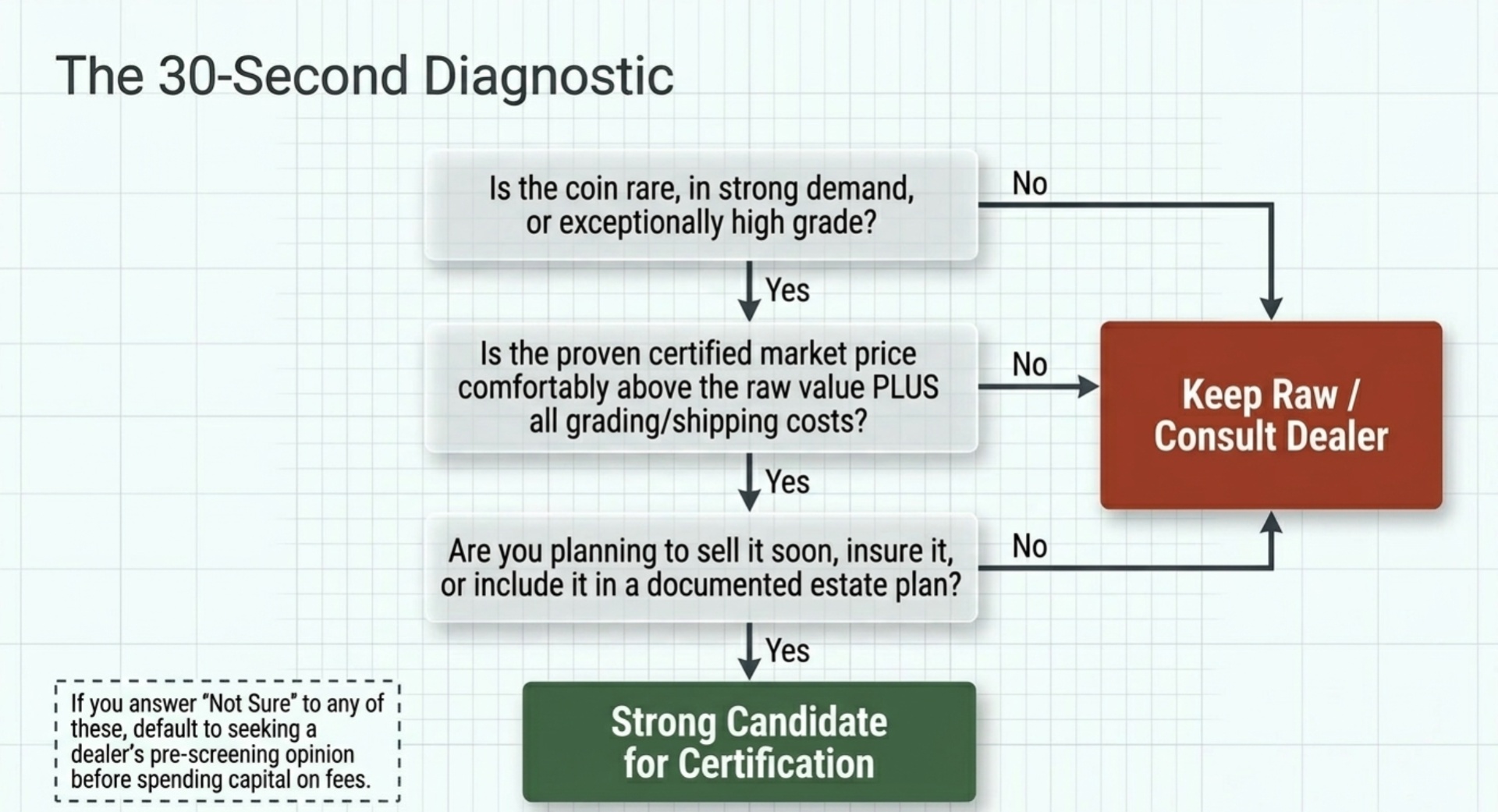
If those boxes are checked, there’s a good chance grading is worth it.
Ideal Candidates: When It Makes Sense to Send Coins to PCGS or NGC
The best candidates for certification are coins where a confirmed grade and authenticity materially change what serious buyers are willing to pay.
Typical strong candidates (US and world)
- Key‑date coins in popular US and world series (for example, 19th‑century crowns, scarce colonial issues, key US type coins).
- Pre‑1933 US gold and classic European/world gold in above‑average grades.
- Modern bullion or commemoratives that appear to be near the top of the grading scale (MS‑69, MS‑70, PF‑69, PF‑70).
- Coins where genuine vs counterfeit is a major concern in the market.
- Varieties and rarities that need clear attribution to realize full value.
Situations where you should think twice
- Low‑value circulation coins from any country that rarely sell for more than grading fees.
- Common bullion where condition is typical and price is driven mostly by metal content.
- Damaged, harshly cleaned, or corroded coins that will receive low or “details” grades.
Costs and Benefits of Having Coins Professionally Graded
Professional grading has clear benefits—higher trust, easier resale, better price discovery—but only if those benefits outweigh all the fees and friction for your specific coins.
Typical Grading Costs
While exact prices vary, general ranges look like this:
- Economy tiers for lower‑value coins: roughly 20–30 dollars per coin.
- Standard tiers for mid‑value coins: higher fees, often tied to declared value.
- Premium / express tiers: significantly more per coin but faster turnaround.
- Additional costs: shipping to and from the service, insurance, potential membership fees or dealer submission costs.
Quick cost checklist
- Per‑coin grading fee (based on value tier).
- Shipping and insurance both ways.
- Possible membership or handling charges.
- Time (weeks vs days, depending on service level).
How Grading Can Pay Off When You Sell Rare Coins
For rare or high‑grade coins—US, ancient, or world—grading can:
- Increase buyer confidence, especially online or at a distance.
- Expand your pool of potential buyers (serious collectors, investors, registry set builders).
- Anchor pricing to comparable certified coins in price guides and auction archives.
If you plan to sell rare coins to a dealer, arriving with carefully chosen certified pieces can make negotiations smoother and help you capture the premium that comes with strong, verified grades.
How Certification Helps When You Sell to a Dealer
Certification helps dealers and sellers get on the same page faster about grade, authenticity, and fair price, especially for higher‑end US and world coins.
Transparency and Trust in Appraisal
When a dealer evaluates a slabbed coin, they already know a recognized service has authenticated it and assigned a grade under published standards. Dealers still review the coin and slab, but the third‑party grade reduces haggling about condition and lets both sides focus on market value.
This is particularly important for high‑value coins where small grade differences translate into big price differences. Certified coins also simplify insurance appraisals, estate work, and large collection purchases, because they are easier to inventory and value consistently.
How a Local Dealer Works With Certified Coins
A seasoned coin shop that regularly handles certified US and world coins will typically:
- Track current market levels for certified material across major series.
- Recognize undergraded, fairly graded, and overgraded coins.
- Help you decide whether new submissions, re‑grades, or crossovers might be worthwhile.
For a business like Copper State Coin & Bullion, це місце, де варто згадати їхній досвід роботи із сертифікованими монетами та вставити анкор‑лінк “sell your certified coins to us” на відповідну сторінку.
What If Your Coins Are Already Certified?
If your coins are already in PCGS, NGC, or similar holders, focus on protecting the slabs, organizing your paperwork, and understanding current market levels before you sell.
Maximizing the Value of Certified Coins
If your US or world coins are already graded:
- Store slabs carefully so they don’t get deeply scratched, cracked, or clouded.
- Keep receipts, prior appraisal reports, and provenance documents together.
- Use certification numbers to check your coins on PCGS, NGC, or other verifier sites for images and extra data.
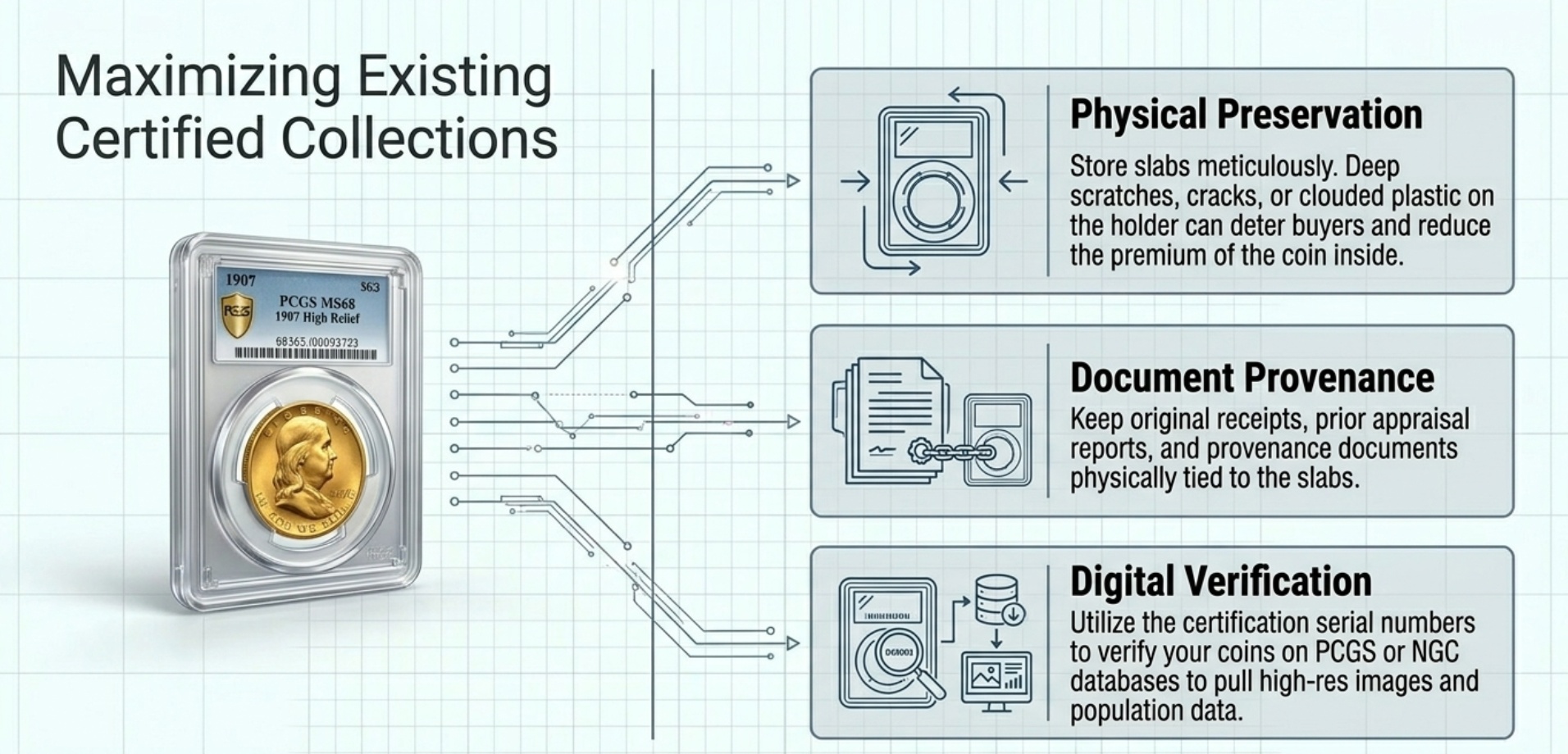
When selling, clean, intact holders and organized documentation make it easier for dealers and collectors to quickly confirm value.
When You Might Still Need an Insurance Appraisal
Even with certification, high‑value collections often need a formal written insurance appraisal. Insurers want a summary of the collection, replacement values, and clear documentation.
Bottom Line: Is Coin Grading Worth It for You?
Micro‑answer: Coin grading is worth it when a respected certification clearly improves your coin’s value, liquidity, and safety more than it costs you in fees, shipping, and time.
Bottom line checklist
- The coin (US or world) is genuinely scarce or in strong demand.
- Its apparent condition is above average and could place it in a higher price tier.
- Certified price levels show a clear premium over raw examples.
- Grading, shipping, and any membership fees are modest compared with that premium.
- You plan to sell, insure, or pass the coin on as a documented asset.
If you can’t comfortably tick most of these boxes, grading may not be the right move for that particular coin. In many cases, your best first step is to get an in‑person opinion from a dealer who works with both certified and raw material every day.
FAQ: PCGS, NGC, and Whether Coin Grading Is Worth It
Does PCGS or NGC certification always increase a coin’s value?
No. Certification tends to increase value and marketability for scarce or high‑grade coins, but for common or heavily worn pieces, grading costs can eat up most or all of any potential premium.
How do I know if my coin is worth sending to a grading service?
Estimate your coin’s realistic raw value, check what certified examples in similar grades sell for, and compare that to grading and shipping costs; if there’s a clear margin and strong demand, grading may be worth it. A quick review with a dealer can help you avoid marginal submissions.
What’s the main difference between certified and raw coins when I sell them?
Certified coins come with independent authentication and a standardized grade, which usually leads to faster sales and more confident offers, while raw coins require the buyer or dealer to do all the grading work and price in extra risk.
How much does it cost to have a coin professionally graded?
Fees vary by service and value tier, but many economy submissions start around 20–30 dollars per coin and can rise to 100 dollars or more for premium tiers, plus shipping, insurance, and possible membership or handling costs.
Do serious collectors prefer PCGS or NGC, or does it matter?
Both PCGS and NGC are widely accepted by serious collectors, and in most mainstream markets coins certified by either service are considered trustworthy and marketable when priced correctly for their grade.
Can I get my coins graded through a local coin shop instead of dealing with PCGS or NGC directly?
Yes. Many coin shops submit to third‑party grading services on behalf of their customers, simplifying the process and sometimes reducing shipping or membership complexity for collectors.
Should I grade coins before selling them to a dealer?
Often, it’s smarter to bring your coins to the dealer first and let them help you decide which pieces are worth certification so you don’t pay to grade coins that won’t see a meaningful boost in value.
If you’re wondering whether coin grading is worth it for your US or world coins, your best next move is to have a knowledgeable dealer review your collection and give you clear, practical guidance before you spend money on certification.