TL;DR
- The biggest mistake is cleaning or polishing coins before a sale; it almost always destroys numismatic value.
- In most cases, you should keep coins in their existing holders, handle them by the edges, and organize them by type, not shine them up.
- Grading, appraisal, and bullion value are three different lenses on the same coin—condition, market price, and metal content—and mixing them up can cost you money.
- A simple pre‑sale checklist (no cleaning, gentle handling, basic sorting, documentation, and at least one independent appraisal) will protect most of your collection’s value.
- In most cases, your best move is to get a transparent appraisal first, then decide what to sell, what to grade, and what to keep based on clear numbers rather than guesses.
How to prepare your coin collection for sale without damaging its value
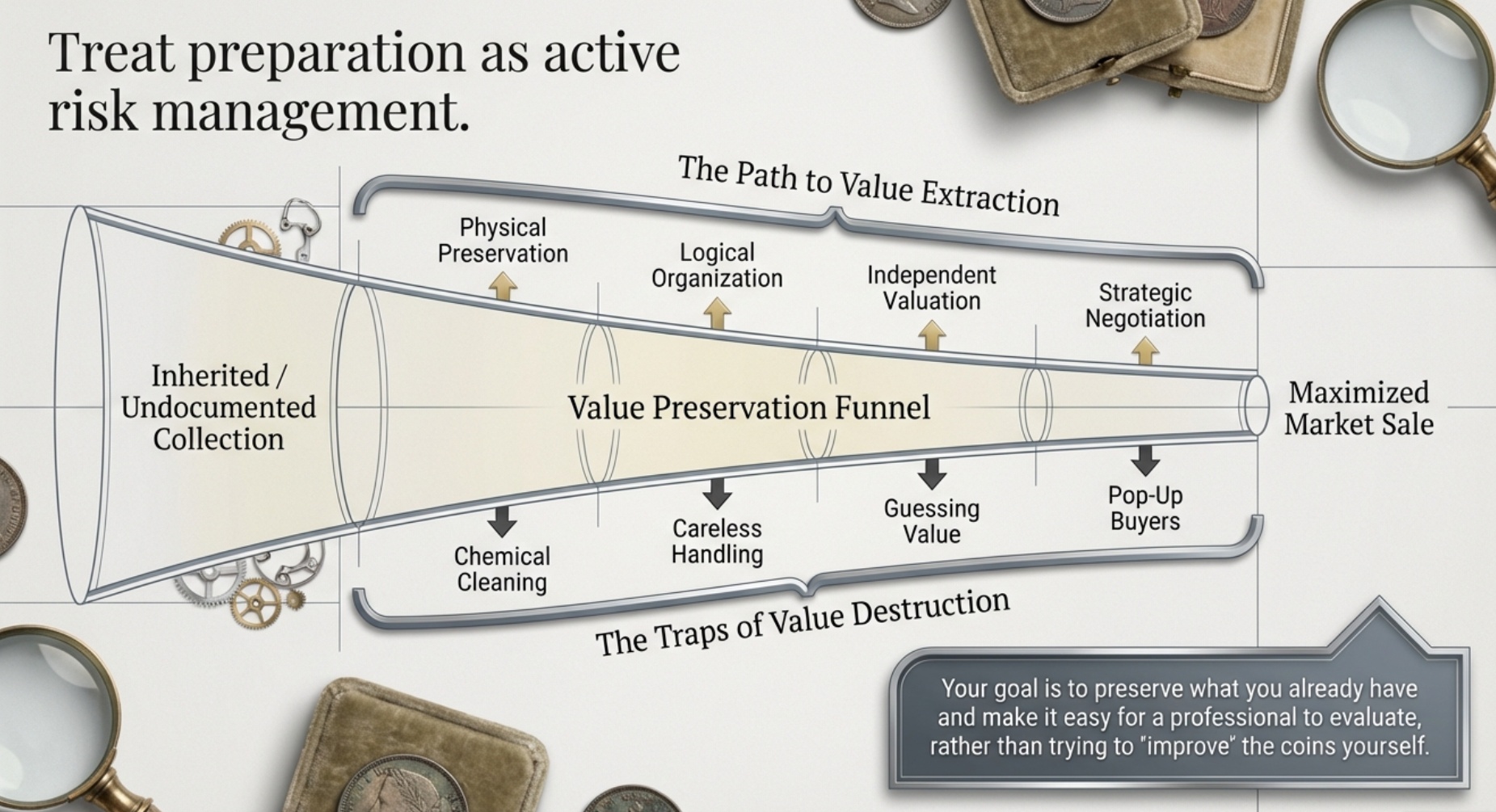
If you are wondering how to prepare your coin collection for sale without damaging its value, the answer is simple: preserve what you already have and make it easy for a professional to evaluate, rather than trying to “improve” the coins yourself. The biggest mistake sellers make is assuming that cleaning, polishing, or re‑packaging everything will raise offers, when in reality it often destroys the very numismatic value buyers are willing to pay for.
This guide walks you through safe handling, basic organization, and how to use grading, appraisal, and bullion value together so you can sell with confidence. Along the way, we’ll point to related resources on appraisals, pricing, and selling coins and bullion so you have a complete, linked playbook before you walk into a shop or ship anything.
Quick definitions
- What is grading?
Grading is the formal process of evaluating a coin’s condition and assigning it a standardized grade—often on a 1–70 scale—based on detail, wear, luster, and surface quality. - What is numismatic value?
Numismatic value is the extra value a coin commands beyond its metal content because of rarity, condition, historical significance, and collector demand. - What is bullion value?
Bullion value (or melt value) is the intrinsic value of the metal in the coin—what it is worth purely for its gold, silver, or other metal content at current spot prices. - What is a coin appraisal?
An appraisal is an expert’s written assessment of a coin or collection, combining authentication, condition, and current market data to estimate fair market value.
Grading vs appraisal vs bullion value
Understanding the difference between grading, appraisal, and bullion value helps you avoid paying for the wrong service—or accepting the wrong price.
| Aspect | Grading | Appraisal | Bullion value |
|---|---|---|---|
| Core question | What condition is this coin in? | What is this coin (or collection) worth on today’s market? | What is the metal in this coin worth by weight? |
| Focus | Surface, wear, luster, strike (1–70 scale) | Authentication, grade, rarity, demand, recent sales | Gold/silver content × current spot price |
| Who does it? | Grading services (PCGS, NGC, etc.) or trained numismatists | Professional appraisers, coin dealers, auction specialists | Any knowledgeable dealer using live metal prices |
| Output | Standardized grade, sometimes a slabbed coin | Written report or value estimate per coin / per collection | Dollar figure based on melt value only |
| Best for | Key dates, high‑grade coins, auction candidates | Estates, full collections, insurance, sale decisions | Common bullion, damaged coins, heavily worn pieces |
In most cases, starting with an appraisal for the whole collection—and then grading only the few coins where grade makes a big price difference—is the most cost‑effective path.
Pre‑sale checklist: prepare without hurting value
Use this quick checklist to prepare your coin collection for sale without damaging its value:
- Do not clean, polish, or scrub any coins.
- Handle coins by the edges only; avoid touching the faces.
- Keep coins in their current holders or albums unless they are clearly unsafe (e.g., sticky PVC).
- Group coins by type (US vs world, gold vs silver, bullion vs collectible).
- Separate obviously common bullion from potentially rare or high‑grade pieces.
- Gather receipts, old appraisals, grading certificates, and provenance notes.
- Get at least one independent coin appraisal before negotiating with buyers.
- For any coin flagged as special, discuss whether grading is worth the cost.
- Plan secure transport or insured shipping for dealer visits or appraisals.
In most cases, if you follow this checklist and resist the urge to “improve” anything, you will preserve far more value than any home cleaning or re‑packaging could ever add.
Step 1: Don’t clean or polish - ever
The biggest mistake is cleaning coins before sale, whether with chemicals, abrasives, or “gentle” home remedies. Polishing removes original surfaces, leaves hairlines, and makes coins look unnatural under magnification, which grading services and serious buyers penalize heavily.
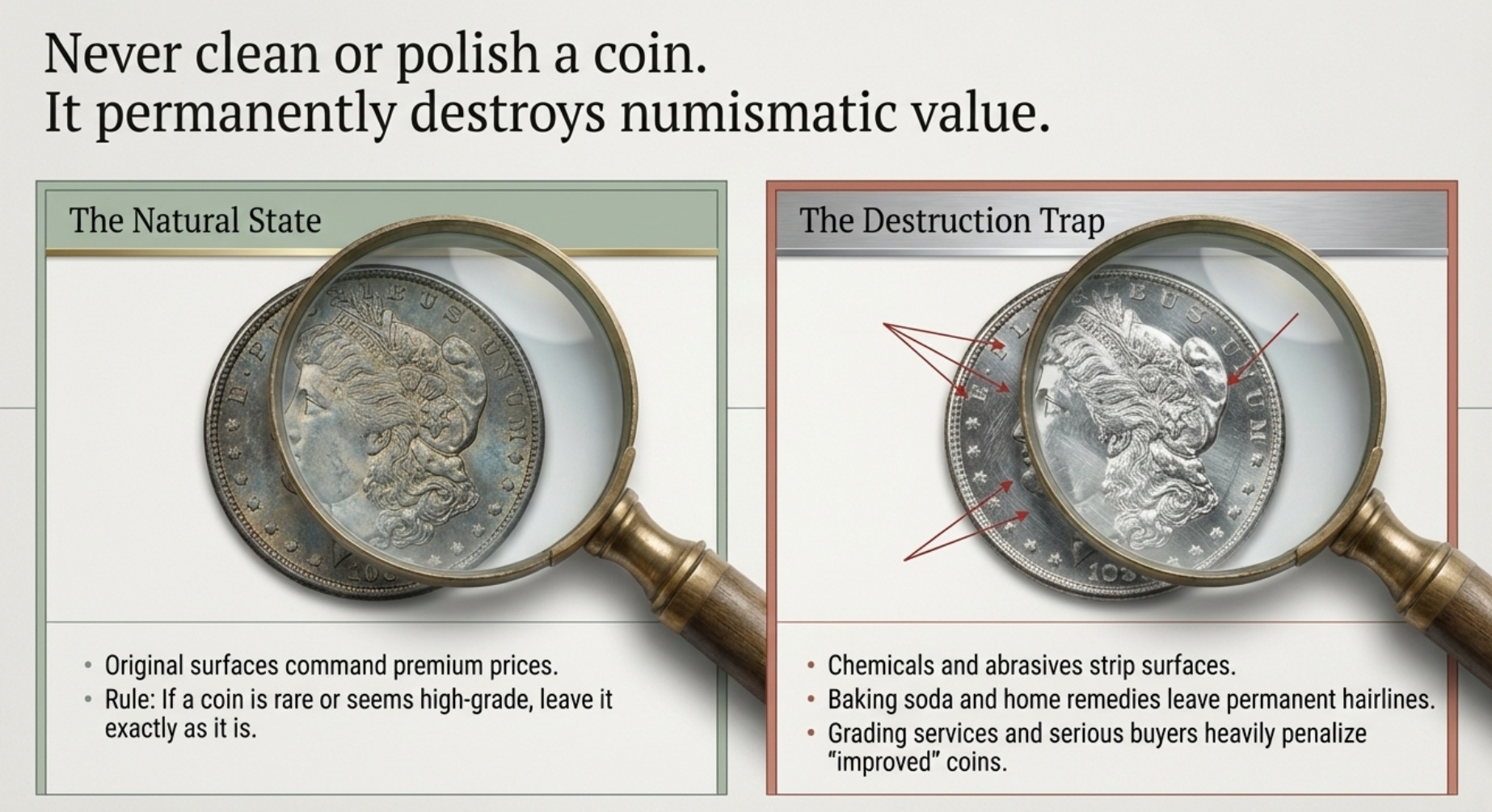
In most cases, a coin with natural patina or toning is worth more than the same coin that has been “improved” with polish or baking soda. If a coin is rare or seems high‑grade, leave it exactly as it is and let a professional advise on whether conservation by a specialist is justified.
If you want a fuller explanation of why cleaning is so damaging, plus photo examples, an article focused entirely on coin conservation vs cleaning is a good next read.
Step 2: Handle and store coins correctly
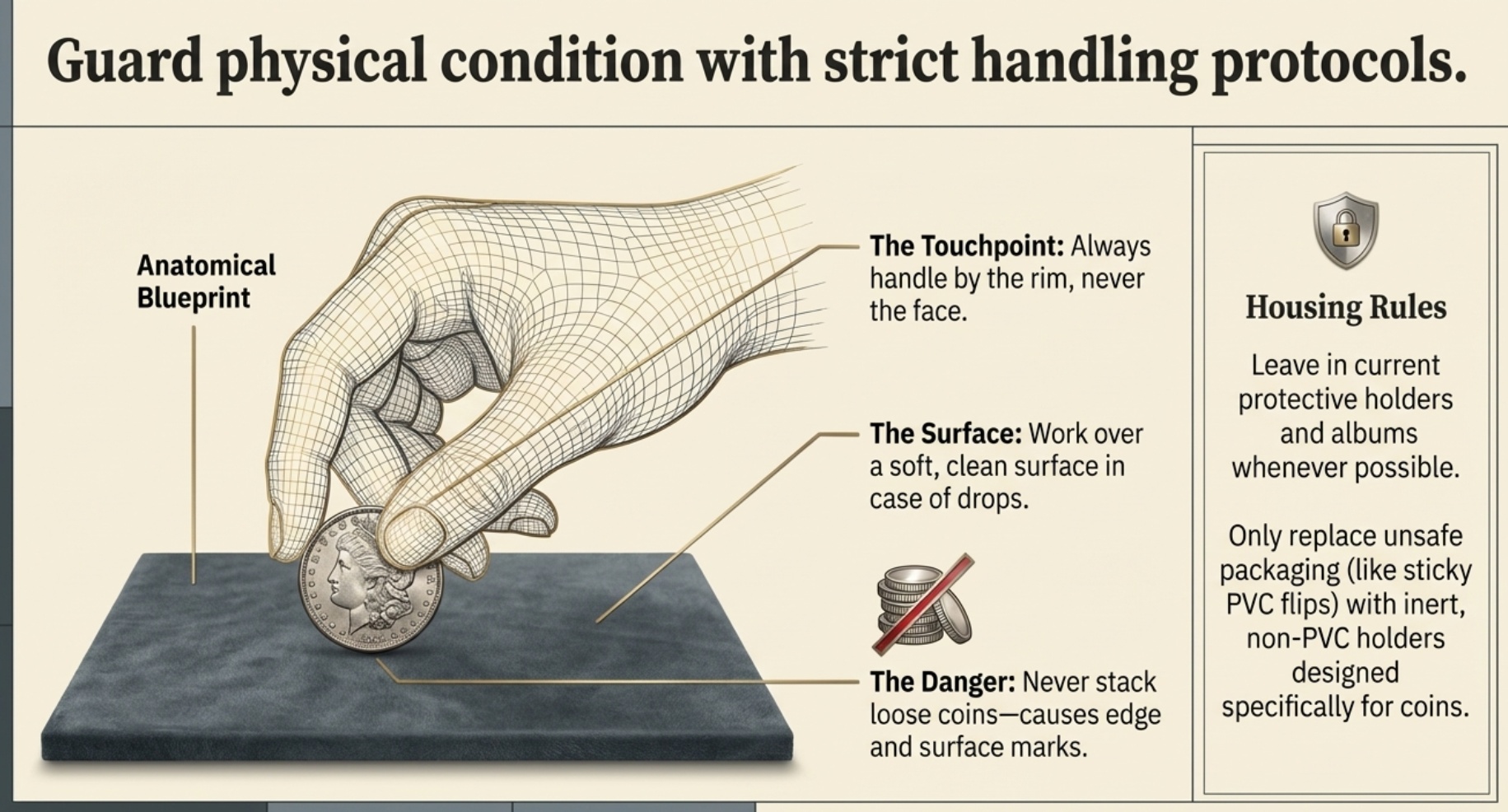
The biggest ongoing risk to your collection before sale is careless handling and rushed re‑housing. In most cases, you will protect more value by leaving coins in their current protective holders and albums than by moving them into new packaging at the last minute.
Mini‑tips:
- Always handle coins by the rim, never the face.
- Work over a soft, clean surface in case you drop one.
- Avoid stacking loose coins; stacking can cause edge and surface marks.
- If you must replace holders (for example, PVC flips), use inert, non‑PVC holders designed for coins.
Proper storage also helps you if you decide not to sell right away. A well‑stored, documented collection is easier to appraise later and more attractive to serious buyers.
Step 3: Organize by type, not by “shine”
The biggest mistake after cleaning is reorganizing everything purely by appearance, which can strip away useful context. In most cases, you should sort coins into logical groups—by country, metal, denomination, and era—while preserving any existing sets or albums that clearly belong together.
Helpful
- By geography: US vs foreign coins, then by region or country.
- By metal: Gold, silver, base metal; bullion vs collectible issues.
- By purpose: Modern bullion (priced by weight), older numismatic series (priced by rarity and grade), and “junk” or scrap.
This structure lets an appraiser quickly focus on the parts of your collection most likely to have significant numismatic value, while still being able to price bullion content efficiently.
Step 4: Understand grading, numismatic value, and bullion value together
Why all three matter
- Grading tells you where a coin sits on the condition scale, often using an established 1–70 system.
- Numismatic value tells you what collectors currently pay for coins of that type and grade, considering rarity and demand.
- Bullion value tells you the floor price based on the metal alone, regardless of collector interest.
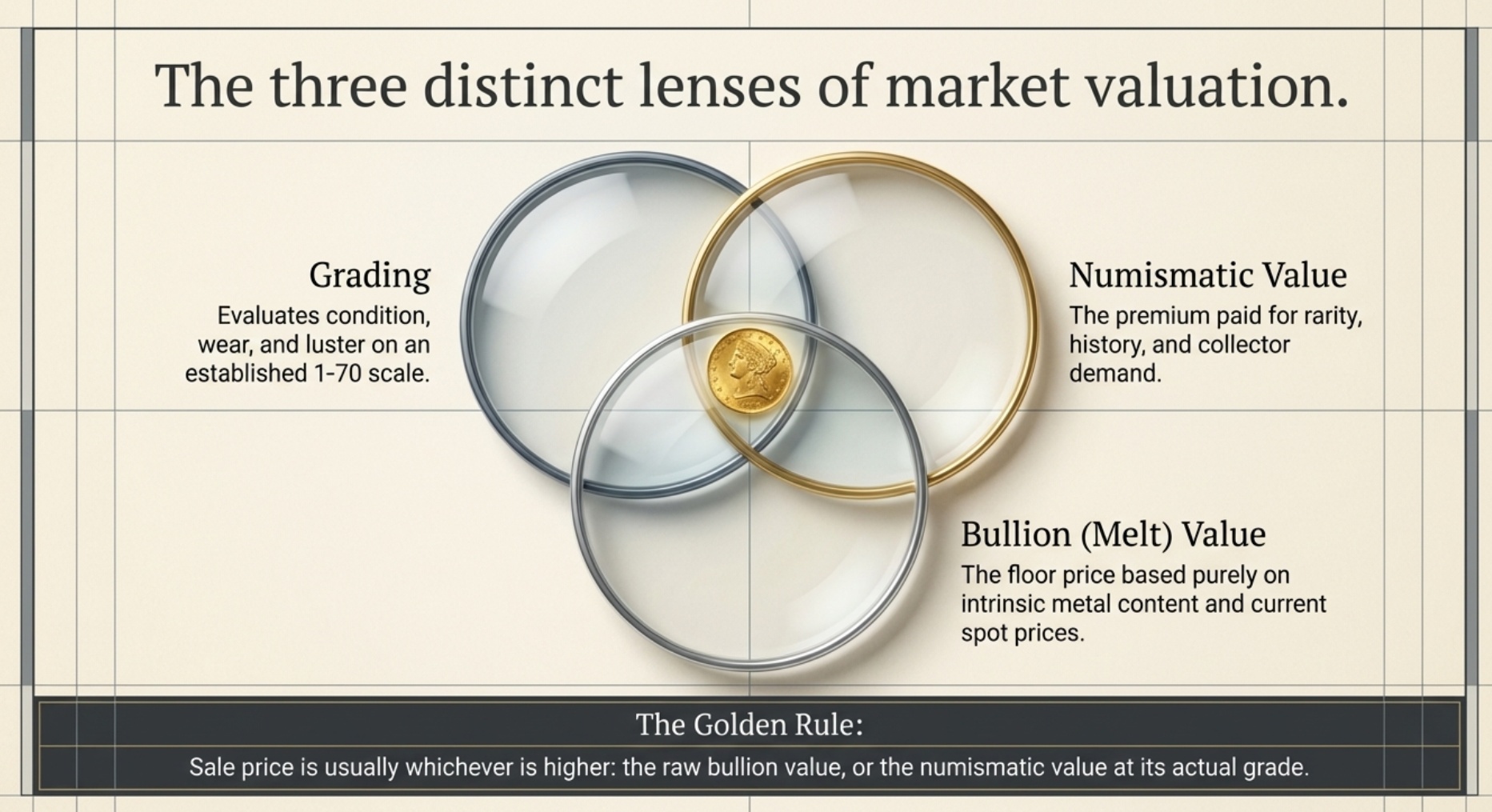
In most cases, a coin’s sale price will be whichever is higher: its bullion value or its numismatic value at its actual grade. For very common or damaged coins, bullion dominates; for rarer, high‑grade, or historically interesting pieces, numismatic value can be many times higher than melt.
An appraisal connects all three: it checks authenticity, estimates grade, and then applies both numismatic and bullion data to arrive at a realistic market value.
Step 5: Use appraisals strategically before you sell
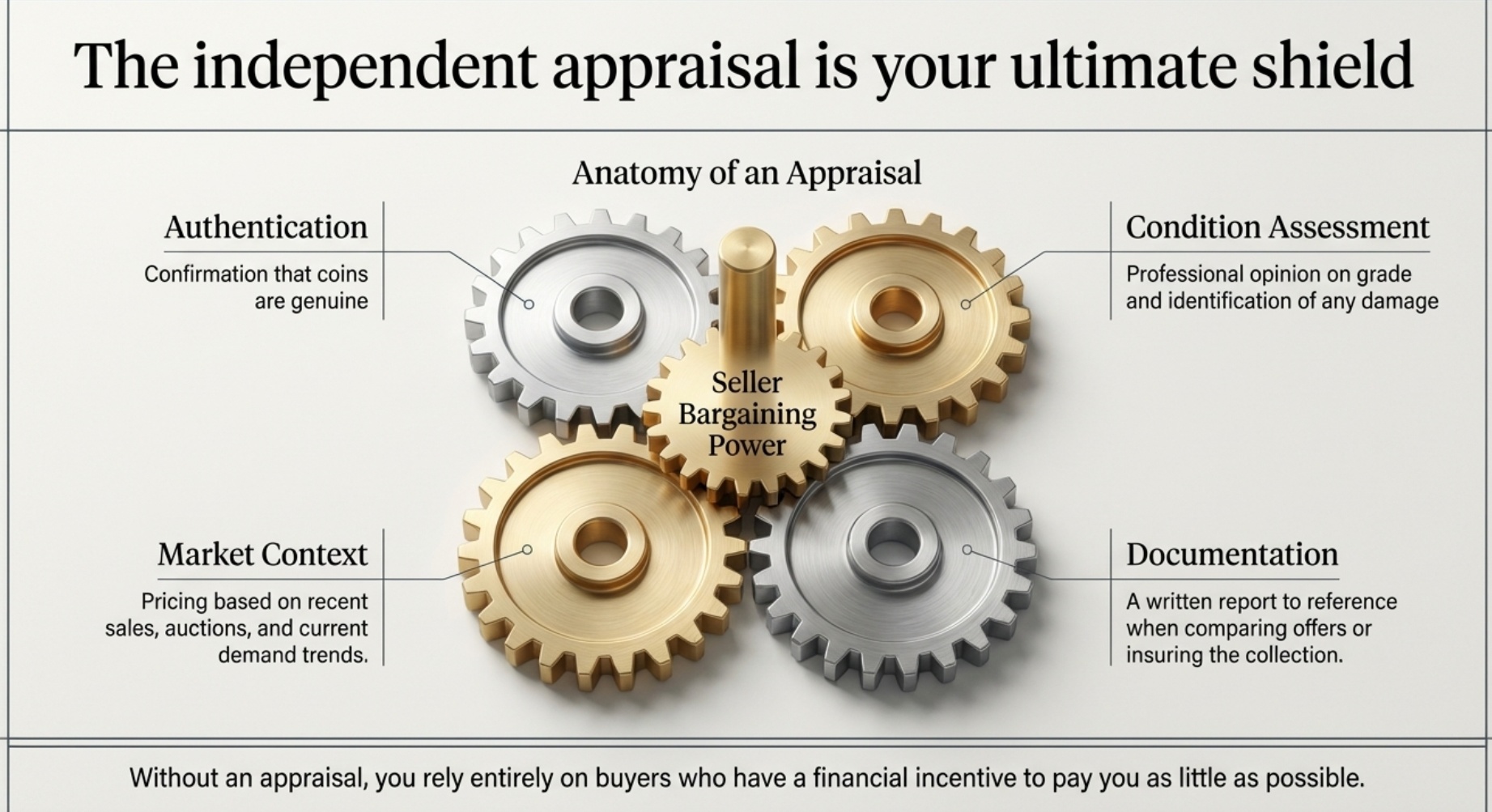
In most cases, getting at least one independent coin appraisal before you talk to buyers is the best way to avoid leaving serious money on the table. Without an appraisal, you are relying on buyers—who have an incentive to pay as little as possible—to tell you what your coins are worth.
What a good appraisal gives you
- Authentication: confirmation that coins are genuine.
- Condition assessment: professional opinion on grade and any damage.
- Market context: pricing based on recent sales, auctions, and demand trends.
- Documentation: a written report you can reference when comparing offers or insuring the collection.
Once you have an appraisal, you can decide rationally which coins might justify grading, which to sell as bullion, and which to keep or consign to auction.
For step‑by‑step guidance on the appraisal process and how to compare appraisers, your dedicated article is a key internal node to drive readers to from here.
Step 6: Plan safe logistics and the right selling channel
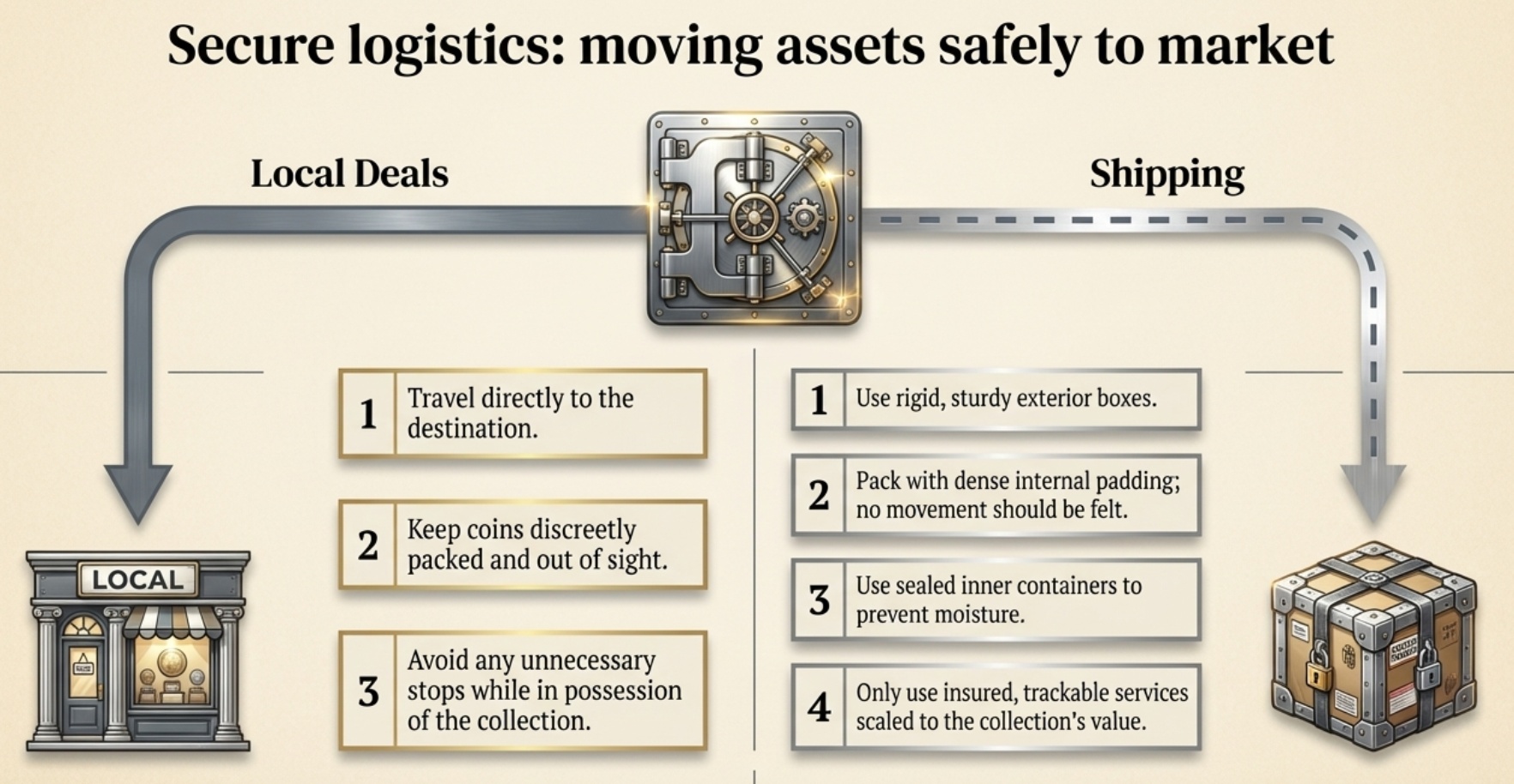
Transport and shipping
- For local deals: travel directly, keep coins discreetly packed, and avoid unnecessary stops.
- For shipping: use sturdy boxes, internal padding, sealed inner containers, and insured, trackable services appropriate to the collection’s value.
Choosing where to sell
- Established coin and bullion shops with a track record in both bullion and numismatics.
- Reputable auction houses for truly rare or high‑value items.
- Avoid pop‑up hotel buyers or anyone pushing “today‑only” offers without clear pricing breakdowns.
If your collection includes gold and silver bullion as well as collectible coins, it’s smart to read your broader selling‑bullion content alongside this guide so you understand how buyers structure offers on each category.
FAQs: preparing your coin collection for sale
Should I clean my coin collection before selling it?
The biggest mistake is cleaning or polishing coins; it almost always lowers their value, even if they look shinier. Leave surfaces as they are and let a professional advise on any conservation.
Is it okay to remove coins from albums or holders before an appraisal?
In most cases, you should leave coins in their existing holders or albums if they are protective and organized. Unnecessary re‑housing adds handling risk without increasing value.
What documentation should I bring when selling a coin collection?
Bring any receipts, prior appraisals, grading certificates, and notes about where the coins came from. This paperwork helps appraisers and buyers confirm authenticity and justify stronger offers.
Do I need to get my coins graded before I sell them?
In most cases, only a small subset of rarer or high‑grade coins truly benefit from grading; common circulated pieces do not. A good appraiser or dealer can flag which specific coins might be worth sending to a grading service.
How should I transport my coins to a dealer safely?
Keep coins in holders, pack them securely in a discreet container, travel directly, and avoid handling them loose in pockets or bags. For shipping, use insured, trackable services and robust packaging.
What is the single biggest way to avoid damaging value before sale?
The biggest way to avoid damage is to adopt a “do no harm” mindset: no cleaning, minimal handling, and no rushed repackaging. Focus on organization and documentation instead.
Should I sort my coins by value before I talk to a dealer?
In most cases, basic sorting by type and metal is enough; you don’t have to guess exact values. Let an appraiser or experienced buyer separate true numismatic pieces from straightforward bullion.
If you are getting ready to sell a coin collection, treat preparation as risk management: protect surfaces, keep context, and get at least one independent appraisal before you negotiate. With a simple checklist, a clear understanding of grading vs appraisal vs bullion value, and the right internal resources at hand, you can walk into any buyer meeting with your collection—and your bargaining power—intact.