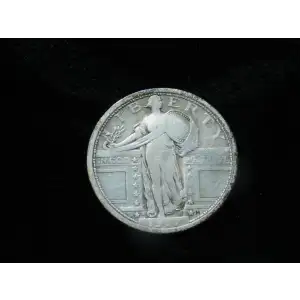
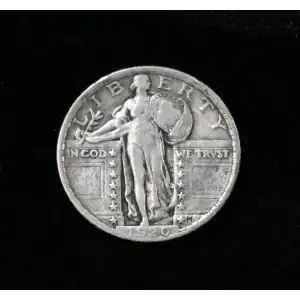
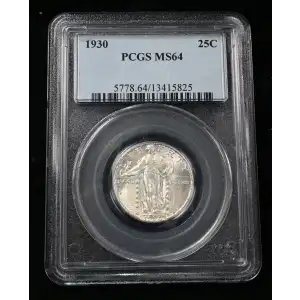
Two questions decide what a Standing Liberty quarter is: which type it is, and whether the date is still there. The type is a design question — the Mint changed both sides of the coin partway through 1917, and changed the date again in 1925. The date is a survival question, and on this series it is the one that most often turns a collectible coin into a piece of silver.
The series ran from 1916 to 1930, struck at Philadelphia, Denver and San Francisco, and according to PCGS it ran continuously through that span except for 1922, when no quarters were made at all. Hermon A. MacNeil designed it. PCGS CoinFacts records the specification as 6.30 grams, 90% silver and 10% copper, 24.30 millimeters, with a reeded edge — which puts roughly 0.18 troy ounce of silver in an unworn example, and rather less in a coin that has spent forty years in circulation.
Type 1 and Type 2: what changed in 1917
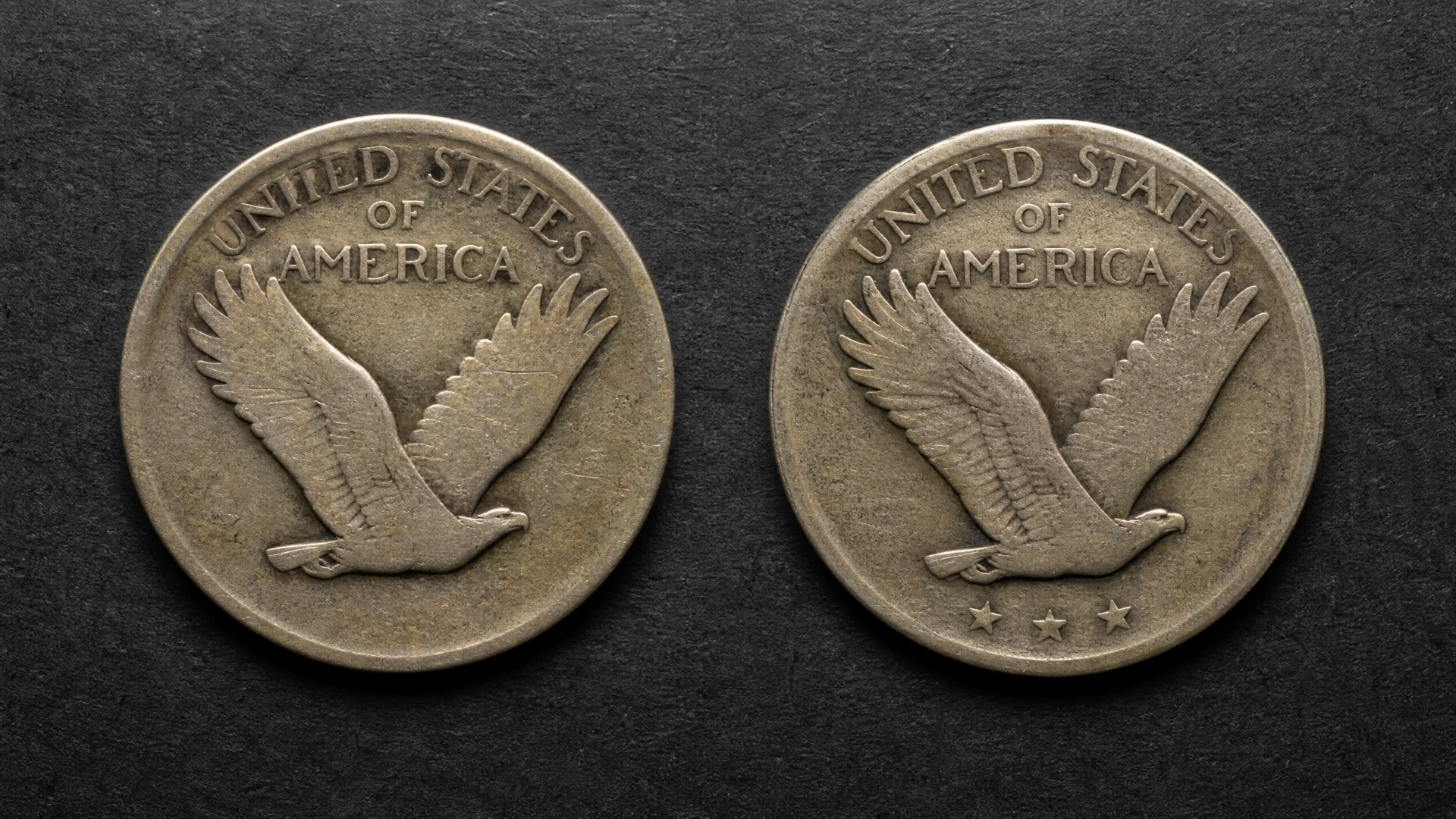
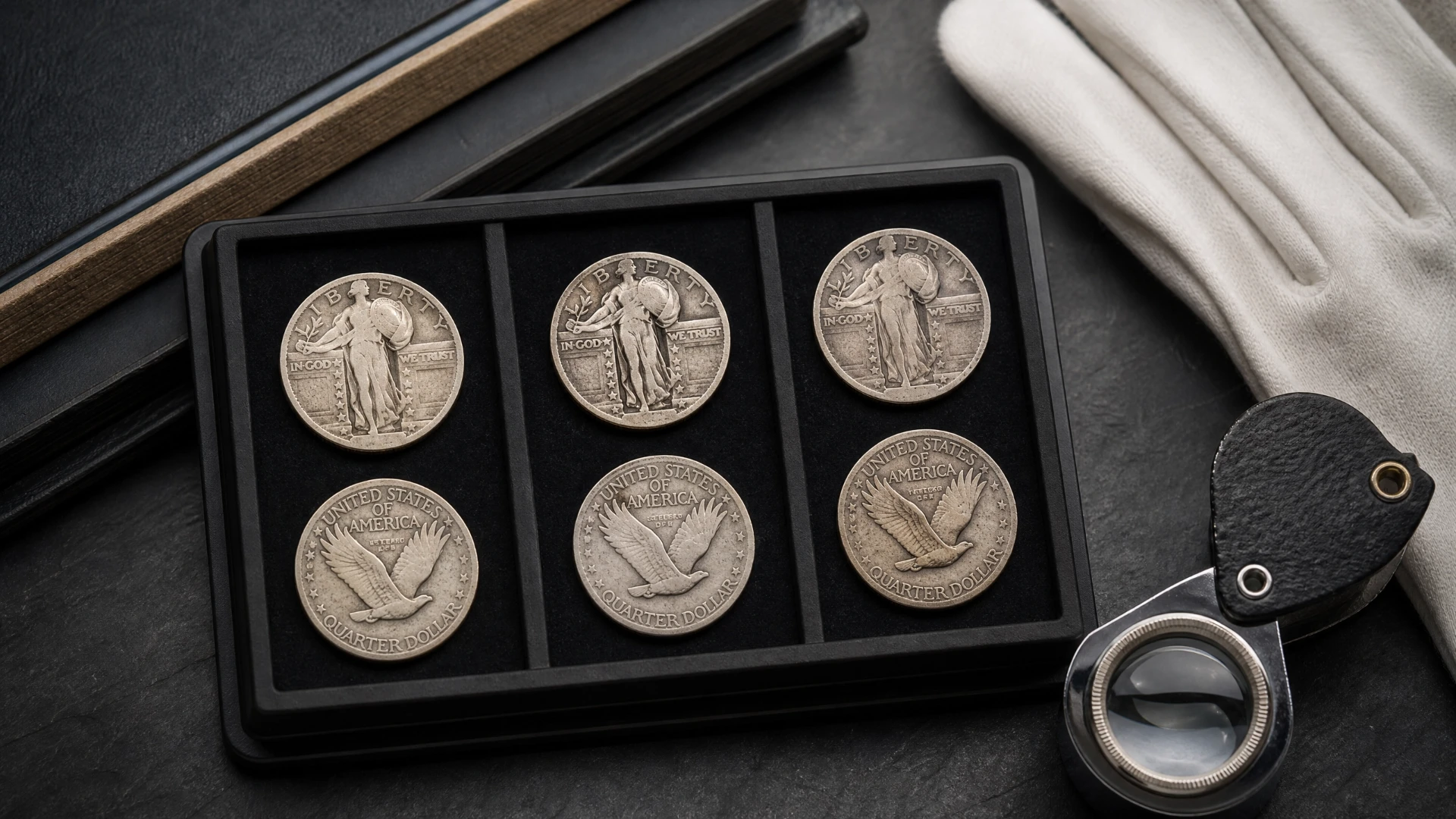
The 1916 coins and the earliest 1917s are Type 1. MacNeil's original obverse showed Liberty standing in a gateway holding an olive branch and a shield, with her right breast exposed; the reverse showed an eagle in flight with no stars beneath it.
Complaints about the partial nudity followed, and PCGS records that the design "was soon changed." On the Type 2 obverse Liberty wears a coat of mail across her chest. On the reverse the eagle sits higher and more centrally, and three stars are moved to a position below it. Both changes arrived mid-1917, which is why 1917 exists in both types and is the only date that does.
The distinction that catches new collectors is that the reverse is the easier tell on a worn coin. The presence or absence of three stars beneath the eagle is a design feature rather than a fine detail, so it stays readable on coins where the chain mail across Liberty's chest has flattened out. On a circulated example, look under the eagle first.
| Type 1 | Type 2 | |
|---|---|---|
| Years | 1916 and part of 1917 | Part of 1917 through 1930 |
| Obverse | Liberty's chest uncovered | Liberty in a coat of mail |
| Reverse | Eagle in flight, no stars below | Eagle raised and recentered, three stars below |
| PCGS category name | Type 1, No Stars Below Eagle (1916–1917) | Type 2a, Stars Below Eagle (Pedestal Date) 1917–1924; Type 2b, Stars Below Eagle (Recessed Date) 1925–1930 |
| Date position | Raised on the pedestal | Raised 1917–1924; recessed 1925–1930 |
Why 1925 and later Standing Liberty quarters keep their dates
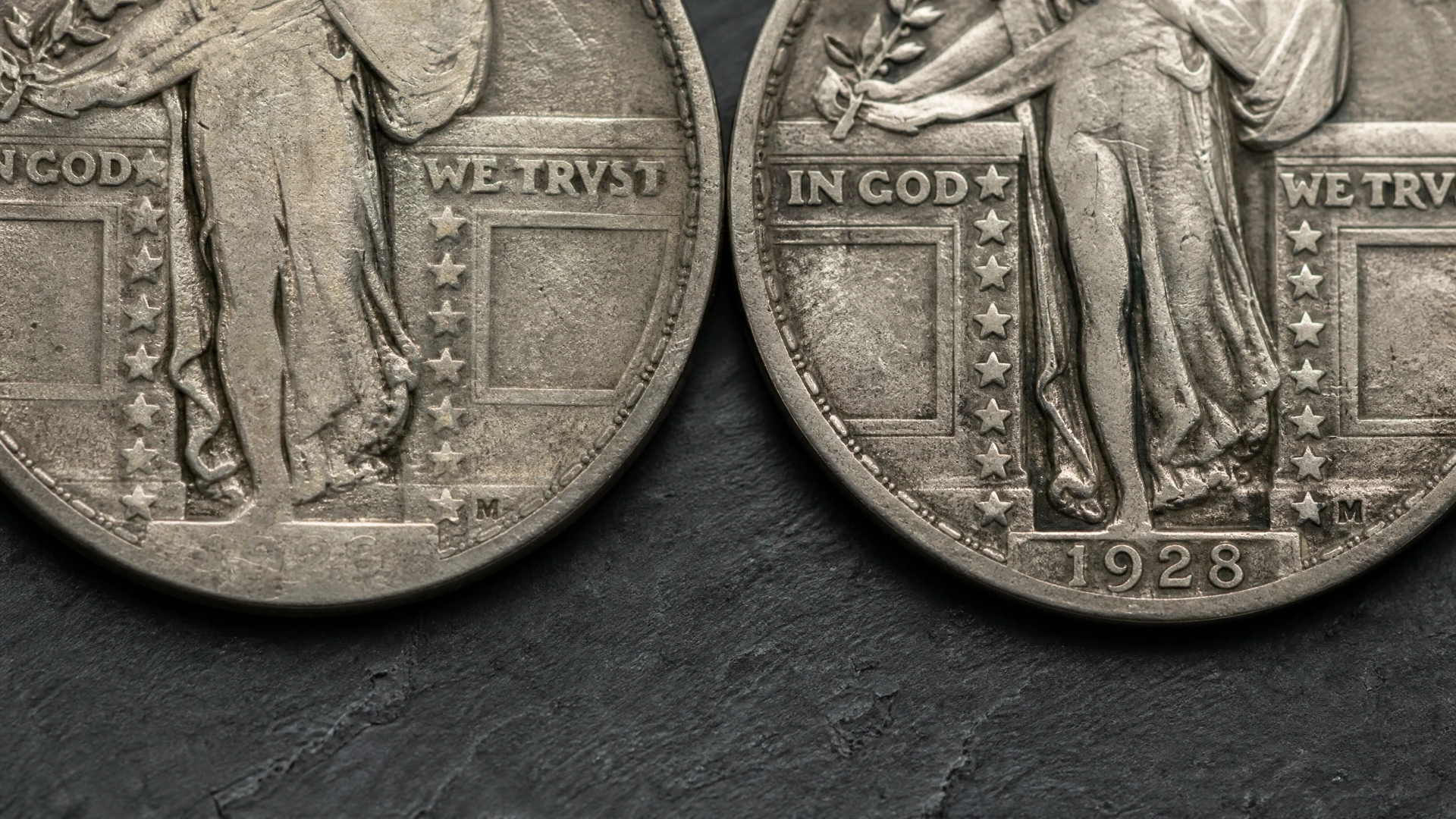
Through 1924 the date sat high on the pedestal below Liberty, standing proud of the field. That is the highest point on that part of the coin, so it met every pocket, every till and every counter first.
PCGS describes the result plainly: the date was "one of the first elements to become obliterated through ordinary circulation wear," which left "hundreds of thousands of Standing Liberty Quarters – likely millions – to become essentially dateless." In 1925 the Mint hollowed out the pedestal and set the numerals inside the recess, and coins from 1925 through 1930 are far more likely to still show a readable date at the same amount of wear. PCGS keeps them in a separate category for exactly this reason: Type 2b, Stars Below Eagle (Recessed Date), 1925–1930.
So the practical rule is that a heavily worn Standing Liberty quarter with a legible date is probably 1925 or later, and a heavily worn one without a date is probably 1917–1924. That is a starting point for sorting a jar, not an identification.
What a dateless quarter actually is
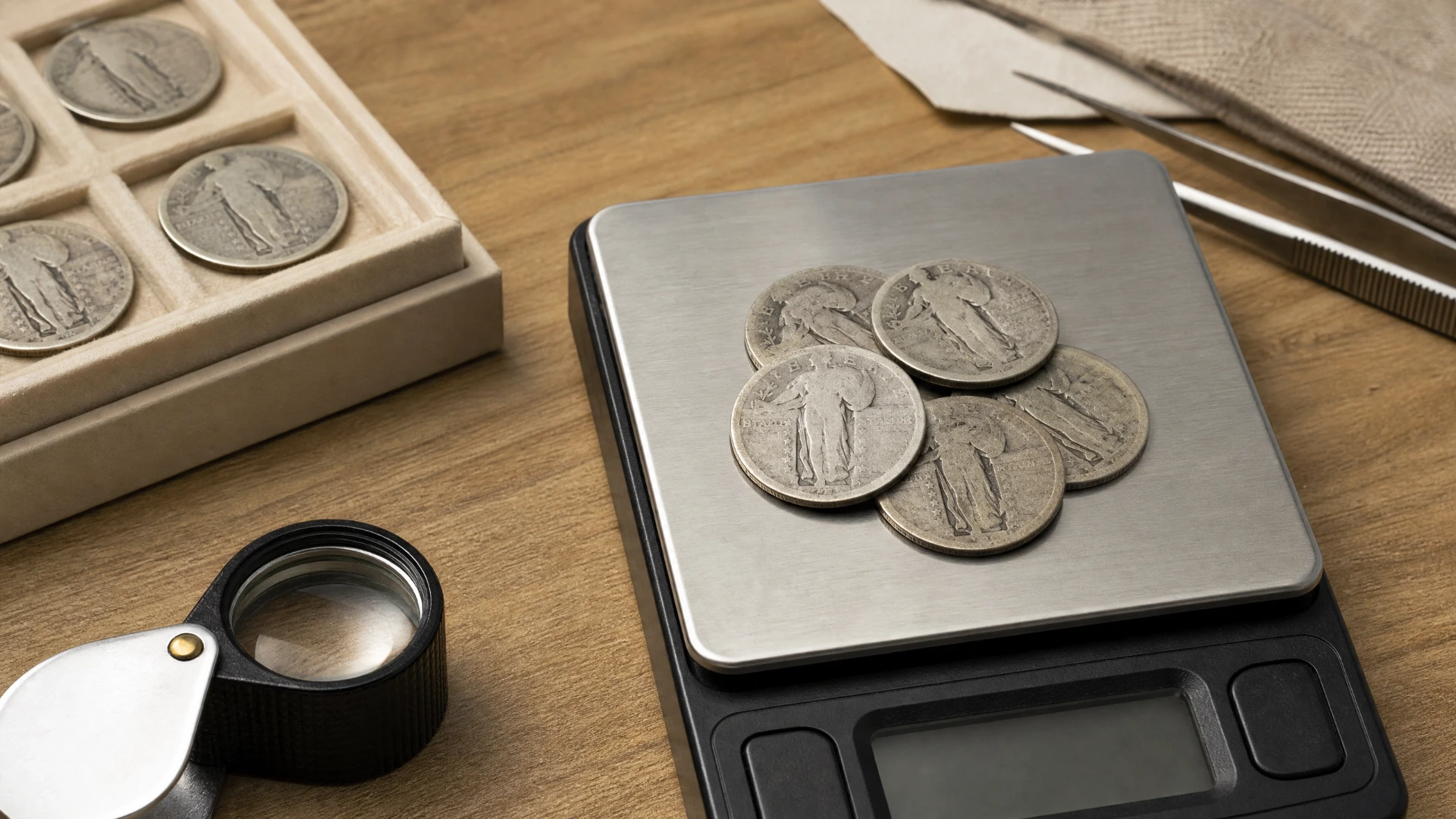
A Standing Liberty quarter with no readable date has no date, mintmark or type premium attached to it, so it is bought and sold as 90% silver by weight. It is not a rare coin and it is not a worthless one. It is silver, priced off the metal, and a shop calculates it the same way it calculates any other pre-1965 quarter: weight, times fineness, against the price on the day.
Worn coins weigh less than the 6.30-gram specification, sometimes noticeably so, which is why dateless coins tend to be weighed as a lot rather than counted as a lot. Ask to see the scale.
Chemical date restoration alters the surface. The old trick of etching the pedestal with an acid compound sometimes brings a ghost of the numerals back. It also leaves a visibly etched area that does not look like the rest of the coin. PCGS lists "altered surfaces" among the conditions for which a submitted coin is designated Genuine or given a Details grade rather than a straight numeric grade. A restored date can tell you what you have; it does not turn a dateless coin into a collectible one.
A partially legible date is a different problem, and one with a technique attached to it — we cover reading a worn date in our guide to Buffalo nickel value, key dates and mint marks. On Standing Liberty quarters the numerals are not worn flat; they are gone.
Standing Liberty quarter key dates, by mintage
Scarcity in this series comes from small mintages rather than from varieties, with one exception. Figures below are as recorded by PCGS.
| Issue | Mintage | Why it matters |
|---|---|---|
| 1916 | 52,000 | The first year and the smallest mintage in the series. Struck at Philadelphia in the last two weeks of December 1916 and released in January 1917 alongside the first 1917s. |
| 1918/7-S | Not separately recorded | An overdate variety — a 1918 die showing traces of a 7 beneath the 8. The one variety in the series collected on its own terms. |
| 1921 | 1,916,000 | A low-mintage Philadelphia issue in the raised-date years, so worn survivors are often dateless. |
| 1923-S | 1,360,000 | The scarce San Francisco issue of the raised-date period. |
| 1927-S | 396,000 | The second-smallest mintage in the series, and notably difficult in higher grades. |
A note on the word "rare." A mintage of 52,000 is a genuinely small number for a US circulating coin; a mintage of 1.9 million is small for this series but not small in absolute terms. Both are scarce relative to a common date. Neither is a statement about condition, and on this series condition is where most of the difference lives.
Full Head, and why it is not a grade
Liberty's helmet carries fine detail that the dies struck weakly at some mints in some years. A coin with those details fully present may receive a Full Head designation — FH — from PCGS or NGC alongside its numeric grade.
Full Head describes the strike, not the wear. An uncirculated coin can lack it and a coin with it is not automatically higher grade. PCGS notes that sharply struck uncirculated examples "are quite elusive" and "often command a sharp premium," and on several San Francisco and Denver issues the FH and non-FH markets behave almost like two different coins.
It is also worth remembering that a grade is an opinion. A coin graded MS-64 FH by PCGS has been assigned that opinion by PCGS; it does not carry it inherently.
How Standing Liberty quarter value is actually worked out
There is no single answer to "what is a Standing Liberty quarter worth," and any figure quoted without four pieces of information is meaningless. Those four are the date, the mintmark, the grade, and — for this series specifically — whether the coin carries a Full Head designation.
Where numbers come from matters as much as what they are. Published price guides such as the PCGS Price Guide are compiled estimates and move with the market. Realised auction prices are records of what one coin achieved on one day: PCGS records an auction record of $50,400 for a 1916 graded MS67, achieved at Heritage Auctions on 31 August 2025. That is a single result for a single coin at the top of the series, and it is not a valuation of anybody else's 1916.
Between those two sit melt value, wholesale, retail and auction — four different numbers for the same coin, and conflating them is the most common reason someone leaves a counter disappointed. A dateless quarter is a melt-value coin. A 1927-S in a grading service holder is not, and neither is priced by the other's logic.
Building a set, and where to start
The series is short — thirty-seven issues across fifteen years, with a gap where 1922 would be. That makes a date-and-mintmark set a realistic project in a way that Morgan dollars are not, and most collectors start with the recessed-date years, where a decent circulated coin still shows its date.
A type set is smaller still: one Type 1, one raised-date Type 2, one recessed-date Type 2, and you have represented every version the Mint issued. Many collectors put together the three-coin type set first and decide afterwards whether the full run is worth the 1916 and the 1927-S.
If you are working from a group of coins rather than a want list, sort them by whether the date is readable before you do anything else. That single question splits the pile into the part that is silver and the part that needs looking at properly.
What we do with them
We have over 40 years of numismatic and bullion experience, and Standing Liberty quarters come across our counter in every state from a bag of dateless silver to a slabbed key date. We offer complimentary appraisal for sellers, and a separate paid insurance appraisal service where you need documentation for cover. We are members of PCGS, NGC, PMG, the Certified Coin Exchange and ICTA, and we submit coins for grading where submission is worth the cost — which is a conversation worth having before you pay for it, not after.
If you are hunting rather than selling, our rare US coins and numismatic sections are where the series turns up, and we keep want lists — if you tell us what you are missing, we will look for it. For a related series with the same "what is this actually worth" problem, see our guide to Walking Liberty half dollar value.
Why an Arizona coin sale is handled differently from scrap
A.R.S. § 44-1601 defines "precious item" so as to exclude coins, so on the face of the statute a coin purchase does not attract the identification, holding and reporting requirements that a scrap gold sale does. The wording leaves room for argument, no Arizona appellate decision or Attorney General opinion appears to have settled it, and a city or county ordinance can require more. We explain the split in why an Arizona shop asks for your ID and pays by check.
This article is educational and reflects general information about precious metals and collectible coins. It is not investment, tax or legal advice, and Copper State Coin & Bullion is not a registered investment adviser, broker-dealer or tax professional. Metal prices fluctuate and past performance does not indicate future results. Consult a qualified professional about your own situation.
Frequently asked questions
How do I tell a Type 1 from a Type 2?
Look at the reverse. Type 1 shows the eagle in flight with no stars beneath it; Type 2 shows the eagle raised and recentered with three stars below it. The obverse difference — Liberty's chest uncovered on Type 1, covered by a coat of mail on Type 2 — is reliable on higher-grade coins but wears away on circulated ones.
Why is the date missing on so many of these quarters?
On coins dated 1916 through 1924 the numerals stood proud on the pedestal below Liberty, so they took the brunt of circulation wear. PCGS records that this left likely millions of the coins essentially dateless. The Mint recessed the date into the pedestal in 1925, and coins from 1925 through 1930 hold their dates far better.
Is a dateless Standing Liberty quarter worth anything?
Yes — it is silver, and silver has a price. What it does not have is any premium for date, mintmark, type or grade, because none of those can be established. That puts it in the same category as any other worn pre-1965 quarter, and it is why a dealer will quote a dateless group as one lot rather than coin by coin.
Which Standing Liberty quarters are the scarce ones?
By mintage, 1916 at 52,000 and 1927-S at 396,000 are the two smallest, with 1923-S at 1,360,000 and 1921 at 1,916,000 behind them. The 1918/7-S overdate is collected as a variety in its own right. Condition matters as much as date on this series, particularly where a Full Head designation is involved.
What does Full Head mean on a Standing Liberty quarter?
Full Head, abbreviated FH, is a strike designation given by PCGS or NGC when the fine detail on Liberty's helmet is fully present. It describes how well the coin was struck, not how little it was worn, and it is assigned alongside the numeric grade rather than as part of it. Sharply struck uncirculated examples are elusive on several issues.
Two stores in the Phoenix metro
A jar of dateless silver or a coin you think might be a 1927-S — either one is worth putting on the counter, and we will look at it with you. Complimentary appraisal for sellers; a call ahead helps if it is a large lot.
Peoria
Copper State Coin & Bullion
8360 W. Thunderbird Road C#103
Peoria, AZ 85381
(623) 432-3953
Phoenix
Copper State Coin & Bullion
4550 E Bell Road Suite 188
Phoenix, AZ 85032
(602) 377-1944
Both stores: Mon–Fri 9:00–17:00 · Sat 9:00–16:00 · Sun closed