Large-size currency is the U.S. paper money issued before Series 1928 notes entered circulation on July 10, 1929. These notes measure about 7.375 by 3.125 inches — today's notes are about 30% smaller — and they cover every major class of federal paper money from the Civil War Demand Notes to the Series 1918 Federal Reserve Notes and Federal Reserve Bank Notes. A large-size note's value depends on its class, its catalog number and signatures, its issuing bank and its grade.
What Counts as Large-Size Currency
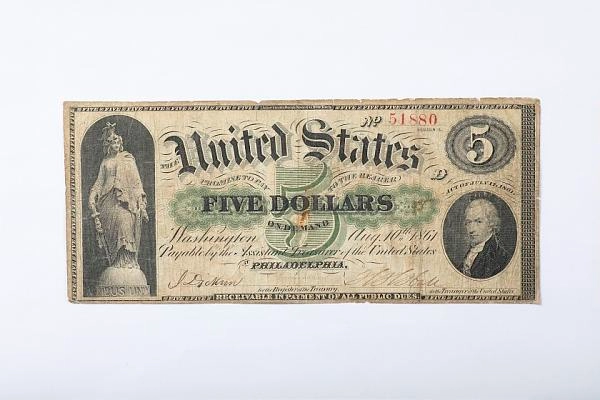
A large-size note is any U.S. federal note printed in the pre-1929 format. According to the Federal Reserve's U.S. Currency Education Program, notes were reduced to 6.14 by 2.61 inches, from 7.375 by 3.125 inches, with the 1929 change.
Collectors call large-size notes "horse blankets" for their size. Joshua McMorrow-Hernandez, writing for PCGS, explains the reason for the switch: the Bureau of Engraving and Printing was printing far more notes each year in the 1920s, the special paper was expensive, and cost studies showed a smaller note would save millions of dollars.
The date printed on a note is its series, not necessarily the year it was printed. A Series 1923 note may have been printed several years later, which is why collectors identify notes by series and catalog number rather than by printing year.
The Main Classes of Large-Size Notes
Large-size currency comes in several distinct classes, each issued under different laws and backed by different promises. The Bureau of Engraving and Printing's history of currency notes describes each class; the dates below are the BEP's issuing periods for the class as a whole, which in several cases continued into the small-size era.
| Class | Issued | Issuer and backing | How to recognize it |
|---|---|---|---|
| Demand Notes | 1861–1862 | U.S. Treasury; payable on demand in coin | No Treasury seal |
| United States Notes (Legal Tender) | 1862–1971 | U.S. Treasury; legal tender by law | "United States Note" or legal-tender wording |
| National Bank Notes | 1863–1935 | Chartered national banks, secured by U.S. government securities | Bank name, town and charter number printed on the face |
| Gold Certificates | 1865–1936 | U.S. Treasury; redeemable in gold coin | "Gold Certificate" in the title; the BEP describes orange seals |
| Silver Certificates | 1878–1965 | U.S. Treasury; redeemable in silver | "Silver Certificate" in the title |
| Treasury (Coin) Notes | 1890–1893 | U.S. Treasury; issued for silver bullion purchases | Series 1890 or 1891 |
| Federal Reserve Notes | 1914–present | Federal Reserve Banks; obligation of the United States | Large-size Series 1914 and 1918, red or blue seal |
| Federal Reserve Bank Notes | 1915–1945 | The individual Federal Reserve Bank that issued them | "National Currency" across the top, with the issuing bank named |
Silver certificates and Federal Reserve Notes continued after 1929 in small size. For the small-size versions, see our guides to silver certificate value and Federal Reserve Notes versus silver certificates.
Federal Reserve Bank Notes vs Federal Reserve Notes
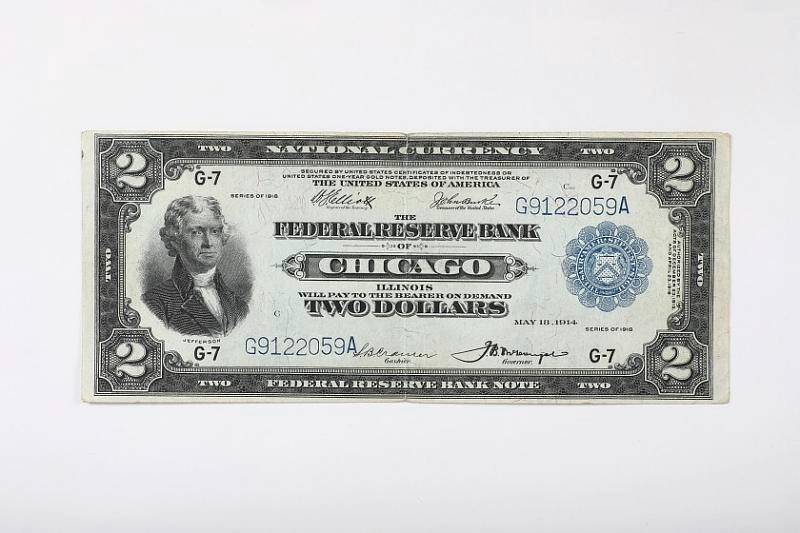
A Federal Reserve Bank Note is an obligation of the single Federal Reserve Bank that issued it, while a Federal Reserve Note is an obligation of the United States, issued through the Federal Reserve Banks. The BEP describes Federal Reserve Bank Notes as "obligations of the individual Federal Reserve banks that issued them," and notes they never made up a significant share of currency in circulation.
The two look similar at a glance, so check the top of the note. According to Paul M. Green in Numismatic News, Federal Reserve Bank Notes carry "National Currency" at the top center, and the Series 1915 notes state they are "Secured by United States Bonds Deposited with the Treasurer of the United States of America." Large-size Federal Reserve Notes instead read "Federal Reserve Note."
Federal Reserve Bank Notes came in two large-size series:
- Series 1915 — $5, $10 and $20, issued by only five banks: Atlanta, Chicago, Kansas City, San Francisco and Dallas, and not every bank issued every denomination.
- Series 1918 — added the $1, $2 and $50, with wider participation among the twelve districts.
One of the best-known is the Series 1918 $2, the "Battleship Note." Cory Williams, writing for PCGS, explains that it shows Thomas Jefferson on the face and the battleship USS New York on the back, and was issued under the Pittman Act of April 23, 1918, which allowed silver dollars to be melted and silver certificates withdrawn; the Federal Reserve banks issued these notes to circulate in their place. Each note carries two Treasury signatures and two signatures from officers of the issuing bank, and because those officers changed, the signature combinations are part of what collectors pursue.
National Bank Notes and the Arizona Connection
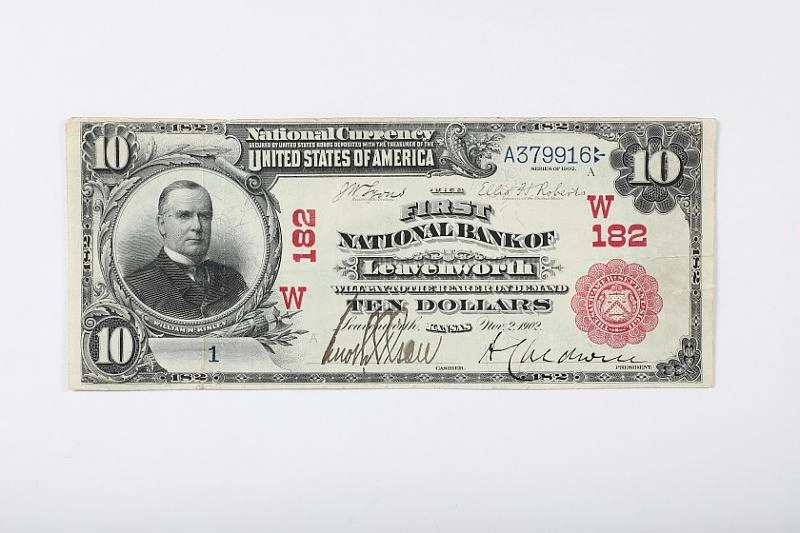
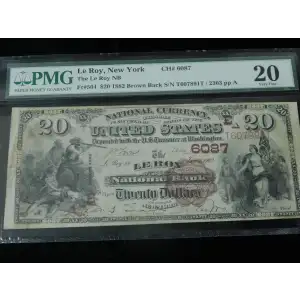
National Bank Notes are the large-size class most tied to place. Each note was printed with the name, town and charter number of the national bank that issued it, so the same design exists for thousands of banks across the country.
That is why many collectors build National Bank Note collections by state or town. Notes from Arizona banks are one example: because the state and town are printed on the face, a collector can build a set around a single state, including banks chartered before statehood in 1912. The design and series identify the type; the bank and the number of surviving notes from it drive much of the interest in a specific note.
Large-size Nationals do come through our paper money department. Recent stock in our paper money department has included an 1882 $20 Brown Back National, a 1902 $10 National Currency note and a 1922 $20 Gold Certificate. Inventory changes, so check the page for what is in stock today.
What Drives Large-Size Note Value
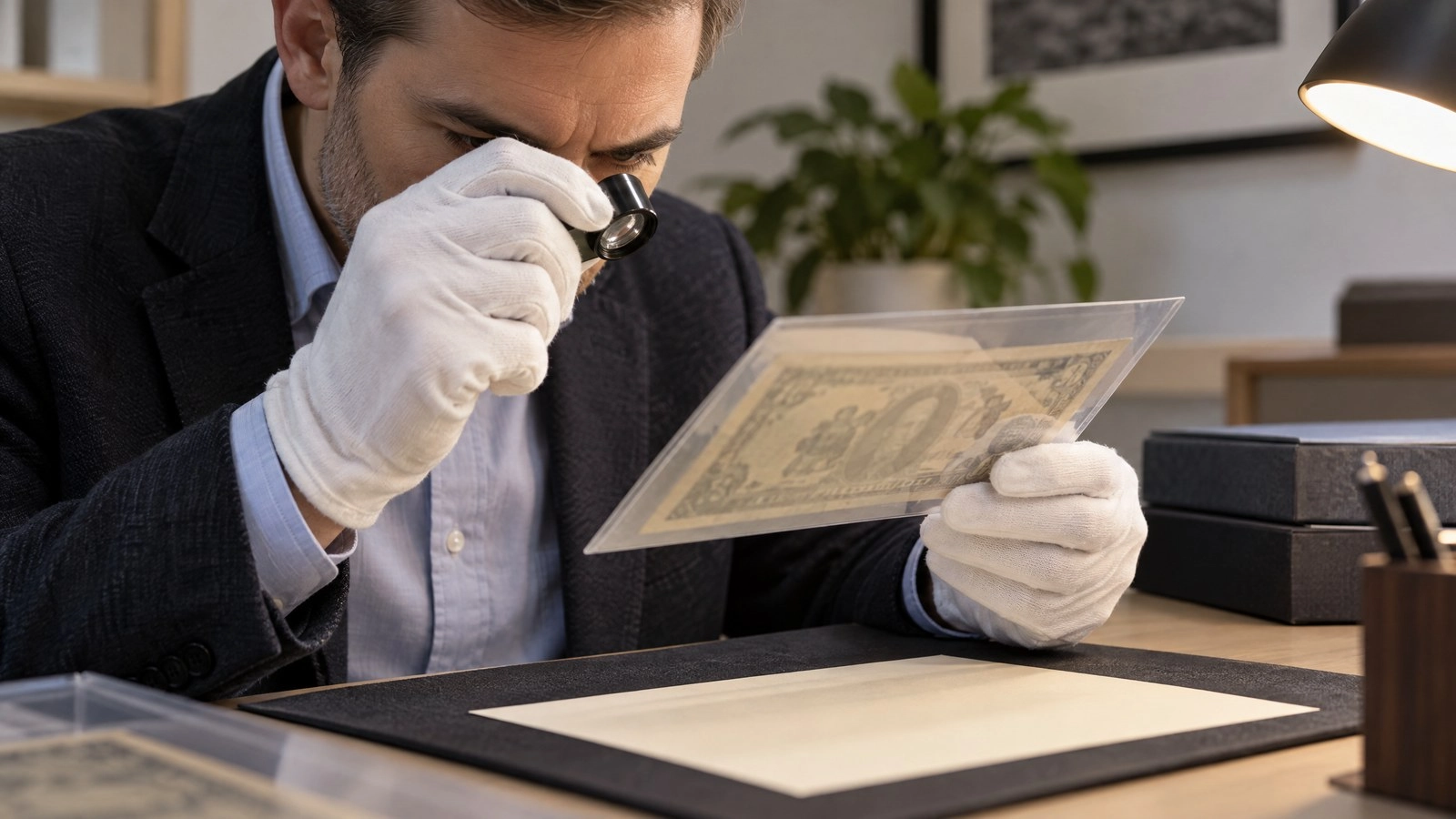
A large-size note's value comes from six factors, and the face value is the least important of them. The U.S. Currency Education Program states that all U.S. currency issued since 1861 remains valid and redeemable at full face value. Collector demand for large-size notes is generally above face.
- Class and catalog number. Collectors identify large-size notes by Friedberg number, from the standard reference Paper Money of the United States. The number pins down class, series, denomination and signature combination.
- Signature combination. Many series were printed under several pairs of Treasury signatures, and some pairs are far scarcer than others.
- Issuing bank or district. For National Bank Notes and Federal Reserve Bank Notes, the bank or district can matter as much as the type.
- Grade. Grade is an expert opinion of a note's condition on a scale of 1 to 70. A crisp, uncirculated note and a heavily folded one of the same type can differ greatly in value.
- Originality. PMG awards its Exceptional Paper Quality (EPQ) designation to a note that, in its graders' opinion, has not been "physically, chemically or materially processed to give the appearance of a higher grade." Pressing, washing and repairs all count against a note.
- Star notes and serial numbers. A star in the serial number marks a replacement note, which is usually scarcer than the regular issue. Very low serial numbers also attract collectors.
We do not print values here, because they depend on all six factors at once and move with the market. A note's value is best established by looking at the specific note — which is what an appraisal does.
Selling Large-Size Notes
Before you sell Federal Reserve Bank Notes or any other large-size note, leave them exactly as they are. Do not flatten, press, wash, trim or tape a note. Each of those is the kind of processing that lowers a note's grade or costs it an originality designation, and the damage generally cannot be reversed.
A few practical steps help:
- Keep notes in the holders or envelopes they came in, and do not remove a note from a PMG or PCGS Banknote holder.
- Keep an inherited collection together, with any albums, receipts or notes the collector left. Provenance and the collector's own attributions can save time.
- Handle notes by the edges, with clean, dry hands.
Copper State Coin & Bullion buys and sells paper money, including large-size notes, at both our Peoria and Phoenix stores, and offers complimentary appraisal for sellers. If you need documentation for insurance, that is a separate, paid service; our guide to insurance appraisals explains what that document contains. Start on our Sell to Us page or simply bring the notes in.
This article is educational and reflects general information about precious metals and collectible coins. It is not investment, tax or legal advice, and Copper State Coin & Bullion is not a registered investment adviser, broker-dealer or tax professional. Metal prices fluctuate and past performance does not indicate future results. Consult a qualified professional about your own situation.
Frequently Asked Questions
What years were large-size U.S. notes issued?
Large-size federal notes were issued from 1861, starting with the Civil War Demand Notes, until Series 1928 small-size notes entered circulation on July 10, 1929. The last large-size series vary by class; Federal Reserve Bank Notes and Federal Reserve Notes, for example, last appeared in large size as Series 1918.
Are old large dollar bills still legal tender?
They keep their face value: the U.S. Currency Education Program states that all U.S. currency issued since 1861 remains valid and redeemable at full face value. In practice, spending a large-size note at face value usually makes little sense, because collector demand generally puts its value above face. Have it looked at before you spend it.
What is a Federal Reserve Bank Note?
A Federal Reserve Bank Note is a note issued by one individual Federal Reserve Bank as its own obligation, rather than as an obligation of the United States like a Federal Reserve Note. Large-size examples come in Series 1915 and 1918, read "National Currency" across the top and name the issuing bank. The Series 1918 $2 "Battleship Note" is one of the best known.
How do I find out what my large-size note is worth?
Identify the class, series and Friedberg number, then assess the grade honestly or have it graded by PMG or PCGS Banknote. For a quicker answer, Copper State Coin & Bullion offers complimentary appraisal for sellers at its Peoria and Phoenix stores.
Should I clean or flatten a large-size note before selling it?
No. Washing, pressing, flattening or repairing a note can lower its grade and disqualify it from PMG's Exceptional Paper Quality designation, which is awarded only to notes not processed to look better. Folds and wear are part of a note's history; bring it in as it is.
Bring Your Large-Size Notes to Copper State
Copper State Coin & Bullion brings over 40 years of numismatic and bullion experience to paper money as well as coins. Whether you have a single 1918 note or an inherited album of Nationals, bring it to either store for a complimentary appraisal, or browse our paper money department if you are building a collection.
Copper State Coin & Bullion — Peoria
8360 W. Thunderbird Road C#103
Peoria, AZ 85381
(623) 432-3953
Mon–Fri 9:00am–5:00pm · Sat 9:00am–4:00pm · Sun closed
Copper State Coin & Bullion — Phoenix
4550 E Bell Road Suite 188
Phoenix, AZ 85032
(602) 377-1944
Mon–Fri 9:00am–5:00pm · Sat 9:00am–4:00pm · Sun closed