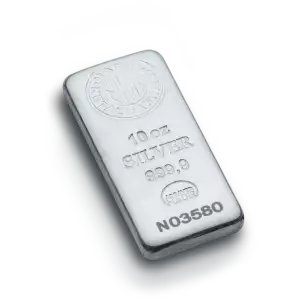
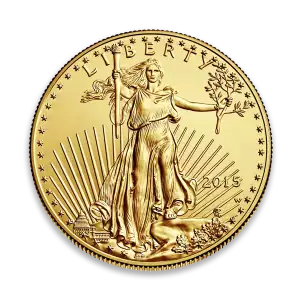
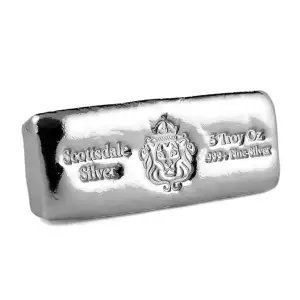
If you live in the West Valley and want to buy or sell coins, bullion or paper money in person, the nearest Copper State Coin & Bullion counter is the Peoria store. There is no Copper State shop in Surprise, Sun City or Goodyear — Peoria is the West Valley location and Phoenix is the second store, and both addresses are in the contact block at the end. What follows is what the drive gets you: how an Arizona dealer is required to handle a purchase, how bullion is treated for state tax, and what usually comes across the counter from this side of the Valley.
This article is educational and reflects general information about precious metals and collectible coins. It is not investment, tax or legal advice, and Copper State Coin & Bullion is not a registered investment adviser, broker-dealer or tax professional. Metal prices fluctuate and past performance does not indicate future results. Consult a qualified professional about your own situation.
Where the West Valley sits relative to the counter
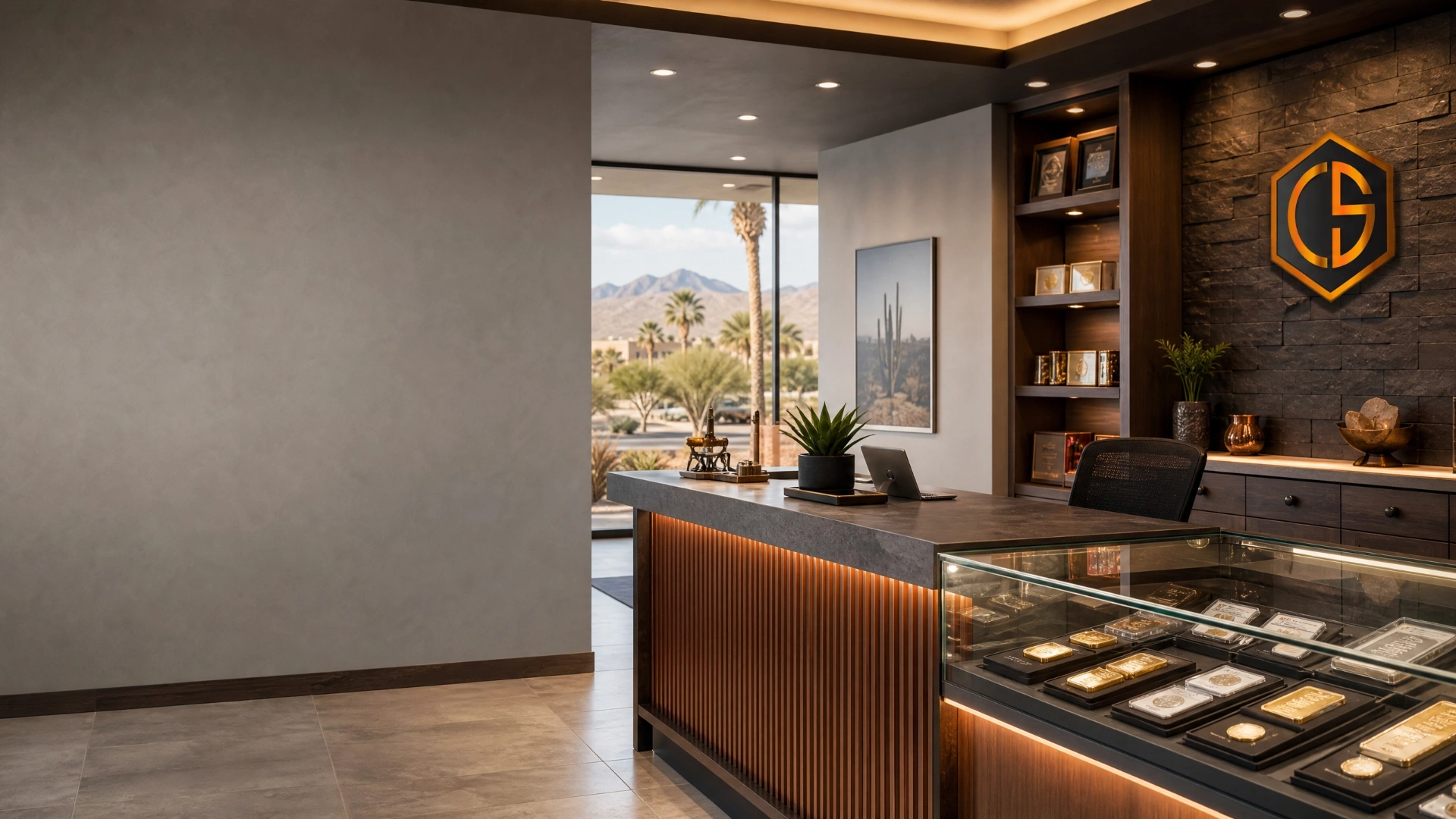
The Peoria store sits on West Thunderbird Road, and Thunderbird is the spine of this part of the Valley — it runs west out of Peoria straight into Sun City and on toward Surprise. From Goodyear and the Estrella side the approach is different, usually up Litchfield or Dysart and across on Bell or Thunderbird, so it is worth checking your own route rather than assuming the map.
Copper State keeps the same hours at both stores, including Saturdays, which matters if a weekday trip across the Valley is not realistic. The full hours are in the contact block at the end.
What Arizona law requires when a dealer buys from you
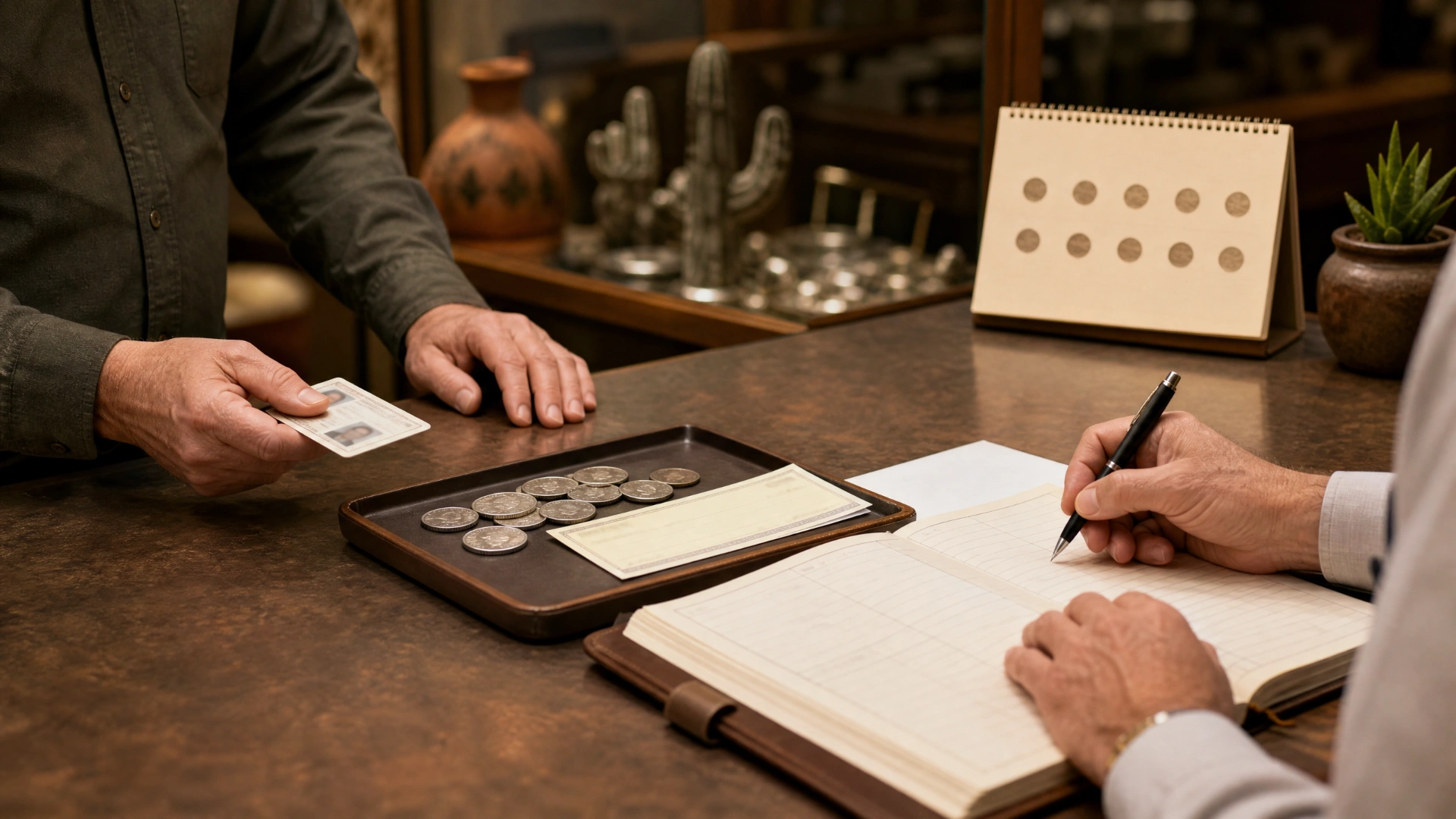
Arizona regulates dealers in precious items in Title 44, Chapter 11, Article 1 of the Revised Statutes. This is the part of the visit that surprises people, and none of it is shop policy — it is state law, and it binds every dealer in precious items in Arizona. Section 44-1604 then lets a city, town or county add stricter requirements on top, so the counter you visit may be working to more than the state minimum.
Which of your items are covered is the first question, and the statute answers it plainly. A.R.S. § 44-1601 defines a precious item as secondhand gold, silver or platinum jewelry, flatware or holloware, plus secondhand stones and pearls — and states that "precious item does not include coins". So a mixed lot arrives at the counter as two streams: the scrap chain and the silver flatware fall inside the rules below, and the coins do not. When a dealer buys a precious item, A.R.S. § 44-1602 requires it to:
- require the seller to identify themselves with "a valid motor vehicle operator's license, valid motor vehicle nonoperating identification license, valid armed forces identification card or other valid photo identification";
- record the seller's details and keep the record "for six months from the date of purchase";
- deliver to local law enforcement, "at least once each week in which he makes a purchase", a complete list of items purchased;
- hold each item "in the same shape and form as receipted for" for ten calendar days after that list is delivered; and
- pay by check only, "made payable to a named payee who is the actual intended seller".
That last point is the one worth knowing before you arrive, and it is also where the coin exclusion matters most: if you were expecting cash across the counter for a scrap gold lot, the statute is the reason it does not work that way — while a coin sale is outside the article entirely. The ten-day hold is likewise why a bracelet you sold on Tuesday is not in the case on Friday.
A.R.S. § 44-1603 then sets out where the article does not apply at all, including regularly scheduled Arizona gem and mineral shows and purchases from merchants and wholesale dealers. The split between the two, and what a city ordinance can add on top, is set out in why an Arizona shop asks for your ID and pays by check.
Bring photo ID. It is the single thing that turns a wasted trip into a completed transaction.
How Arizona treats bullion for transaction privilege tax
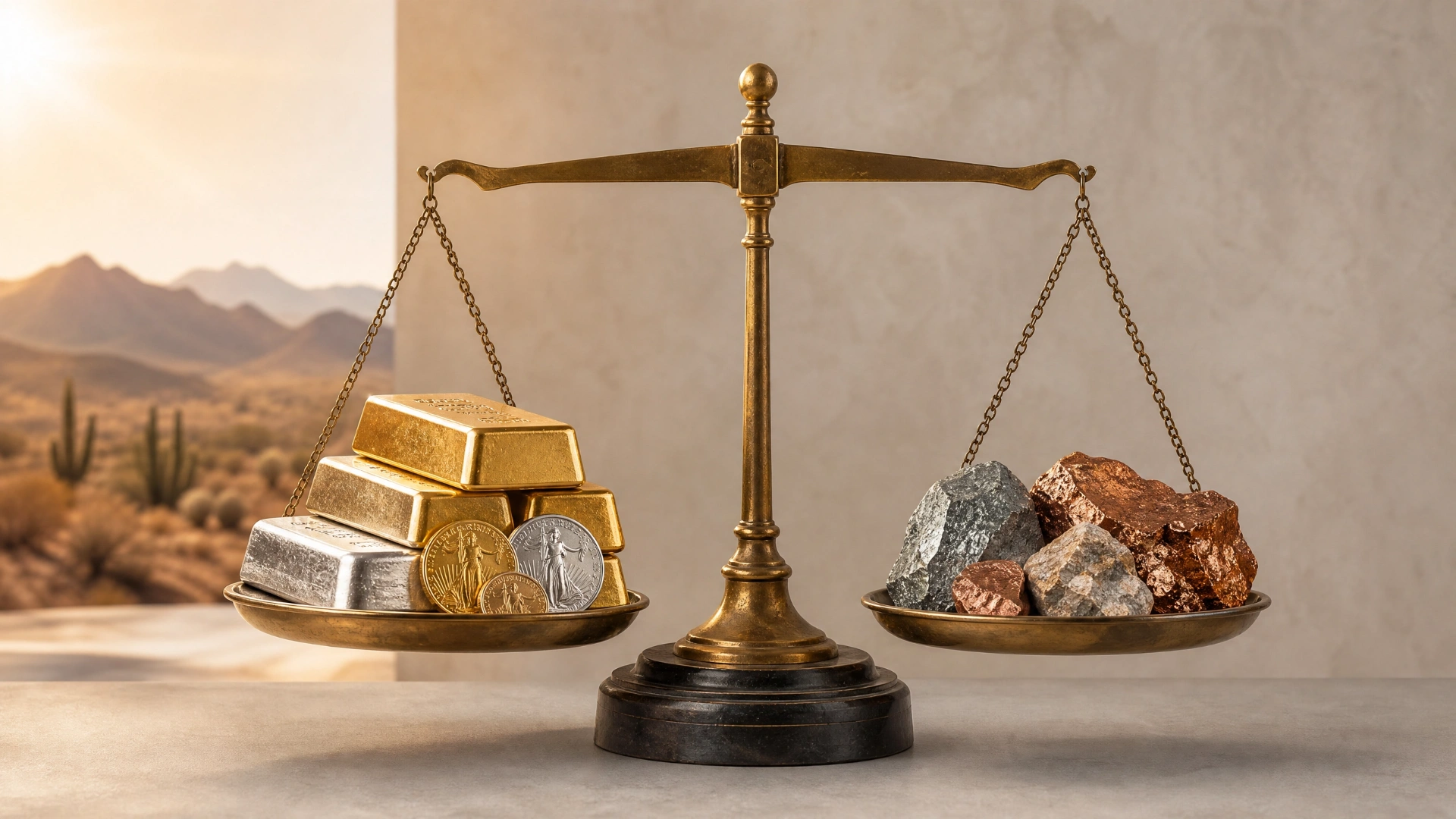
Arizona's retail classification statute, A.R.S. § 42-5061(A)(21), exempts from the retail tax base "the sale of cash equivalents and the sale of precious metal bullion and monetized bullion to the ultimate consumer". The same paragraph defines monetized bullion as "coins and other forms of money that are manufactured from gold, silver or other metals and that have been or are used as a medium of exchange", and precious metal bullion as "precious metal, including gold, silver, platinum, rhodium and palladium, that has been smelted or refined so that its value depends on its contents and not on its form".
The paragraph carries its own limit: "the sale of coins or other forms of money for manufacture into jewelry or works of art is subject to the tax". Tax treatment turns on the specific facts of a transaction and on local rates, so this is a description of the statute rather than advice about your purchase — consult a tax professional about your own situation.
What West Valley sellers actually bring in
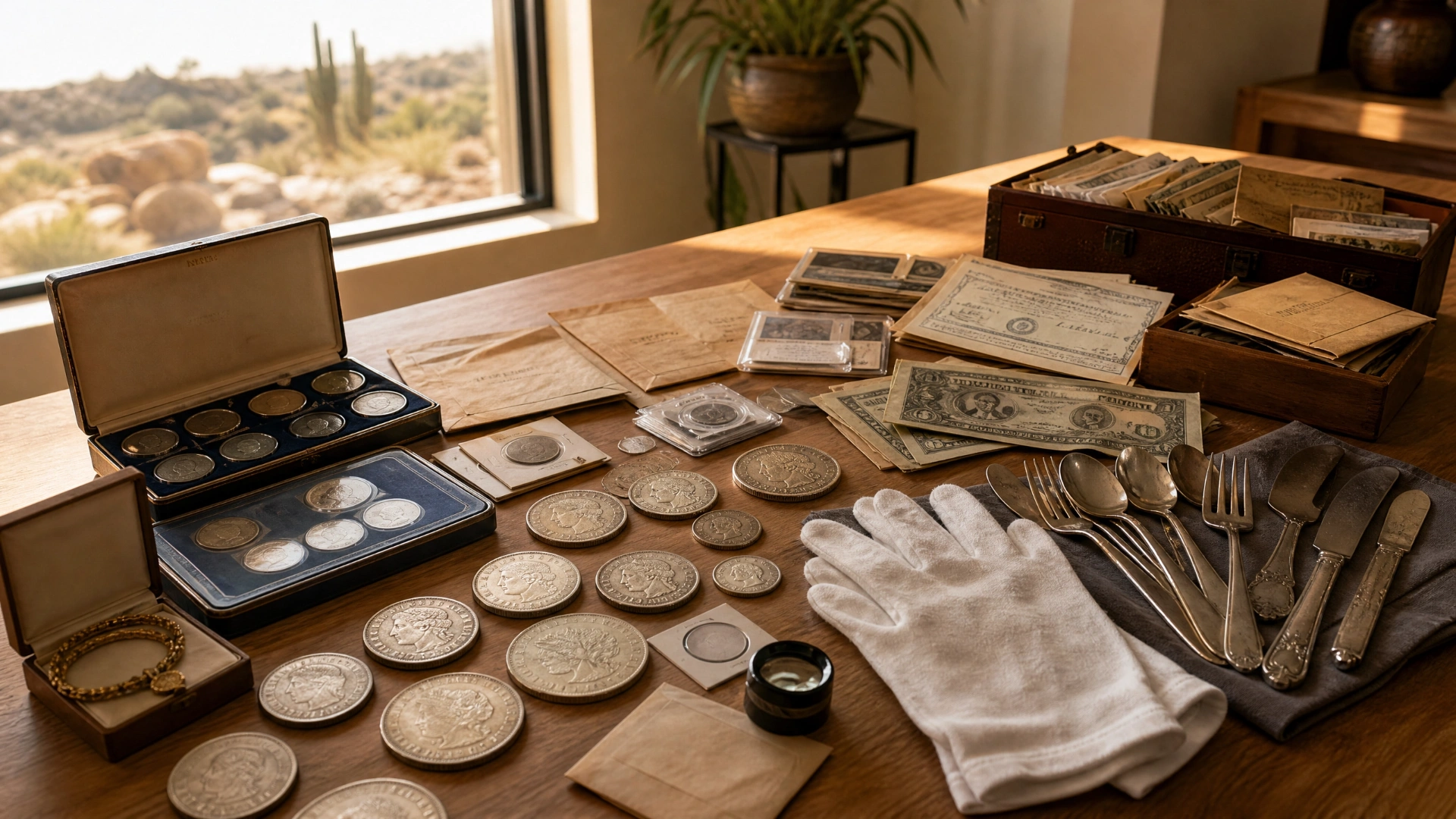
Sun City was built as an age-restricted retirement community and much of the surrounding West Valley followed the same pattern, which shapes what crosses the counter here. A large share of the coins and currency that arrive from this side of the Valley come from estates and downsizing rather than from active collectors: a parent's Morgan and Peace dollar rolls, a box of proof sets bought new from the Mint in the 1970s and 1980s, silver certificates and old notes kept in a drawer, mixed 90% silver from before 1965, and jewelry and flatware that nobody in the family wants.
Those lots need different handling. Bullion-grade material is priced off metal content. Collectible coins are priced on date, mintmark and condition, and a single better date — one with a low mintage or a thin certified population — can carry more value than the rest of the box combined, which is the practical argument for not sorting or cleaning anything before you come in. Cleaning is among the most reliable ways to reduce what a coin is worth, and the damage cannot be undone.
What happens at the counter
Copper State offers a complimentary appraisal for sellers. Paid insurance appraisal documentation — a written valuation for an insurer or an estate — is a separate, chargeable service, and it is worth saying which one you need when you arrive.
Over 40 years of numismatic and bullion experience sits behind the counter, and the shop submits coins to PCGS and NGC and holds memberships including PMG, the Certified Coin Exchange and ICTA. The stores also take want lists: if you are looking for a specific date or a type you are missing, leave the list and staff will source against it.
Bring photo ID and the whole lot — unsorted, uncleaned, in whatever holders, envelopes and packaging it is already in — plus any paperwork that came with it. Our first-visit checklist covers the rest in detail.
Frequently asked questions
Is there a coin shop in Surprise, Sun City or Goodyear?
Copper State Coin & Bullion does not have a store in any of those cities. The nearest counter is the Peoria store at 8360 W. Thunderbird Road, which is the closest of the two Copper State locations for most of the West Valley; the second store is on East Bell Road in Phoenix.
Do I need an appointment to sell coins?
Walk-ins are accepted at both stores during opening hours. For a large estate lot, or if you need paid insurance appraisal documentation rather than a sale appraisal, calling ahead means the right person and enough counter time are available when you arrive.
Why does an Arizona dealer ask for photo ID and pay by check?
A.R.S. § 44-1602 requires a dealer buying a precious item to have the seller identify themselves with a valid driver's license, non-operating identification license, armed forces ID or other valid photo identification, and states that payment "shall be by check only, made payable to a named payee who is the actual intended seller". Both are statutory requirements rather than shop policy.
Does Arizona charge sales tax on gold and silver bullion?
A.R.S. § 42-5061(A)(21) exempts sales of precious metal bullion and monetized bullion to the ultimate consumer from the retail classification, while coins or other forms of money sold for manufacture into jewelry or works of art remain taxable. Local rates and the facts of a transaction can affect the outcome, so ask a tax professional about your own purchase.
Should I clean my coins before bringing them in?
No. Cleaning is a common and permanent way for a coin to lose value before it reaches a dealer, and the damage is visible to a grader. Bring coins as they are, in whatever holders they are already in, and let them be looked at first.
What are the Peoria store's hours?
The Peoria store is open Monday to Friday 9:00 to 17:00 and Saturday 9:00 to 16:00, closed Sunday. The Phoenix store keeps the same hours. Hours can change seasonally, so it is worth a call before a long drive across the Valley.
Come in from the West Valley
If you are coming from Surprise, Sun City, Goodyear or anywhere else on the west side, the Peoria store is the one to aim for. Bring photo ID and the whole lot, unsorted, and ask for a complimentary appraisal. Have a look at the bullion, numismatic coins and paper money ranges before you come, and if you would rather start with a list, sell to us explains how that works.
Peoria
Copper State Coin & Bullion
8360 W. Thunderbird Road C#103
Peoria, AZ 85381
(623) 432-3953
Mon–Fri 9:00–17:00 · Sat 9:00–16:00 · Sun closed
Phoenix
Copper State Coin & Bullion
4550 E Bell Road Suite 188
Phoenix, AZ 85032
(602) 377-1944
Mon–Fri 9:00–17:00 · Sat 9:00–16:00 · Sun closed