Confederate currency and obsolete banknotes can be worth anywhere from a few dollars to thousands, depending on rarity, condition, authenticity, and collector demand. This guide is for collectors, inherited-collection owners, and sellers who want a practical way to judge what their paper money may be worth before taking the next step.
What Are Confederate Currency and Obsolete Banknotes?
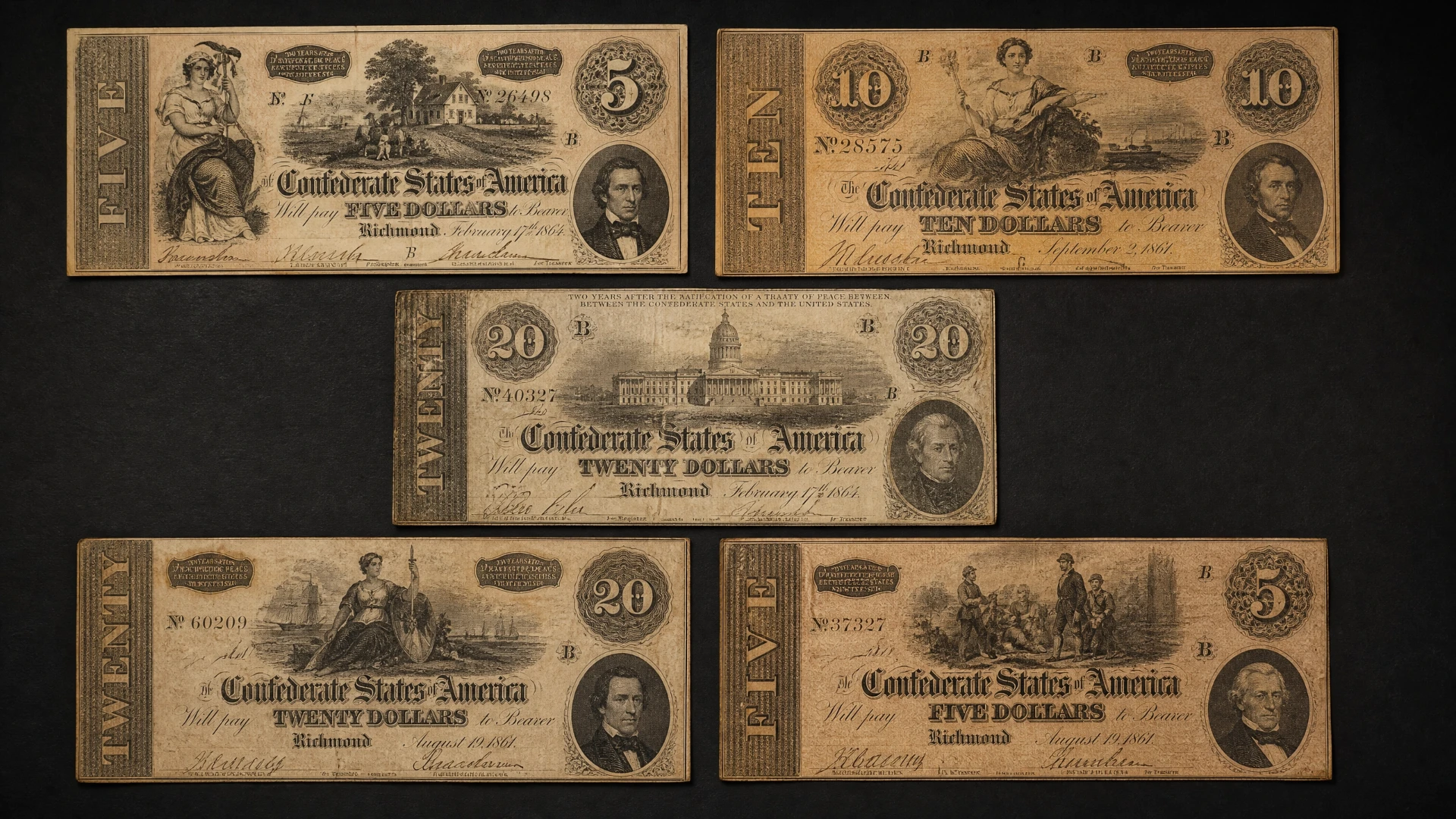
Confederate currency is paper money issued by the Confederate States of America during the Civil War, while obsolete banknotes are older notes issued by banks, states, cities, or private entities before modern federal paper money became standard. These notes are collectible today because they represent a specific historical moment and, in some cases, survive in very limited numbers.
The word numismatic describes the study and collection of money, including coins, paper currency, and related items, a field represented nationally by the American Numismatic Association. For paper money collectors, the historical interest of a note often matters as much as the image or denomination printed on it.
Are These Old Banknotes Worth Anything Today?
Yes, some Confederate notes and obsolete banknotes are worth real money, but not every old note is valuable. Value depends on the note's rarity, condition, authenticity, and how strongly collectors want that specific issue.
A note that is common, heavily worn, damaged, or altered may have only modest collectible value. By contrast, a scarce issue in attractive condition can bring a strong premium, especially when it has been authenticated by a respected grading service.
What Makes a Note Valuable?
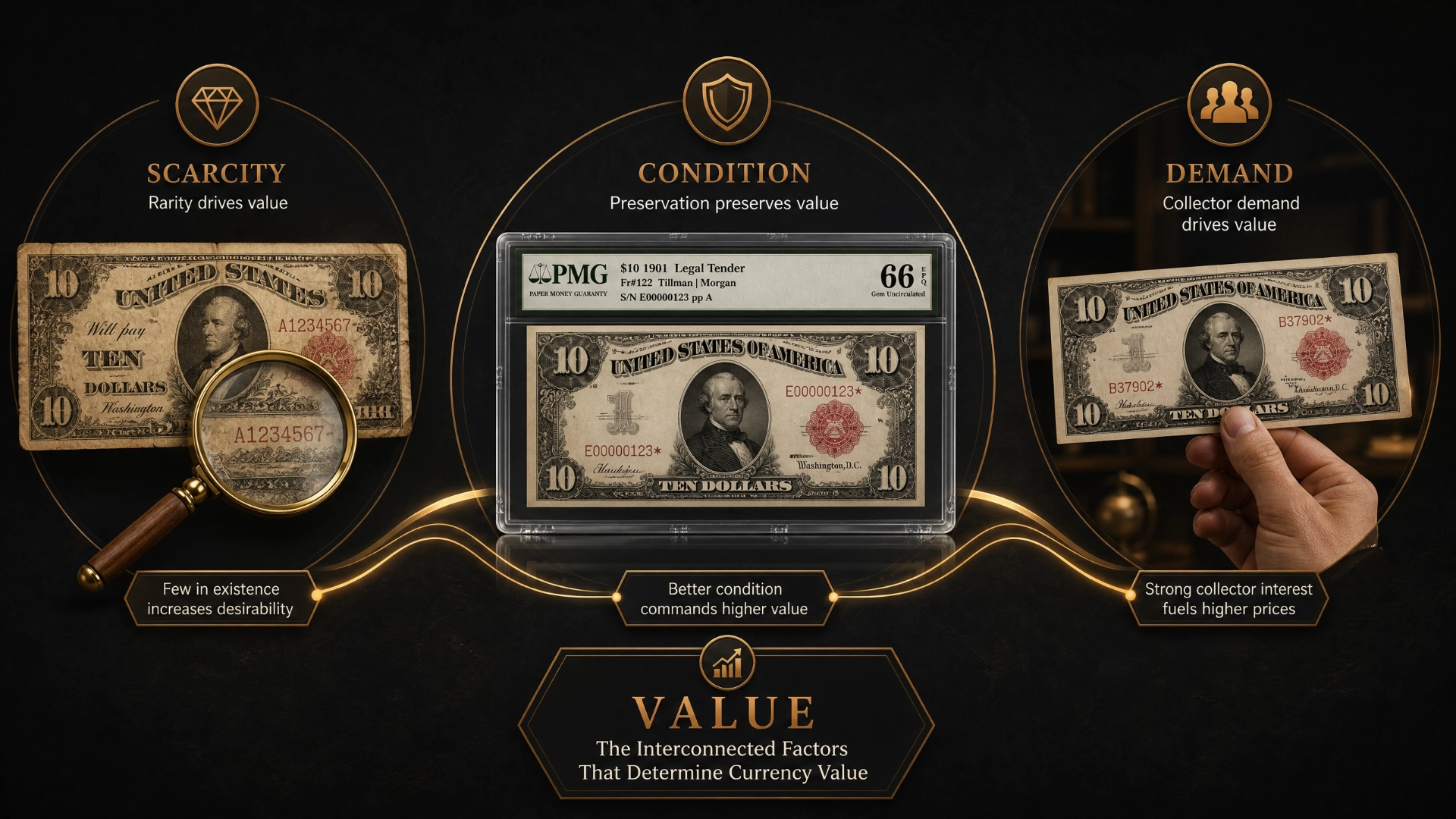
A note is valuable when it combines scarcity, demand, and solid preservation. The biggest drivers are rarity, condition, historical importance, and whether the note has been certified as genuine.
Premium is the amount a collector pays above a note's base value because of rarity, eye appeal, or demand. Melt value is the value of the metal in a coin, a concept explained further in our guide to coin melt value, which generally does not apply to paper money, and spot price is the live market price of a metal like gold or silver; those terms matter more in bullion than in currency, but collectors sometimes hear them in broader dealer conversations.
Rarity and Historical Significance
Scarce issues, unusual denominations, and notes tied to important Civil War history usually attract more attention from collectors. Confederate currency is especially interesting because it was issued during a period of intense inflation and instability, which affected survival rates and market demand.
A note with a small original print run or a well-known variety can be far more collectible than a more common note from the same era. Historical context matters, but rarity usually determines whether a note is merely old or truly desirable.
Condition and Grading
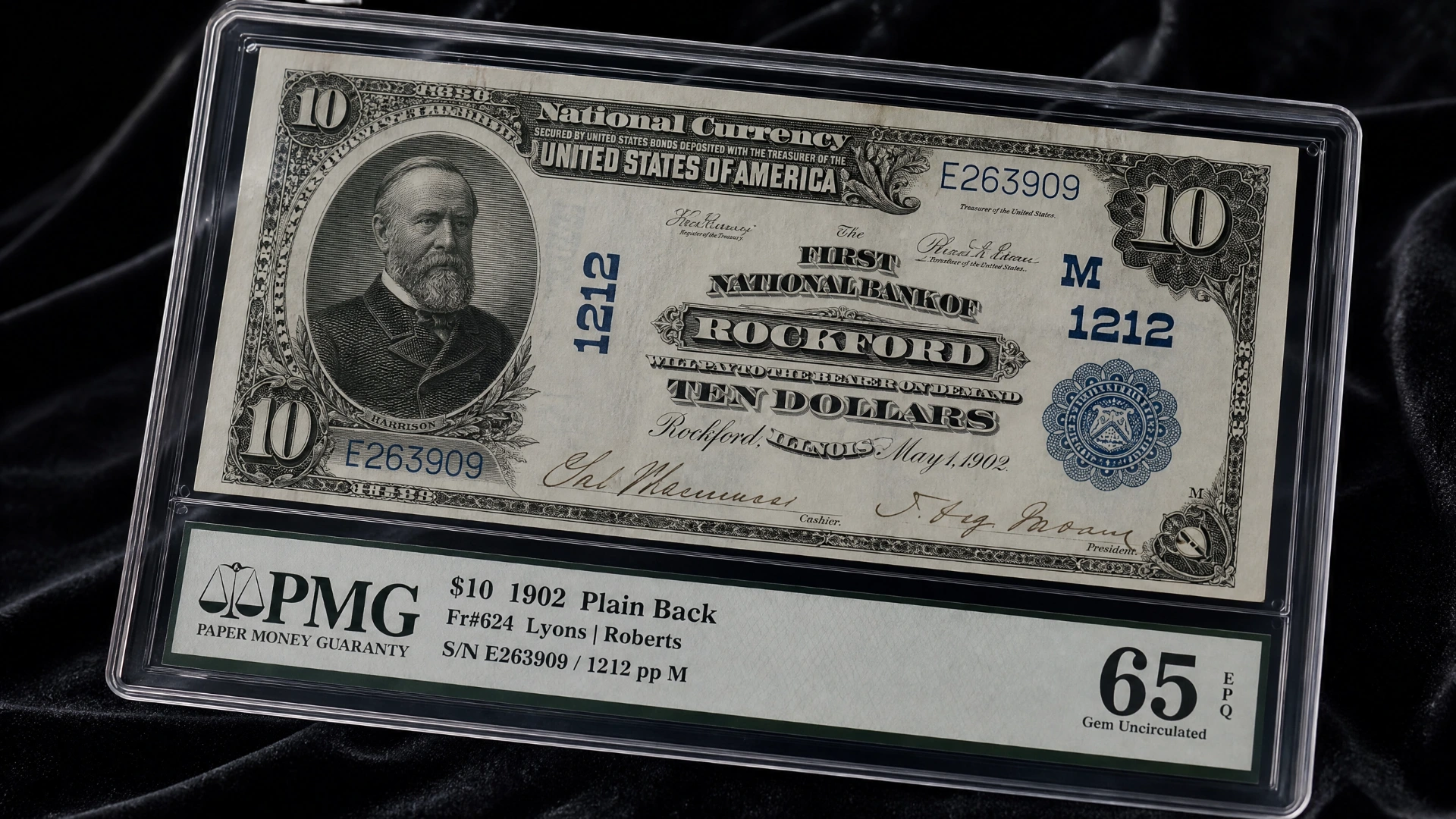
Condition is one of the most important factors in paper money value, and even small flaws can change the market significantly. Grading is the process of assessing a note's condition on a standardized scale, with higher grades indicating better preservation.
Paper money grading looks at folds, tears, stains, pinholes, repairs, centering, and overall eye appeal. A note that looks similar at a glance may bring a very different price if one example is crisp and another is heavily circulated.
Authenticity and Alterations
Authenticity matters because counterfeit, repaired, or altered notes can lose much of their value. A genuine note that has been cleaned, pressed, or tampered with may still be collectible, but buyers usually pay less for it than for an untouched example.
This is one reason specialists often recommend third-party certification for better Confederate currency and obsolete banknotes. Services such as the PMG grading service and PCGS review notes for authenticity and grade, which helps buyers and sellers deal with the market more confidently.
Which Confederate Notes and Obsolete Bills Are Most Sought After?
Collectors tend to seek notes that are scarce, visually attractive, historically important, or linked to well-known issues. Confederate notes from earlier emissions, scarcer denominations, and examples in higher grades often draw the strongest interest.
Obsolete banknotes from local banks, territorial issuers, and uncommon private institutions can also be highly collectible if surviving examples are limited, and collectors can browse our currency inventory to see current examples. In practice, the best notes are usually the ones that combine clear authenticity, strong condition, and documented rarity.
How to Check Your Banknotes Before Selling
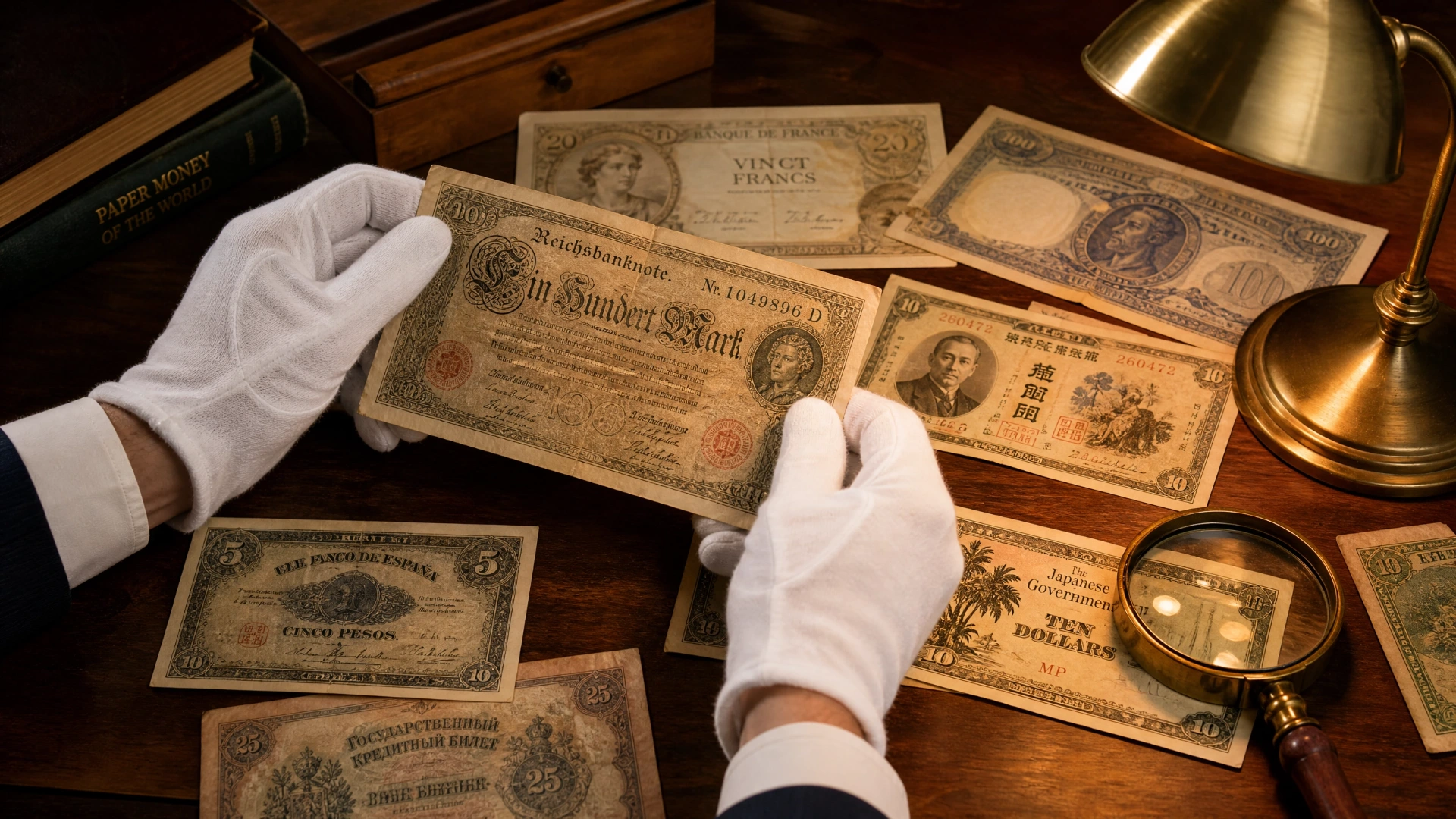
You can do a few basic checks before bringing notes in for evaluation, and those checks can help you avoid underselling something important. Start by identifying the issue, denomination, series details, and visible condition before handling the note too much.
Copper State Coin & Bullion regularly helps collectors sort through paper money that may look ordinary at first but turns out to be scarcer than expected. Our approach is straightforward: identify the note, verify authenticity, and explain what in the collection is worth pursuing further.
Look for Series, Signatures, and Serial Numbers
Series dates, signatures, and serial numbers help identify the exact note and narrow down its type. A serial number is the unique number printed on a note, while a series is the issuance date or design group tied to that note.
Take clear photos of both sides before placing the note in a sleeve or folder. If the note came from an inherited collection, keeping it together with any original envelope, inventory, or paperwork can also help with identification.
Compare Design, Issue, and Condition
Design differences can reveal whether the note is a common example or a more desirable variety. Small changes in portraits, seals, signatures, or wording sometimes matter a great deal to collectors.
Condition should be judged honestly and conservatively. Creases, staining, edge splits, tape, writing, and water damage all reduce value, even when the note is otherwise rare.
How Copper State Evaluates Confederate Currency
A note is valuable when it combines scarcity, demand, and solid preservation. The biggest drivers are rarity, condition, historical importance, and whether the note has been certified as genuine.
Premium is the amount a collector pays above a note's base value because of rarity, eye appeal, or demand. Melt value is the value of the metal in a coin, which generally does not apply to paper money, and spot price is the live market price of a metal like gold or silver; those terms matter more in bullion than in currency, but collectors sometimes hear them in broader dealer conversations.
Copper State Coin & Bullion looks at Confederate notes and obsolete banknotes the same way experienced paper-money collectors do: by weighing authenticity, originality, eye appeal, and how the market treats that exact issue. That matters because a note that seems ordinary to a beginner may be a better date, scarcer variety, or stronger grade than it first appears.
How to Sell Old Banknotes Safely
The safest way to sell old banknotes is to work with a specialist who understands paper money rather than relying on a non-specialist buyer. Paper currency has its own market, and a dealer who regularly handles obsolete banknotes is more likely to recognize the difference between a common old note and a legitimately collectible one.
If you are comparing offers, be careful with pawn shops or generic buyers that treat every note as if it were the same; our guide to selling to trusted dealers covers what to look for. For better pieces, certification, auction exposure, or a knowledgeable dealer can make a meaningful difference in both price and confidence.
When Should You Get an Appraisal?
You should get an appraisal whenever a note might be rare, appears to be in unusually strong condition, or is part of a larger inherited collection. A complementary appraisal is a basic value opinion, while an insurance appraisal is a formal written report used to document coverage or claims.
If you are unsure what you have, an appraisal can help you decide whether to sell, insure, or hold the notes. Copper State Coin & Bullion helps customers make that decision without pressure, and our Peoria appraisal team can separate common pieces from notes that deserve a closer look.
Why Paper Money Grading Matters
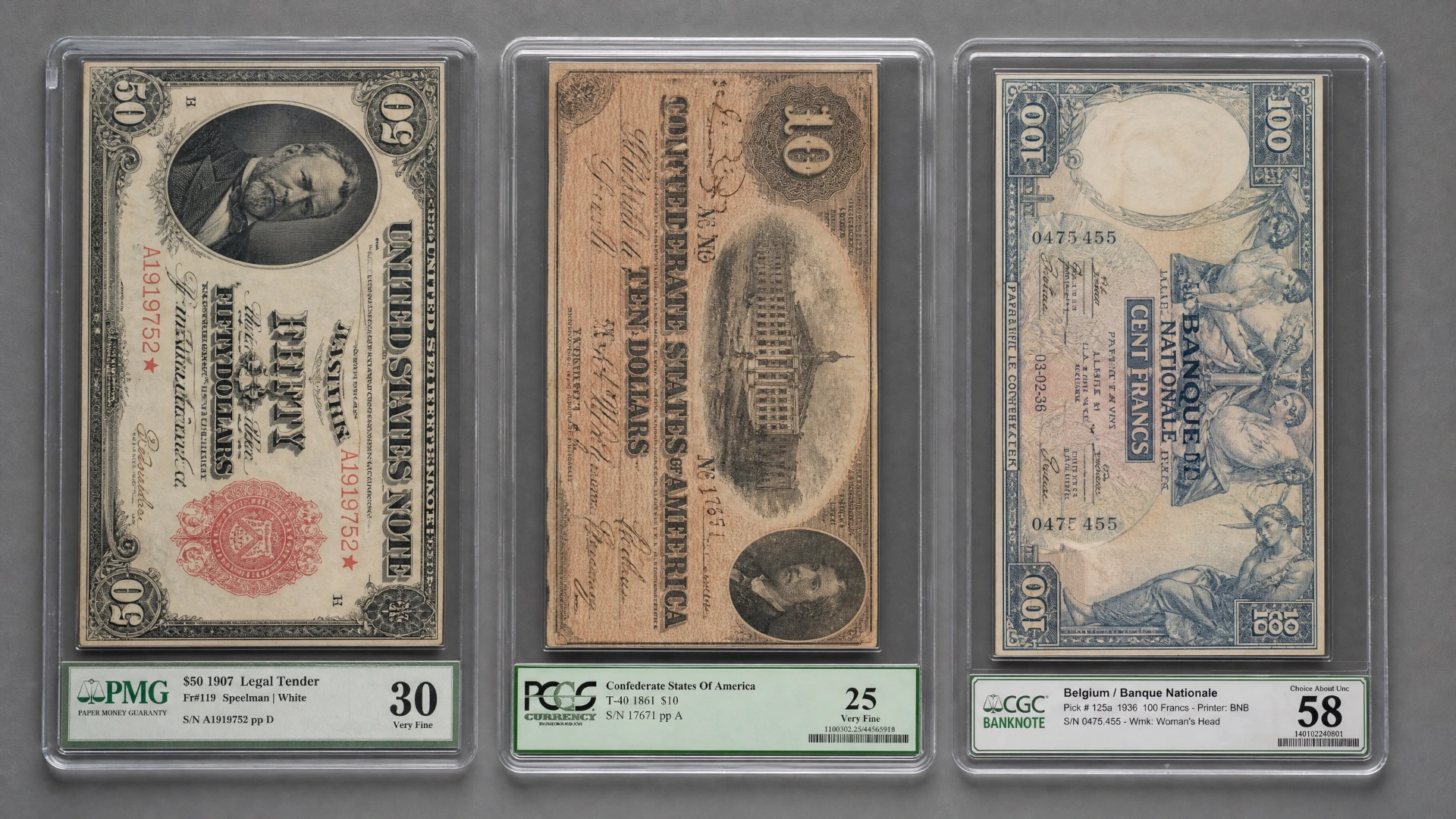
Paper money grading matters because certification can confirm authenticity and provide a consistent condition assessment. PMG is a third-party grading service that authenticates, grades, and encapsulates banknotes in a protective holder, and PCGS offers similar currency grading services.
Certified notes are often easier to sell because buyers trust the grade and do not have to guess about condition or originality. For scarce Confederate notes or important obsolete issues, certification can support stronger marketability and reduce uncertainty for both sides.
The Smithsonian's National Museum of American History notes that the Confederate government issued currency on eight separate occasions between 1861 and 1865, which helps explain why the series remains such a strong research and collecting field.
Common Mistakes to Avoid
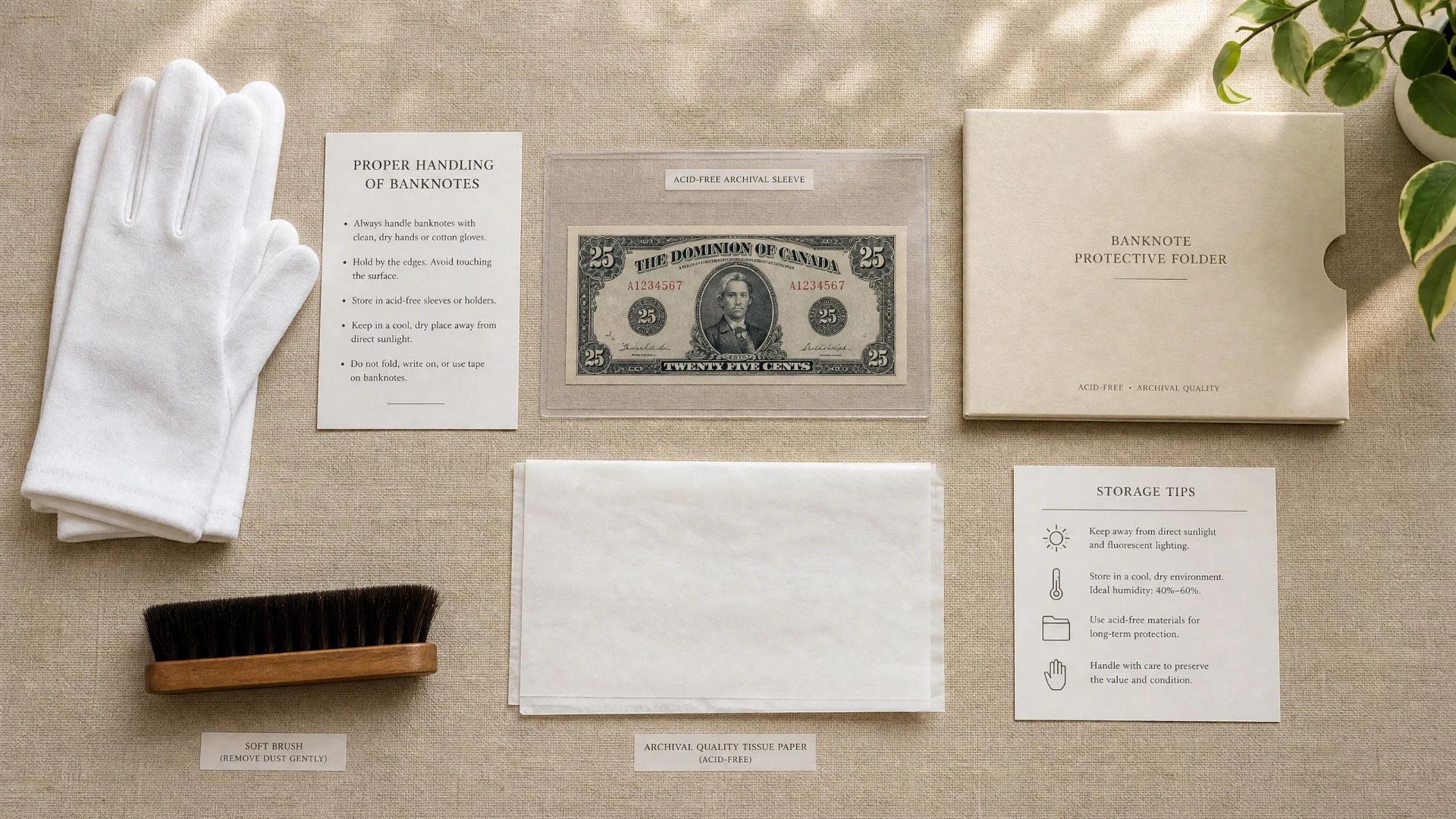
The biggest mistake is assuming every old note has high value simply because it is old. Age alone does not guarantee demand, and many notes are valuable only when rarity and condition line up well.
Do not fold, tape, clean, press, or write on the note. Avoid framing it with adhesive materials unless it is already protected in an archival holder, because improper handling can lower value quickly.
Where to Get Help With Confederate Currency or Obsolete Notes
A specialist dealer can help you identify, appraise, and possibly purchase Confederate currency or obsolete banknotes. That is especially useful if you have mixed paper money, inherited material, or notes you suspect may be rare.
Copper State Coin & Bullion serves collectors and sellers across the Phoenix metro and beyond, and our Arizona locations, including our Phoenix location, make it easy to get in-person guidance when you want a second opinion. We also work with online customers, which is helpful if you are researching first and deciding whether to visit later.
Ready to Find Out What Your Notes Are Worth?
Confederate currency and obsolete banknotes can be worth anything from modest collector value to a substantial premium, but the real drivers are rarity, condition, and authenticity. If you have a note that may be special, the smartest move is to have it reviewed by an expert before you sell it.
If you are in Arizona, bring your notes to our Phoenix location at 4550 E Bell Rd Ste 188 (602-377-1944) or our Peoria location at 8360 W Thunderbird Rd C103 (623-432-3953) for a complementary appraisal, or contact us online if you want help identifying what you have first.