What is the Morgan Silver Dollar?
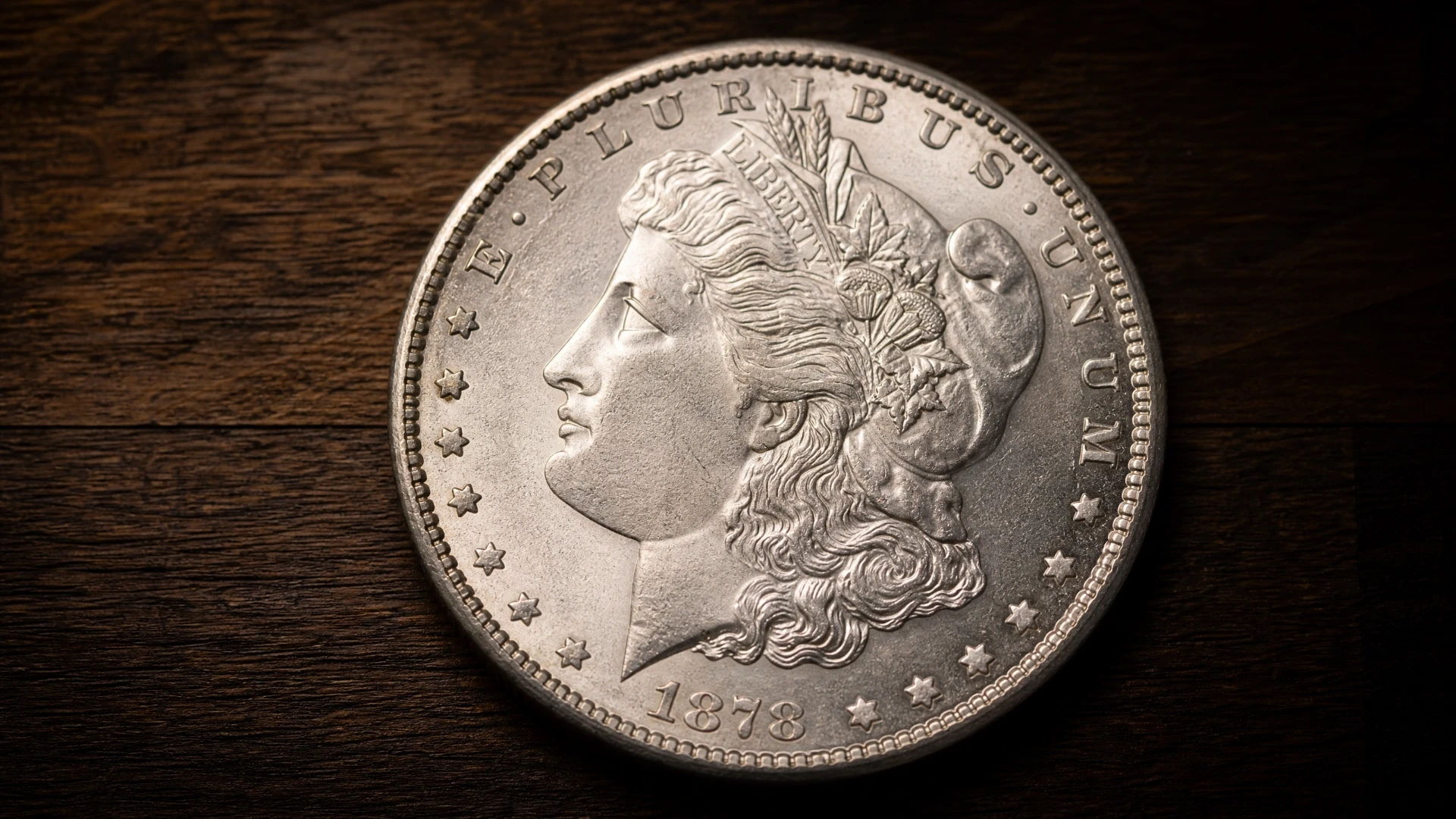
The Morgan silver dollar is a United States silver dollar designed by George T. Morgan and minted from 1878–1904 and again in 1921. It quickly became a cornerstone of American collecting because of its silver content, variety of mintmarks, and many collectible varieties.
Brief history and significance follow. The Morgan was struck at several mints (Philadelphia, New Orleans, Carson City, San Francisco, and Denver in 1921). Its composition is 90% silver and 10% copper, which gives it intrinsic "melt value" tied to silver prices. The coin's large size, attractive design, and many die varieties (VAMs) make it a favorite for both collectors and investors.
"Melt value" is the value of a coin based solely on the metal it contains at current market prices. At Copper State Coin & Bullion, we often see Morgan dollars come in as both historic artifacts and silver investments, which is part of their enduring appeal. Collectors looking to expand beyond Morgans can also browse our full selection of dollar coins available in our numismatic inventory.
Why collectors and investors still love Morgans
Morgan silver dollars remain popular because they combine bullion value, historical significance, and strong collector demand in a single, widely recognized coin. "Spot price" is the current market price of silver per troy ounce at which the metal is being traded on commodities markets.
Collectors value key dates and mintmarks far beyond melt value, while investors appreciate that many common-date Morgans trade at modest premiums over spot. Authoritative resources such as PCGS CoinFacts for Morgan dollars provide population data and auction records that support market pricing and help both sides of the market make informed decisions. Copper State Coin & Bullion uses these same references when advising Arizona collectors and national buyers.
Key dates, mints, and rarities to watch
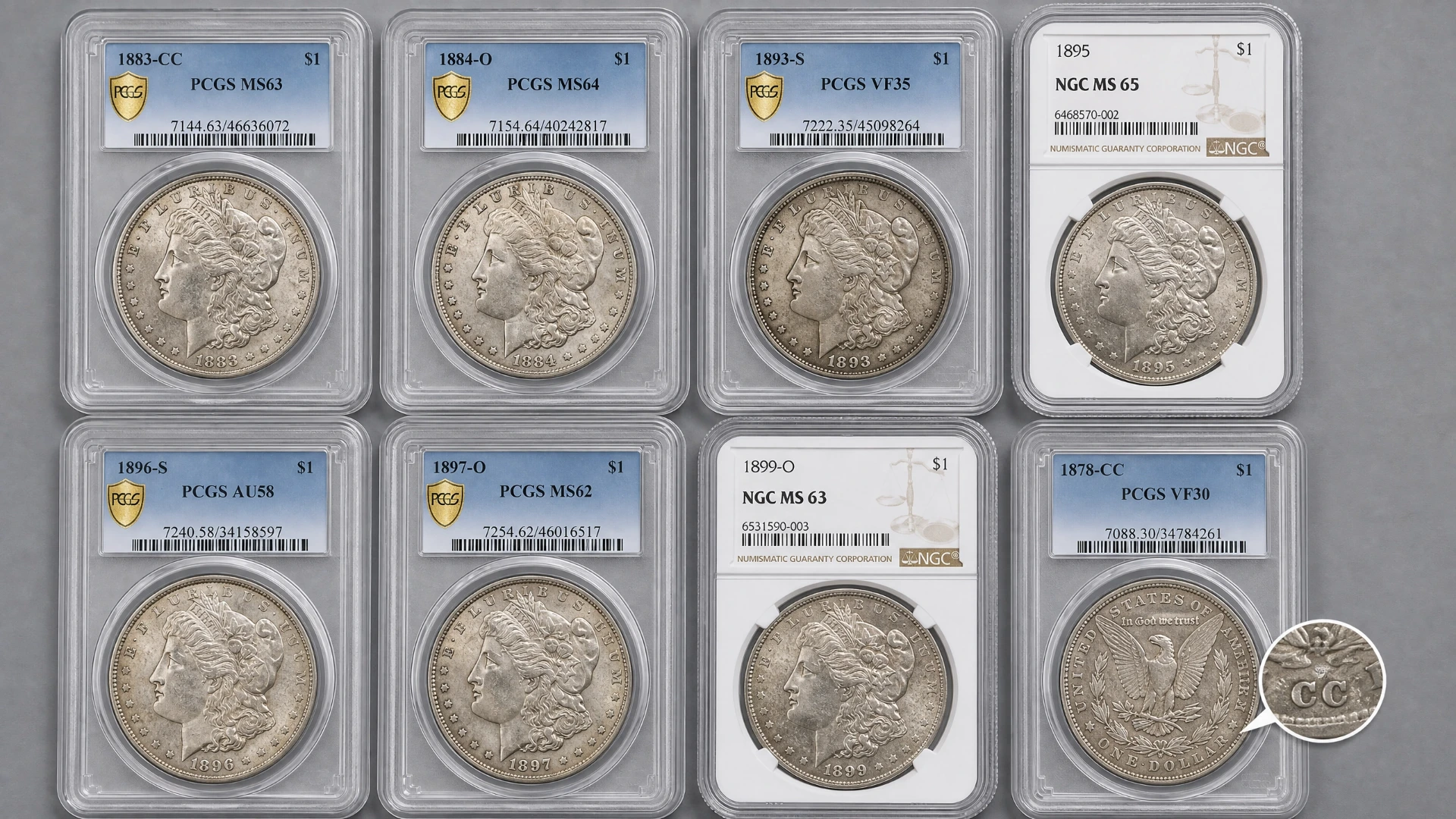
The most valuable Morgan dollars are typically key dates and rare date–mintmark combinations that had low mintages or poor survival rates. Examples include the 1893-S, 1895 (proof-only business strike rarity), 1889-CC, and select high-grade Carson City (CC) issues.
"Mintmark" is the small letter (such as CC, S, O, D) indicating where a coin was struck. Mintmarks are crucial for identification and value; on Morgans, you check the reverse near the wreath for placement. For detailed rarity guidance, the NGC Morgan dollar price guide provides auction results and trends organized by date and grade.
Varieties and VAMs — what they mean for value
VAM stands for Van Allen–Mallis, the cataloging system for Morgan and Peace dollar die varieties. A VAM variety is a specific die pairing or die anomaly; some VAMs command significant premiums, while others are minor curiosities.
Collectors should know how to recognize common VAM indicators such as repunched mintmarks, die breaks, or doubled dies. Reference works and online resources from PCGS and specialist VAM researchers help confirm attributions. Copper State Coin & Bullion frequently helps collectors in the Phoenix metro quickly screen for notable VAMs before coins are submitted for grading.
How Morgan dollar value is determined
Morgan dollar value is primarily determined by the combination of date, mintmark, grade, rarity, and current silver market conditions. "Premium" is the amount paid over a coin's melt value for its numismatic attributes such as rarity, demand, and eye appeal.
For sellers, providing clear photos, mintmark information, whether the coin is in an original holder, and any provenance allows for a more accurate valuation. Appraisers use these inputs along with population data (PCGS/NGC), recent auction prices, and U.S. Mint historical information to estimate a fair offer. At Copper State Coin & Bullion, our numismatists follow this same process during complementary appraisals in Peoria and Phoenix.
Grading basics for collectors
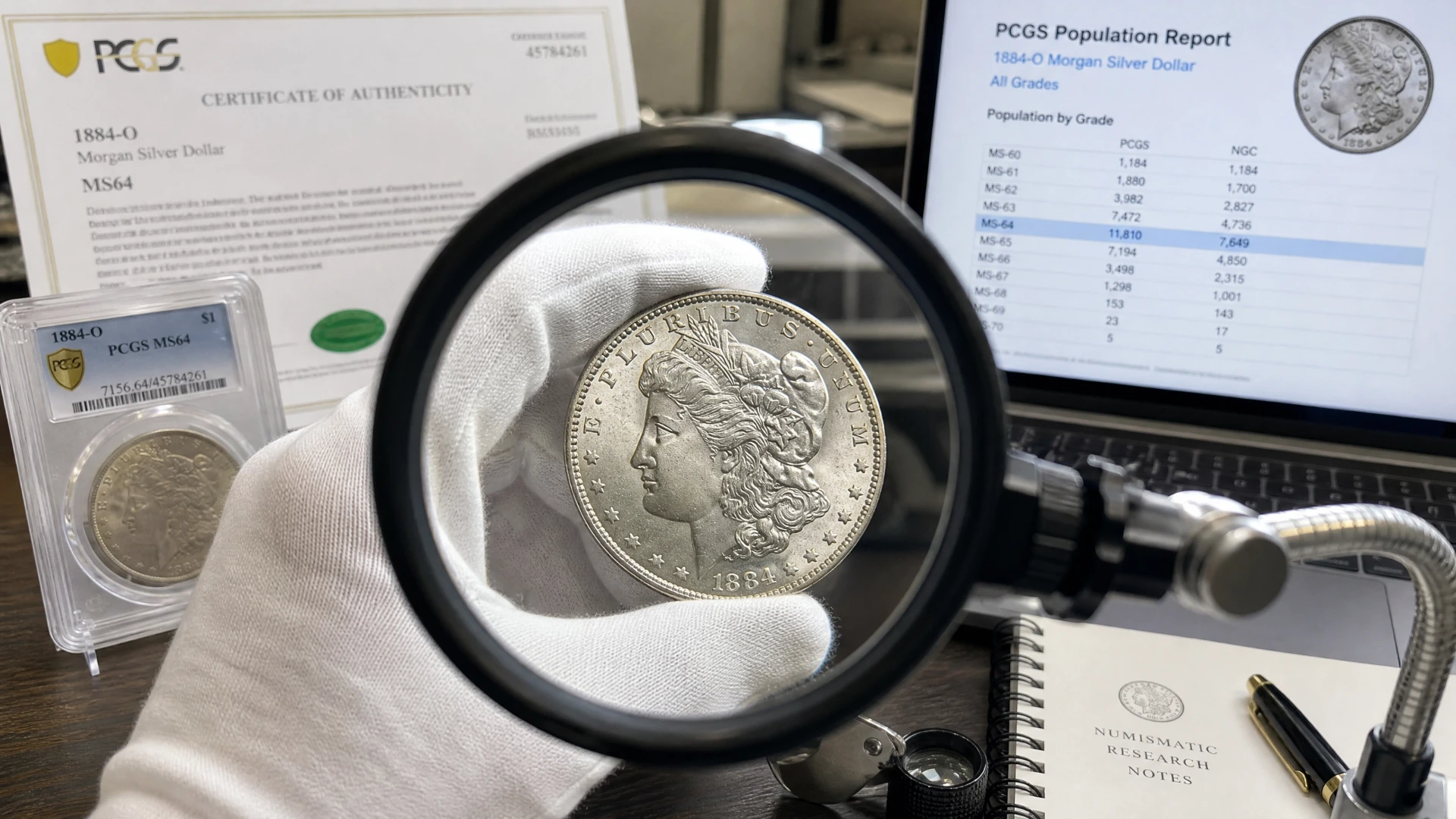
Grading is the process of assigning a condition grade to a coin using a standardized scale. "Grading" is the assessment of a coin's condition on an accepted scale such as the Sheldon scale (1–70). "Mint State (MS)" denotes uncirculated coins graded 60–70, while "Proof (PR)" refers to specially struck coins for collectors.
Common circulated grades include Good (G), Very Good (VG), Fine (F), Very Fine (VF), and Extremely Fine (EF/XF). Uncirculated coins start at About Uncirculated (AU) and then MS60–MS70. PCGS and NGC are leading third-party grading services; their population reports and price guides are essential tools for buyers and sellers. Copper State Coin & Bullion regularly helps collectors decide when a Morgan is a good candidate for PCGS or NGC submission.
How to spot wear vs post-mint damage
Wear reduces grade and value, while damage like cleaning, scratches, or corrosion can dramatically lower value. "Cleaning" is the artificial disturbance of a coin's surface that often removes natural toning and reduces grade.
Look for even wear on high points like Liberty's cheek or eagle wing feathers for circulated coins. Post-mint damage often appears as hairline scrubs, unnatural luster patterns, or abrasive spots—these are penalized by graders and by buyers.
Typical price ranges
Common-date circulated Morgan dollars often trade near their melt value plus a modest numismatic premium, while uncirculated and key-date examples can sell for hundreds to tens of thousands of dollars. For example, a common-date circulated Morgan may range from a few dozen to a couple hundred dollars, an MS63 common-date could be several hundred dollars, and key-date high-grade pieces or rare VAMs can reach five or six figures at auction.
These ranges are illustrative; consult the PCGS Morgan dollar price guide and recent NGC auction results for current market prices and exact sale records. Copper State Coin & Bullion uses these same data points when building offers or helping collectors set realistic expectations before grading or sale.
Buying Morgan dollars — what to look for
When buying, you should focus on authenticity, accurate grading, and fair pricing backed by transparent references. "Certification" is the encapsulation and authentication of a coin by a third-party grading service such as PCGS or NGC.
Choose coins graded by PCGS or NGC when possible, verify holder authenticity, and ask for full photos. In-person buying at a reputable dealer allows hands-on inspection, while online buying requires careful photo review, a verified returns policy, and trusted payment methods. Our team at Copper State Coin & Bullion lists certified Morgans in the numismatic coins section of our online store so national buyers can shop with confidence.
Why choose a specialist like Copper State Coin & Bullion?
Choosing a specialist dealer like Copper State Coin & Bullion helps you avoid the risks and hidden costs that often come with pawn shops, online auctions, and non-specialist buyers. Pawn shops and casual online sellers may not understand grading, VAM varieties, or current PCGS/NGC price levels, which can mean lower offers when you sell or overpayment when you buy.
A dedicated numismatic dealer maintains up-to-date references, understands how to spot counterfeits, and can guide you on whether grading or conservation makes sense before sale. Our Peoria and Phoenix locations combine over 40 years of experience with a national online presence, so you get the same expert perspective whether you walk into the shop or contact us from across the country.
Selling and appraising Morgan dollars
If you are selling, you should consider whether professional grading will add enough value to justify the cost and turnaround time. "Professional grading" is sending a coin to a grading service such as PCGS or NGC for authentication and grading, which can increase marketability but adds fees and time.
Sellers can bring coins to an experienced dealer for a complementary appraisal or submit photos online for a preliminary quote. Our coin selling and appraisal service covers in-person complementary appraisals and paid insurance appraisals for documentation, drawing on PCGS, NGC, and U.S. Mint data to support fair, transparent offers.
Where to buy or sell in Arizona and online
You can buy or sell Morgan dollars in person at established shops in the Phoenix metro, including Peoria and Phoenix locations, or browse a national inventory online. Visiting a local shop gives you hands-on inspection and immediate offers, while online shopping offers wider selection and shipping convenience.
For collectors in Arizona, bringing coins to a trusted local dealer such as Copper State Coin & Bullion often yields better net results than selling to non-specialist buyers or pawn shops. For national customers, using the online store or submitting a want list lets you tap into a broader network of Morgan dollar sources.
What to bring to an in-person appraisal
For an in-person appraisal, you should bring clear photos (if available), original holders or certificates, any provenance documentation, and a form of ID. Good-quality images of both obverse and reverse, plus close-ups of mintmarks, help appraisers provide accurate preliminary quotes.
Copper State Coin & Bullion also encourages you to bring any prior grading paperwork or auction records you may have, as those documents can clarify expectations and speed up the evaluation. For larger collections, consider calling ahead so staff can allocate enough time to review everything carefully.
Preservation, storage, and display tips
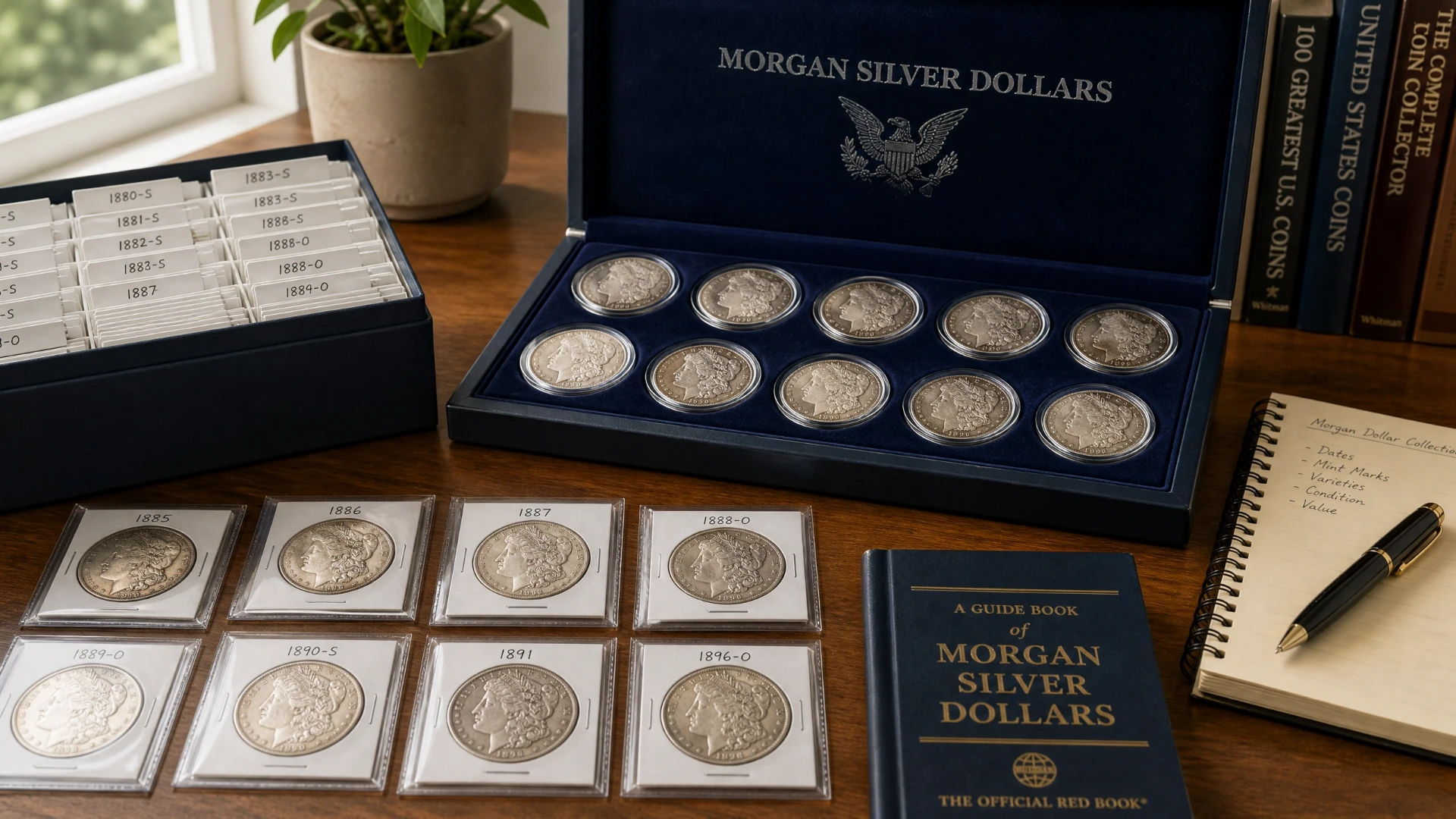
Long-term care preserves the value and eye appeal of your Morgan dollars, especially in higher grades. "Toning" is the natural discoloration on a coin's surface caused by chemical reactions over time.
Store Morgans in inert holders such as Mylar flips or 2x2 cardboard holders, maintain stable humidity and temperature, and avoid PVC plastics that can damage toning. For high-value coins, consider professional grading and separate insurance coverage, and keep a detailed inventory with photos and appraisals for insurance claims.
Quick reference: Common Morgan values at a glance
Approximate value tiers help you quickly understand where your Morgan dollars may fall before a detailed appraisal. Always remember that exact pricing depends on grade, eye appeal, and current market demand.
- Common-date circulated (many 1880s–1890s): modest premium over melt value.
- Common-date MS60–MS65: step-up pricing by each grade increment.
- Carson City (CC) mint in XF and above: often commands an additional premium.
- Key dates (such as 1893-S, 1895 proof): high collector value and a specialist market.
These are ballpark categories; contact a dealer like Copper State Coin & Bullion or check PCGS/NGC price guides for specific numbers.
Next steps — appraisal, want list, and buying options
The best next step is to document what you have and then connect with a trusted specialist who understands Morgan dollars in depth. That may mean getting a quick online opinion or scheduling an in-person review.
You can get a preliminary online appraisal by submitting clear photos and mintmark information, schedule an in-person complementary appraisal at a Peoria or Phoenix location, or start a want list to have staff source specific Morgan dollars nationwide. For high-value pieces, professional grading before sale can be a smart move, and Copper State Coin & Bullion can help you decide when it makes sense.
Frequently Asked Questions
Q: What is a Morgan silver dollar and when were they minted?
A: A Morgan silver dollar is a U.S. silver dollar designed by George T. Morgan and minted from 1878–1904 and again in 1921. It contains 90% silver and 10% copper and was produced at multiple mints, making mintmarks and varieties central to its collecting appeal.
Q: How much is a Morgan silver dollar worth?
A: A Morgan silver dollar can be worth anywhere from its silver melt value to tens of thousands of dollars depending on date, mintmark, grade, and rarity. Common circulated Morgans often sell near melt value plus a small premium, while key dates and high-grade examples can be worth thousands to hundreds of thousands. PCGS and recent auction results are the best benchmarks for current pricing.
Q: Which Morgan dollars are key dates and most valuable?
A: Key Morgan dollars include issues like the 1893-S, 1895, and certain Carson City dates such as 1889-CC and 1885-CC. These coins had low mintages or poor survival rates, and certified high-grade examples are highly sought after. Auction records on Heritage Auctions and PCGS population data show realized prices and confirm their status.
Q: How do graders assign a grade to a Morgan dollar?
A: Graders assign Morgan dollar grades using the Sheldon scale (1–70), evaluating wear, luster, strike, and surface condition. MS (Mint State) grades 60–70 denote uncirculated coins, while lower numbers indicate increasing levels of circulation. PCGS and NGC provide widely accepted certification that many buyers prefer when making significant purchases.
Q: What is the difference between circulated and uncirculated Morgan dollars?
A: Circulated Morgan dollars show visible wear from handling or use, while uncirculated coins (Mint State, MS) show little to no wear and retain original luster. Uncirculated coins typically command higher prices, especially at higher MS grades. Certification from a major grading service can help buyers and sellers agree on the distinction.
Q: Are Carson City (CC) mint Morgans more valuable?
A: Many Carson City (CC) mint Morgans are more desirable because they often had lower mintages and strong collector demand. Value still depends on the specific date and condition, since some CC issues are common and others are scarce.
Q: How do VAM varieties affect Morgan dollar value?
A: VAM varieties can significantly increase a Morgan dollar's value when the variety is rare, dramatic, or in strong collector demand. Minor or common VAMs may add little or no premium beyond the coin's regular date, mint, and grade value. Specialist VAM references and PCGS research tools are the best way to confirm which varieties are worth a premium.
Q: Where can I sell Morgan silver dollars in Phoenix or Peoria?
A: The best place to sell Morgan silver dollars in Phoenix or Peoria is a dedicated coin dealer that understands grading, VAMs, and current market prices. Copper State Coin & Bullion's Phoenix and Peoria locations provide complementary in-person appraisals and immediate purchase offers on Morgan dollars. Addresses and hours are provided below for convenience.
Q: Do you offer complementary appraisals for Morgan dollars in Arizona?
A: Yes, complementary in-person appraisals for Morgan dollars are available at Copper State Coin & Bullion locations in Peoria and Phoenix. These appraisals use current PCGS/NGC data and recent auction records to support fair offers. Paid insurance appraisals are also available when you need formal written documentation.
Q: How should I prepare and photograph coins for an appraisal or online sale?
A: To prepare for an appraisal or online sale, take high-resolution photos of both sides of each coin plus a close-up of the mintmark. Include images of any certification holders, note any known issues such as cleaning, and provide a simple list of dates and mintmarks. This information helps dealers like Copper State Coin & Bullion give more accurate preliminary quotes before seeing the coins in person.
Q: Should I have my Morgan dollars professionally graded before selling?
A: You should consider professional grading for higher-value Morgan dollars, potential key dates, and coins that appear Mint State. Certification can increase buyer confidence and sometimes yield higher prices, but fees and turnaround times mean it is not necessary for every coin. A specialist dealer can help you decide which coins are worth sending to PCGS or NGC.
Q: Can I buy Morgan silver dollars online from your inventory or submit a want list?
A: Yes, you can buy Morgan silver dollars online from Copper State Coin & Bullion's inventory and you can also submit a detailed want list. Online listings include certified coins with full photos, while want lists let staff search nationally for specific dates, mintmarks, or VAM varieties. This approach works well for both Arizona locals and out-of-state collectors.
Visit Us or Shop Online
Ready to identify, appraise, or buy Morgan silver dollars? Visit Copper State Coin & Bullion's Peoria or Phoenix locations for a complementary in-person appraisal and hands-on inspection, or browse certified Morgan dollars in our U.S. silver coins collection. Prefer remote service? Submit clear photos and mintmark details through our online appraisal form or start a want list to have our team source specific dates and VAM varieties for you.
Peoria store: 8360 W. Thunderbird Road C#103 — (623) 432-3953
Phoenix store: 4550 E Bell Road Suite 188 — (602) 377-1944