Quick answer: Choose the coin that matches your goals — Morgan dollars suit collectors who value design variety, die varieties, and set‑building; Peace dollars suit those who prefer later Art Deco style, nicer eye appeal in mint state, and relative scarcity at higher grades. This guide compares history, design, rarity, grading, prices, buying and selling tips, and local Arizona options so collectors and investors can pick the best US silver dollar to collect or invest in.
Quick comparison: Peace dollar vs Morgan dollar
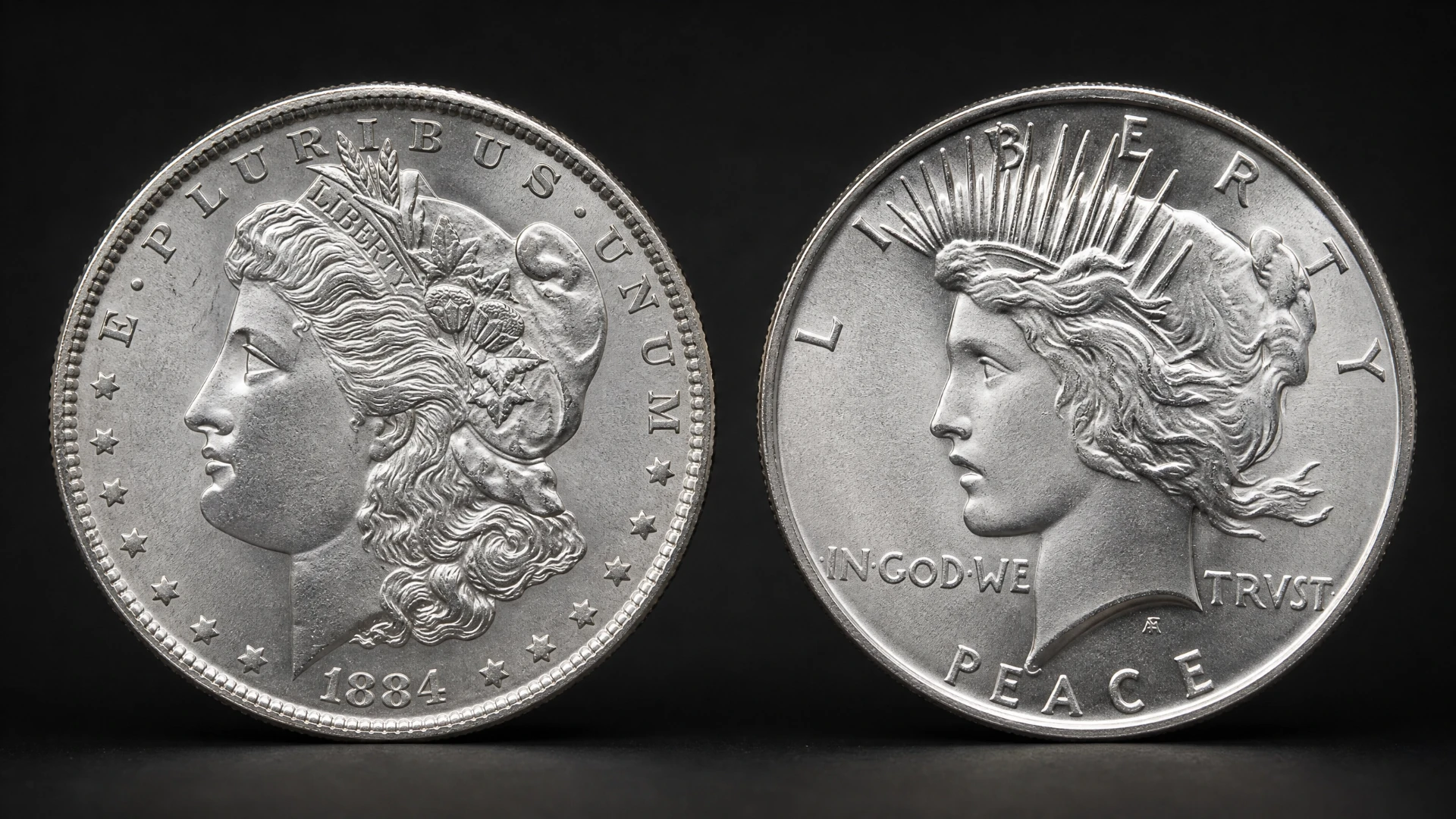
The short answer: Morgan dollars (1878–1921) are earlier, widely collected for varieties and mintmarks, while Peace dollars (1921–1935, plus 1964 patterns) are later and often scarcer in high grades. Morgan dollars attract variety hunters and set-builders; Peace dollars attract collectors who prioritize strong luster and a cleaner aesthetic. Both series are represented in our current Morgan and Peace silver dollars for sale, so it's worth comparing a few examples side by side before you commit to a series.
- Morgan dollars were designed by George T. Morgan and include many mintmarks and die varieties collectors pursue.
- Peace dollars were designed by Anthony de Francisci to commemorate post‑WWI peace and often command premiums in high mint-state grades.
Brief history and key dates
Morgan silver dollar — origins and production years
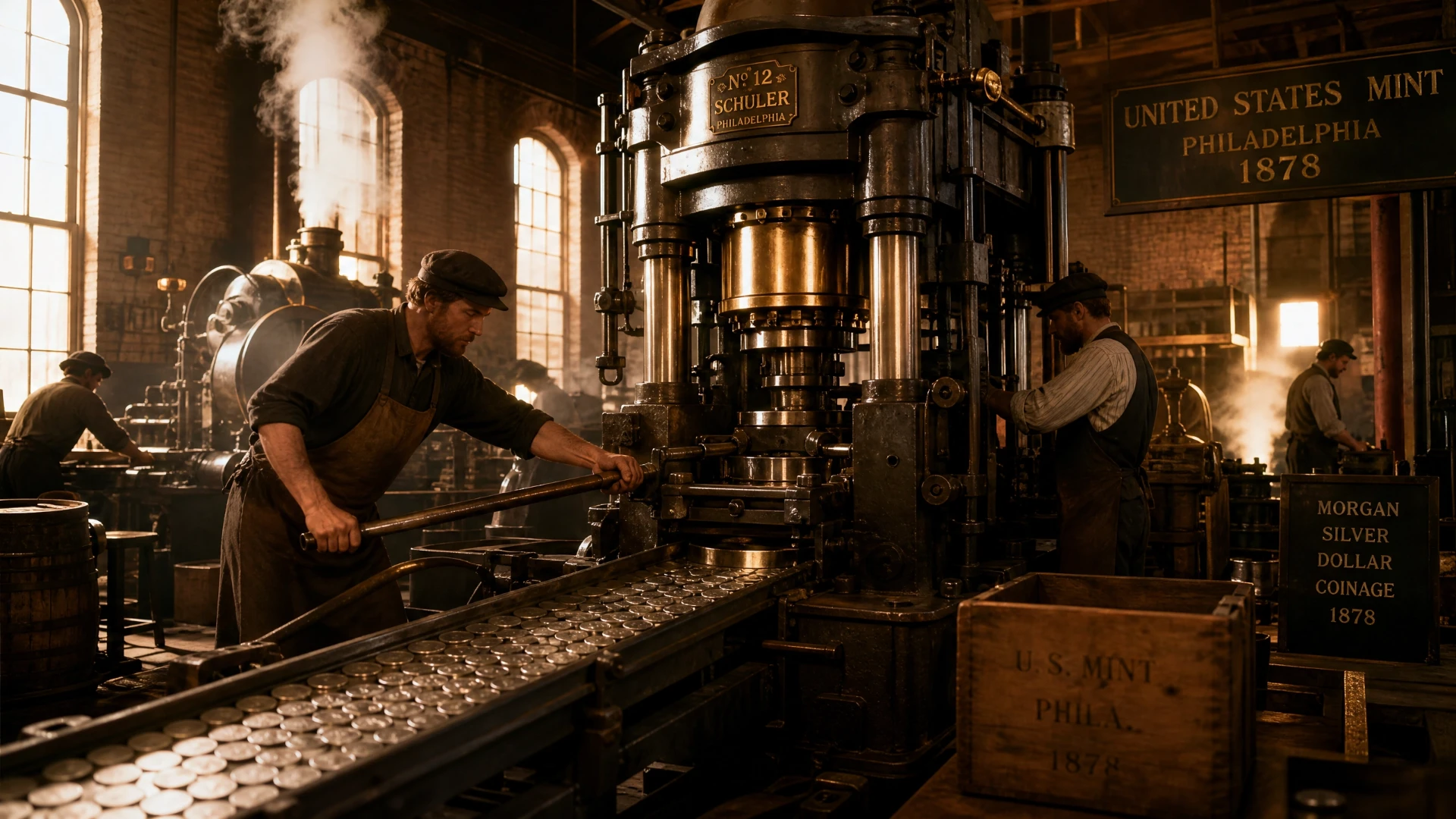
Morgan dollars were struck 1878–1904 and again in 1921. "Mintmark" is the small letter on the coin (for example, "S" for San Francisco) identifying the mint; mintmarks are crucial because some mints produced far fewer examples, creating key dates.
- Designed after the Bland–Allison Act, Morgan dollars reflect late‑19th‑century tastes and a wide production footprint.
- Key scarcity dates include 1893‑S and 1895 (proofs only); major grading services and auction records provide authoritative rarity and sale-price context.
Peace silver dollar — origins and production years
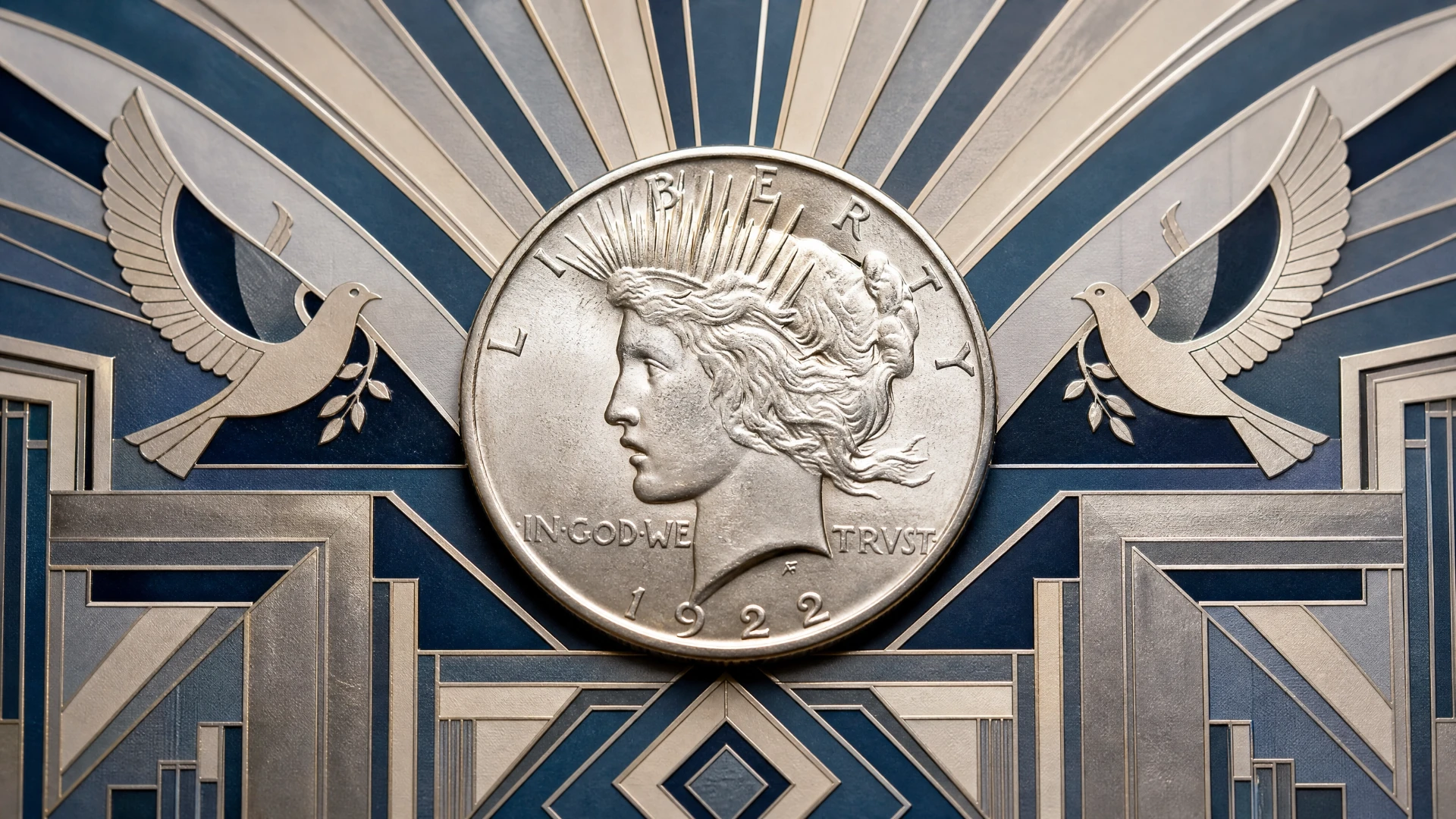
Peace dollars were produced 1921–1928 and 1934–1935; they celebrate peace after World War I. The 1921 Peace is high relief and different in strike; collectors note fewer overall varieties but greater condition sensitivity. The American Numismatic Association documents the coin's design competition in detail, including the controversy over its original broken-sword motif.
- Peace dollars mark a stylistic shift toward Art Deco design.
- Notable issues and rarities are concentrated in a handful of dates, and certified population data helps show how scarce top grades can be.
Design, aesthetics, and collector appeal
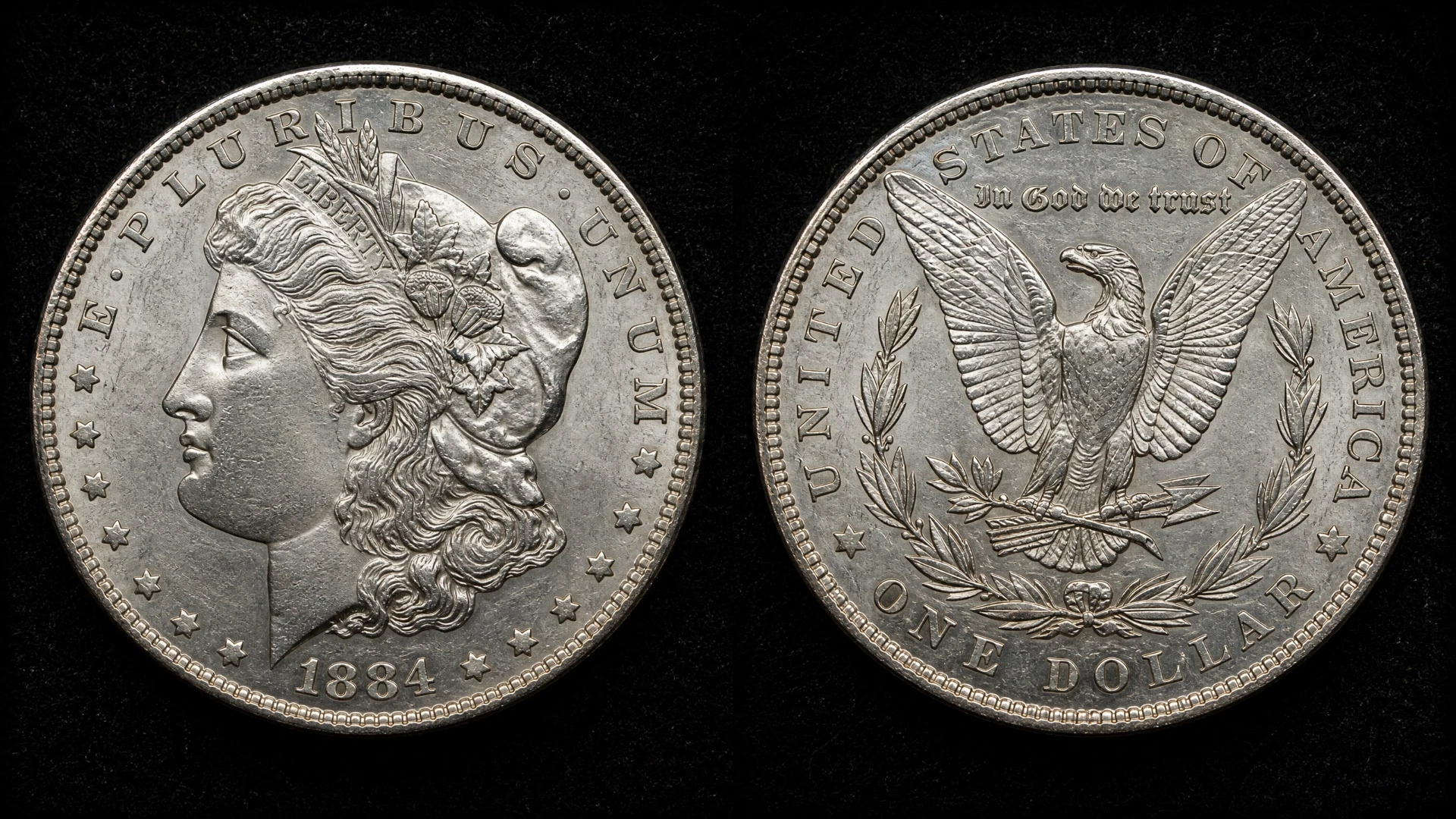
Design attracts different collectors — Morgan's classical, detailed portrait and many die varieties versus Peace's streamlined Art Deco look and focus on eye appeal. Your eye will often tell you quickly which series you enjoy more. If you want to compare pieces in hand before deciding, browse our full selection of U.S. silver coins.
- Morgan features a strong neoclassical Liberty and a detailed eagle reverse; collectors chase mintmark combinations and die varieties.
- Peace has a stylized Liberty and perched eagle; clean fields and strong luster in mint state raise demand.
Design differences and popular varieties
"Variety" is a distinct die pairing or striking variation, different from an "error" like an off‑center strike. Morgan collectors pursue overdates, doubled dies, and repunched mintmarks, while Peace collectors concentrate on strike quality, high‑relief 1921 examples, and a few recognized varieties.
- Morgan's breadth of varieties supports deep specialist communities.
- Peace's relative scarcity in top grades puts emphasis on preservation and strike.
Which design appeals to which collectors
Visual taste and collecting strategy determine preference — variety hunters and long‑set builders often choose Morgans; collectors seeking attractive, high‑grade display pieces often prefer Peace dollars. Many collectors eventually keep examples of both because each series represents a different era of US history.
- Beginners may find Peace dollars easier to evaluate visually; advanced collectors enjoy Morgan detective work.
- Investors often lean toward the series they believe has more room for collector demand growth in higher grades.
Rarity, grades, and which are worth more — Peace dollar vs Morgan dollar
Value depends on grade and specific date and mint; some Morgan key dates outrun most Peace values, while high‑grade Peace dollars can sell for substantial premiums. For both series, condition and scarcity in that condition matter more than age alone.
- "Grading" is the process of assessing a coin's condition and assigning a standard grade (for example, MS‑65), and grade typically drives price more than age alone.
- Morgans have numerous low‑mintage key dates that are expensive across many grades; Peace scarcity concentrates in a few dates and top mint states.
Grading basics (MS, AU, VF) — explain terms on first use
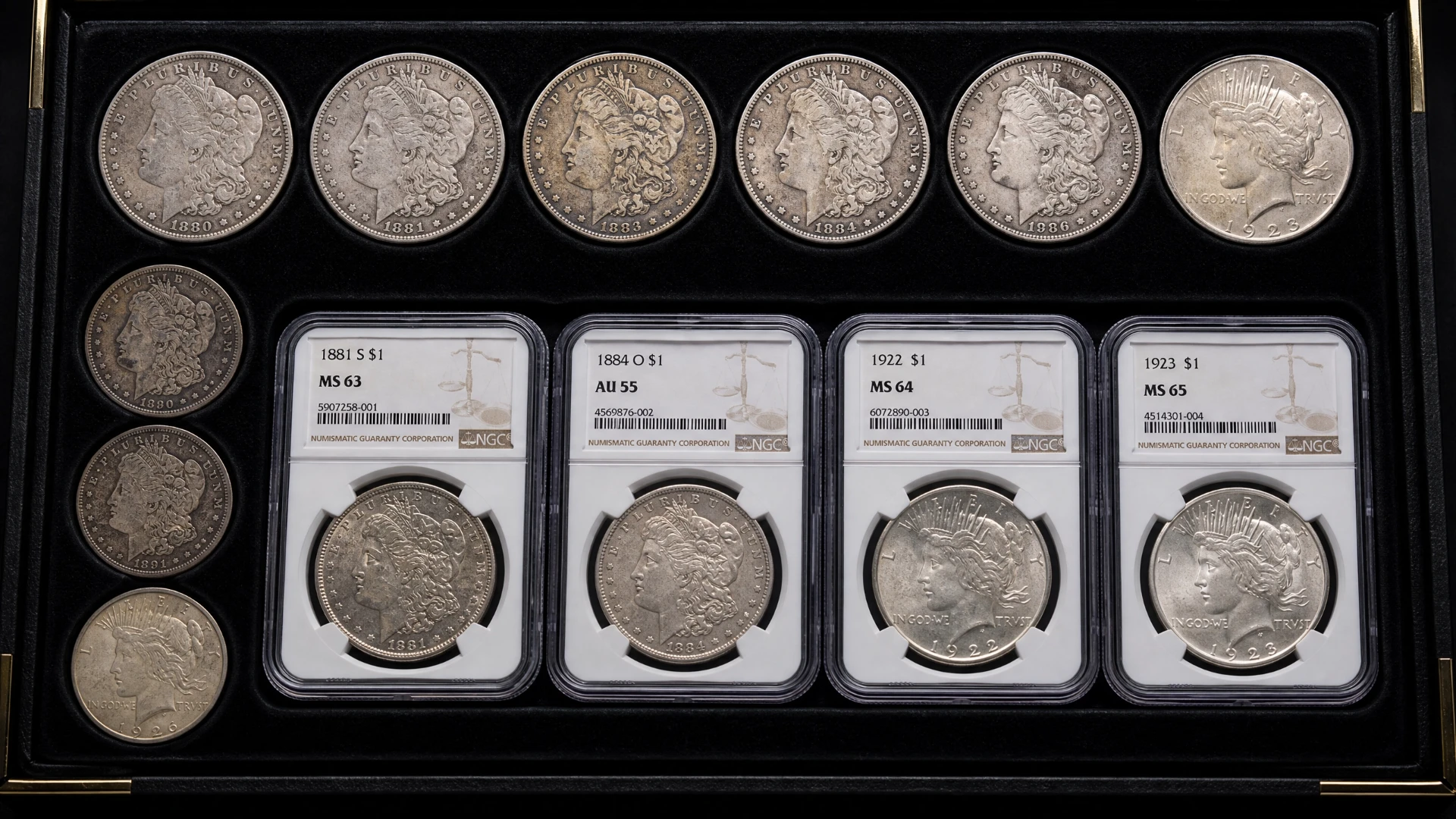
"MS" (Mint State) is a coin never circulated; "AU" (About Uncirculated) shows light wear; "VF" (Very Fine) shows moderate circulation. Certification by professional grading services follows official U.S. coin grading standards and seals the coin in a protective holder, which many collectors and investors prefer.
- Certified, slabbed coins are typically easier to sell and command higher prices than raw pieces.
- Population reports from major grading companies help you compare rarity by grade for both Morgan and Peace dollars.
How rarity differs between Morgan and Peace
Morgan variety breadth creates many collectible niches with variable scarcity; Peace scarcity is concentrated in a few dates and becomes acute in higher grades. That means Morgan sets can be challenging and expensive to complete, while Peace sets are smaller but often harder to finish in uniformly high grade. Checking NGC's coin population reports can show exactly how many examples exist at each grade for a given date.
- The 1893‑S Morgan is a classic key date with widespread collector demand, and even lower‑grade pieces are costly.
- Peace keys like 1928 (Philadelphia) and specific 1934‑S issues command premiums, especially when certified in mint‑state grades.
Investment vs collecting — which fits your goals
If you seek liquidity and predictable demand, choose widely desired common dates; if you want numismatic upside, target key dates or high grades where collector premiums outpace silver spot. Each series lets you blend bullion value with collector interest.
- "Spot price" is the market price for silver per ounce; "melt value" is the coin's metal content value, which sets a floor for many common-date pieces.
- Investors focusing on metal may prefer lower‑premium coins, while collectors aiming for numismatic gains often choose certified key dates or high‑grade Peace or Morgan dollars.
Typical price ranges by grade
Prices vary widely by date and grade; common circulated Morgans and Peace dollars trade modestly above melt, but key dates and certified mint‑state examples can fetch much higher prices. Think of pricing as a spectrum driven by rarity, grade, and demand.
Morgan dollar price ranges
- Common circulated Morgans often sell in roughly the $30–$100 range, depending on wear and silver spot.
- Mid‑grade certified common Morgans (around MS60–MS63) can run a few hundred dollars per coin.
- Key dates like the 1893‑S and certain high‑grade rarities can reach into the thousands or more, especially in top certified grades.
Peace dollar price ranges
- Common circulated Peace dollars typically fall in the $20–$60 range.
- Mint‑state Peace dollars (MS60–MS65) often range from about $75 up through $1,000 or more, depending on date, luster, and strike.
- Key dates like 1928 and some 1934‑S coins bring strong premiums, especially when certified by leading grading services.
Buying and selling — tips and pitfalls
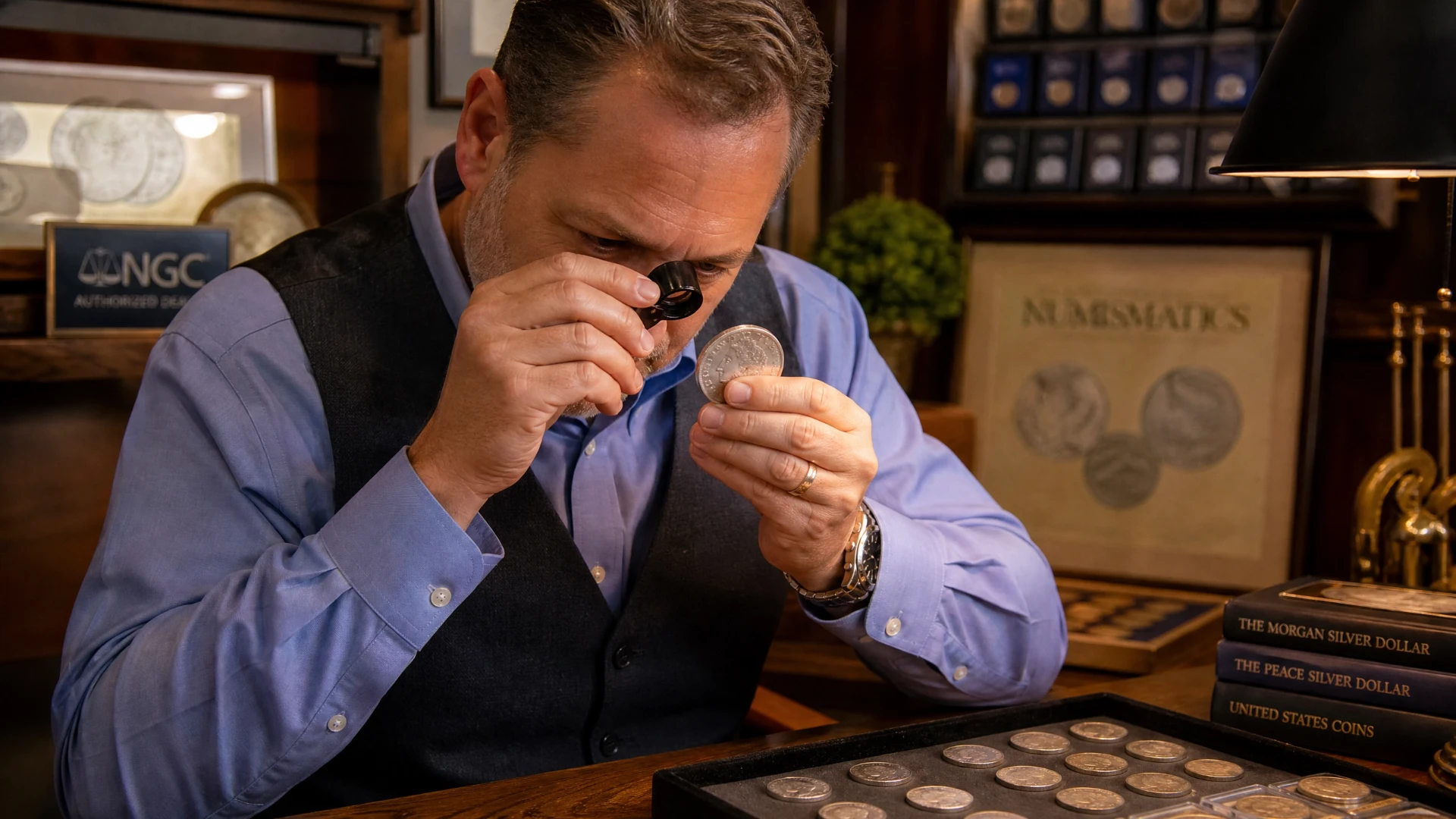
Buy certified coins from reputable sources when possible, and always verify photos, slab serials, and return policies before purchasing. When you're ready to part with a coin, review our coin and bullion selling guidelines before accepting any offer.
- Avoid sellers who lack clear photos, misrepresent grading, or pressure you to buy or sell quickly.
- When selling, get multiple offers and consider an in‑person appraisal if you're local to the Phoenix metro to compare dealer and online bids.
How to buy safely (grading, pedigrees, photos, trustworthy dealers)
Look for coins graded by well‑known third‑party grading companies and verify slab serial numbers against their databases. Strong, well‑lit photos help you judge luster, contact marks, and overall eye appeal.
- Ask for high‑resolution images, a written return policy, and any available provenance for higher‑value coins.
- For expensive pieces, consider comparing dealer asking prices with recent auction results on similar graded coins.
How to sell or consign a Morgan or Peace dollar
Document provenance and obtain an insurance appraisal for high‑value coins before selling or consigning. This helps you understand what you have and protects you if anything is lost in transit.
- Local in‑person sales allow for direct inspection and immediate payment.
- Online auctions expand your buyer pool but require secure, insured shipping and clear communication.
Where to find them — online vs local dealers
Both online marketplaces and local dealers have strengths: online offers wider selection and easy comparison, while local dealers let you inspect coins and get immediate feedback. Many successful collectors use both channels strategically.
Online marketplaces and what to watch for
Online buying offers access to national inventory, but you must be extra careful about grading and authenticity. Look for sellers with a track record, detailed photos, and solid feedback.
- Watch for inconsistent grading, photos that hide wear, and weak or nonexistent return policies.
- For higher‑value purchases, compare asking prices to recent auction results and certified price guides.
Benefits of buying in-person in Phoenix metro
Buying in person in Phoenix or Peoria lets you examine strike, luster, and eye appeal firsthand and receive a complementary appraisal. Copper State Coin & Bullion's Peoria coin shop and Phoenix location provide hands‑on inspection, want‑list sourcing, and certified grading guidance for local collectors.
- In‑store appraisal helps you compare offers and verify certification before you buy or sell.
- A want‑list service lets experienced staff search dealer networks and auctions for specific Morgan and Peace dollars you're missing.
Maintenance and storage tips
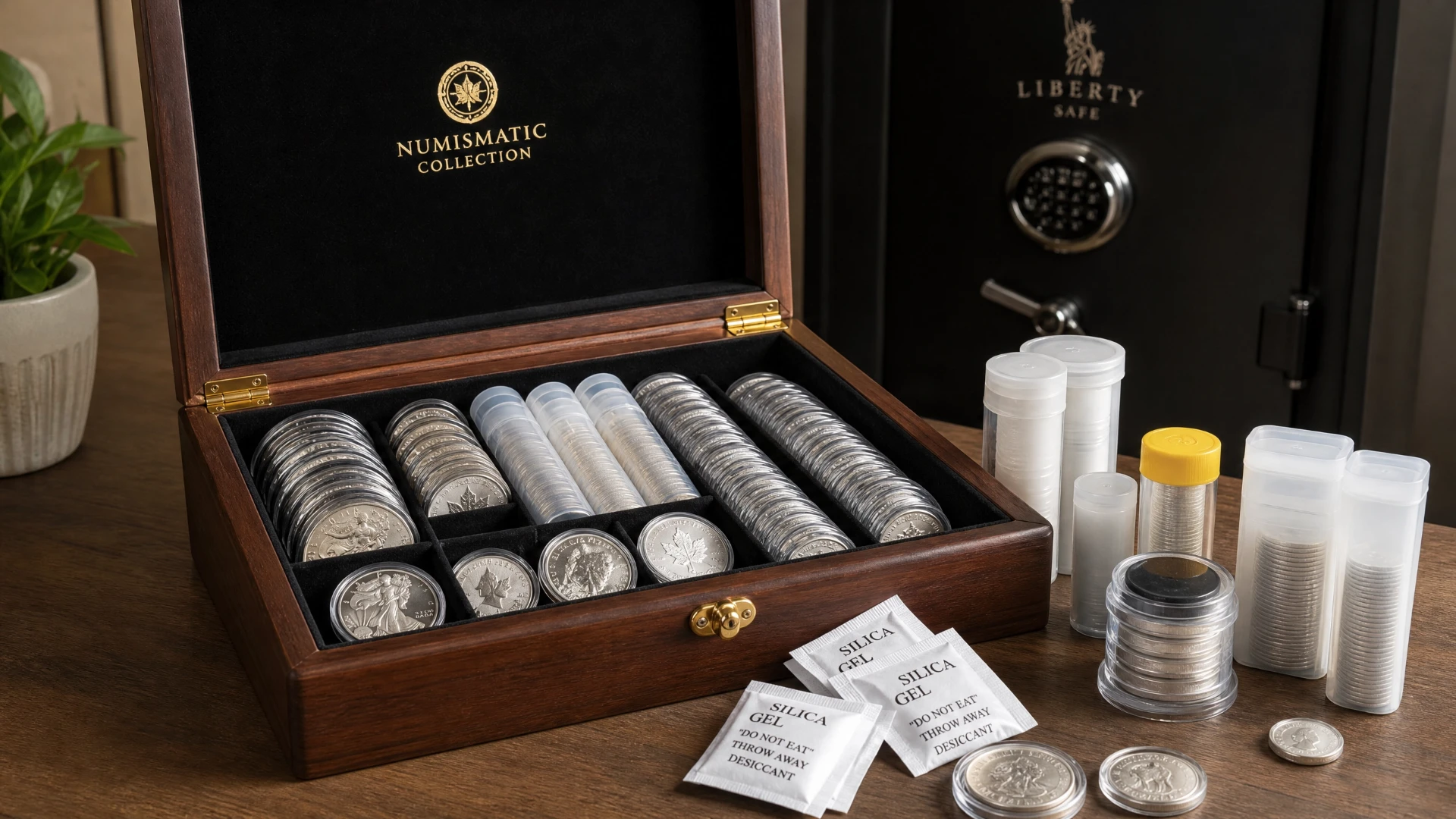
Proper storage preserves grade and value — handle coins by the edges, store in inert holders, and keep photographic and appraisal records for important pieces. Treat both Morgan and Peace dollars like long‑term assets, not trinkets.
- Use airtight holders, tubes, or certified slabs and add silica gel packs in safes or boxes to reduce humidity.
- For high‑value coins, maintain an up‑to‑date insurance appraisal and a simple inventory list with photos.
Decision checklist — which should you collect?
Use these five quick decision points to choose: budget, collecting style, desire for varieties, condition priority, and resale plans. If you want a clear recommendation: if you're starting with a modest budget and want attractive, displayable coins, prioritize Peace dollars; if you enjoy variety hunting, historical breadth, and building comprehensive sets, prioritize Morgan dollars.
- Budget under about $200 and want easy visual choices: start with circulated Peace dollars and later upgrade to certified examples.
- Want variety hunting and long‑term set‑building: focus on Morgans with different mintmarks and recognized die varieties.
- Priority on high‑grade display coins: consider Peace dollars for cleaner fields; Morgan high‑grade examples are spectacular but often cost more.
- Want predictable liquidity: choose common certified dates in either series with strong collector demand.
- Want maximum numismatic upside: target certified key dates or low‑population grades, checking population reports and recent sales.
Why choose Copper State Coin & Bullion?
If you want both expert guidance and secure transactions, Copper State Coin & Bullion brings over 40 years of licensed numismatic experience to the table. Copper State offers complementary basic appraisals to compare offers, a paid insurance appraisal service for high‑value collections, and a want‑list service that sources coins through auction networks and certified dealers — services that are hard to replicate with casual online sellers or non‑specialist buyers.
- Experienced staff routinely verifies slab serials, advises on grading populations, and can help coordinate submissions or insurance documentation for valuable coins.
- Choosing a local, licensed dealer reduces the risk of misrepresentation and gives you in‑person inspection before buying or selling.
Local services and next steps
If you're in the Phoenix metro, bring coins to Copper State Coin & Bullion for a complementary appraisal or submit a want list online to have staff source specific Morgan or Peace dollars. If you live elsewhere, you can still use the online store to shop certified coins, request help finding key dates, and check our coin buying and selling FAQ for common questions.
- The Peoria and Phoenix locations accept want lists, source coins nationally, and help with grading and pricing questions.
- For online shoppers, Copper State's inventory lists certified coins with photos and details so you can compare options from home.
FAQ
Q: What is the main difference between Peace and Morgan silver dollars?
A: The main difference is era and design: Morgan dollars (1878–1921) have a classical style and many varieties, while Peace dollars (1921–1935) reflect an Art Deco look and are often scarcer in high grades. The choice depends on taste, collecting strategy, and which dates you target.
Q: Which is more valuable: a Morgan dollar or a Peace dollar?
A: Value depends on date and grade. Key‑date Morgans can be far more valuable than most Peace dollars, but high‑grade Peace dollars can carry substantial premiums, especially in certified holders.
Q: Are Peace dollars rarer than Morgan dollars?
A: Not universally; Morgan dollars have many low‑mintage key dates and extensive variety niches, while Peace scarcity is concentrated in a few dates and in mint‑state grades. Checking population reports and price guides for individual dates is the best way to compare.
Q: How do I tell if my Morgan or Peace dollar is real?
A: Authenticity checks include weight, diameter, edge reeding, and visual comparison to certified examples. For high‑value coins, professional authentication and certification are strongly recommended.
Q: How does grading affect the value of Morgan and Peace dollars?
A: Grading assigns a condition grade (for example, MS‑65) that heavily influences price; certified coins typically command higher market confidence and resale value. Populations in each grade affect how big the jump is between adjacent grades.
Q: Which Morgan or Peace dates are the most valuable?
A: Key Morgan dates include 1893‑S and the 1895 proof; key Peace dates include 1928 and certain 1934‑S issues, especially in high grades. Exact rankings shift over time, so always check current guides and auction records.
Q: Where can I buy Peace silver dollars in Phoenix or Peoria?
A: You can buy Peace dollars directly from our Phoenix coin shop or our Peoria location, or through the online store for nationwide shipping. Visiting in person lets you examine coins under good lighting and ask grading questions before you buy.
Q: Can I sell my Morgan dollars at a coin dealer near Phoenix?
A: Yes. Copper State Coin & Bullion in Phoenix and Peoria offers complementary in‑store appraisals, immediate purchase offers, and the option to discuss consignment on higher‑value pieces if appropriate.
Q: Does Copper State offer appraisals for Morgan and Peace dollars?
A: Yes. Copper State Coin & Bullion provides complementary basic appraisals for those considering a sale and paid insurance appraisals for collections that need formal documentation, whether for insurance, estate, or personal records.
Q: Should I buy raw or slabbed (certified) Morgan/Peace dollars?
A: For valuable or rare dates, slabbed coins from a major grading service are safer and usually easier to resell. Raw coins can work for budget and mid‑range collecting, but you take on more grading and authenticity risk.
Q: How should I store Peace and Morgan dollars to preserve value?
A: Store coins by the edge in inert holders, avoid PVC plastics and cleaning, and keep them in a stable, low‑humidity environment. For important pieces, consider a safe or safe‑deposit box and keep appraisal records with your insurance documents.
Q: How do I submit a want list or request help finding a key date?
A: You can submit a want list through Copper State Coin & Bullion's website or visit either Arizona location to discuss your collecting goals. Staff can then watch dealer networks and auctions for the specific Morgan or Peace dollars you need.
Call to Action
Ready to inspect or expand your silver dollar collection? Visit Copper State Coin & Bullion in person:
- Peoria store: 8360 W. Thunderbird Road C#103, Peoria, AZ 85381 — (623) 432‑3953. Hours: Monday–Friday 9:00 AM–5:00 PM; Saturday 9:00 AM–4:00 PM; Sunday closed.
- Phoenix store: 4550 E Bell Road Suite 188, Phoenix, AZ 85032 — (602) 377‑1944. Hours: Monday–Friday 9:00 AM–5:00 PM; Saturday 9:00 AM–4:00 PM; Sunday closed.
Prefer to shop from home? Browse Copper State Coin & Bullion's online inventory and submit a want list so the team can help you track down the Morgan or Peace dollars that best fit your budget and collecting goals.