Collecting old U.S. paper money is rewarding for history lovers, hobbyists, and investors because notes tell stories about local banks, economic shifts, and artistry while offering a wide range of values.
Whether you inherited a stack of notes or want to diversify a collection, this guide helps beginners identify, preserve, value, and buy or sell vintage U.S. currency, with practical examples from the Phoenix metro market.
Why collect old U.S. paper money?
Collecting old U.S. paper money is appealing because it blends history, design, and potential financial upside in one tangible hobby.
Notes can connect you to specific towns, banks, and eras in a way coins sometimes cannot, especially when you find pieces issued by long‑vanished local institutions.
For collectors, vintage currency offers variety—from colonial notes to national bank notes and silver certificates—so you can specialize by exploring our paper money for sale or build a broad type set.
For investors, paper money can complement precious metals, particularly when you focus on certified high-grade or scarce issues.
Types of U.S. paper money to look for
Old U.S. paper money comes in several major types, each with distinct collecting appeal and value drivers.
Understanding these categories helps beginners focus their efforts and avoid treating every old note as rare.
Colonial and early notes
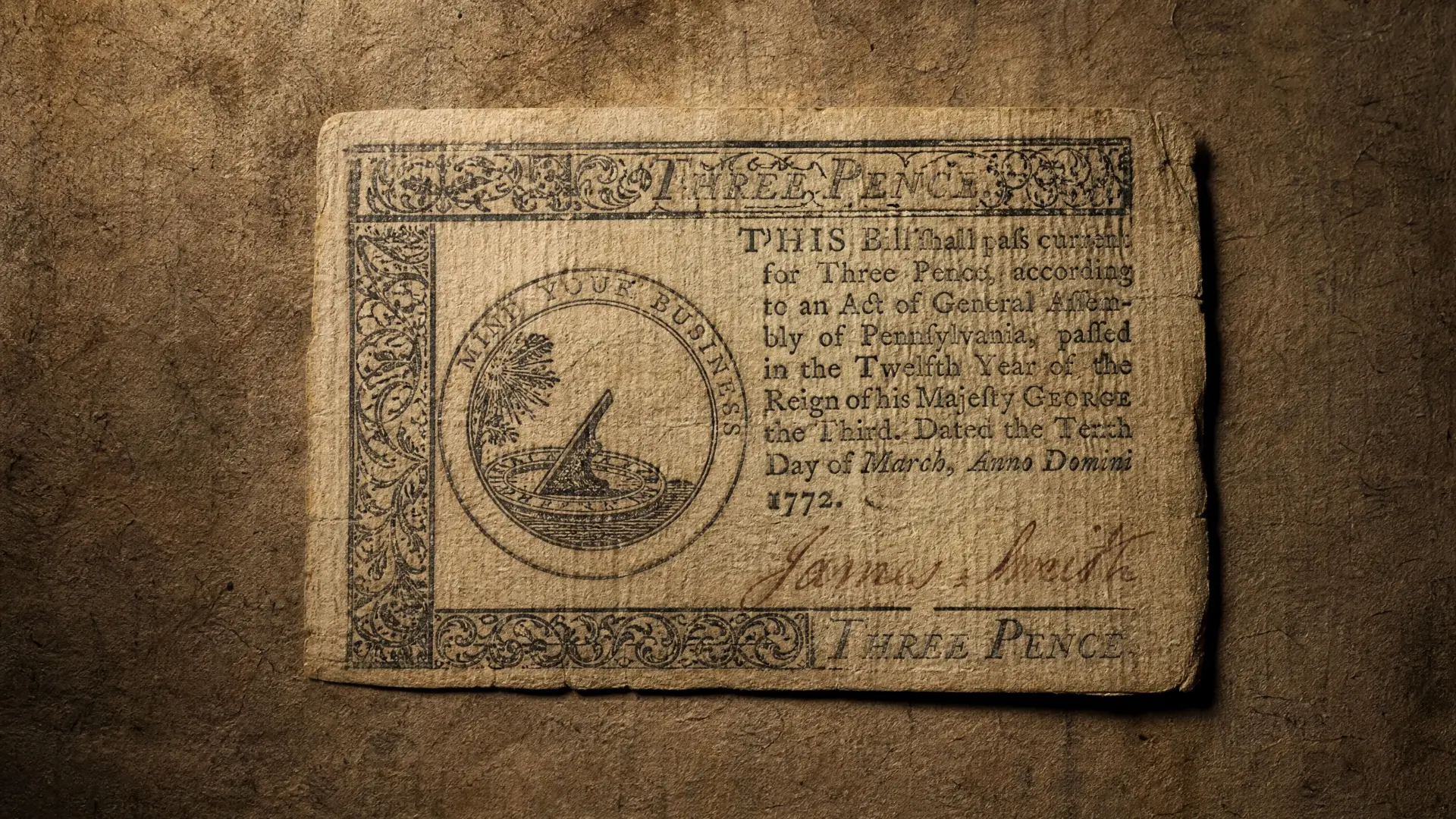
Colonial and early U.S. notes are some of the oldest American paper money, issued before and during the early republic, and they are prized for rarity and historical interest.
Expect unique designs, varied paper, and large differences in survival rates; provenance and legibility greatly affect value.
Because many colonial issues were printed on fragile paper and used heavily, truly high‑grade examples are scarce.
Beginners should rely on established references and, for higher-value pieces, consider professional authentication before making major purchases.
National bank notes
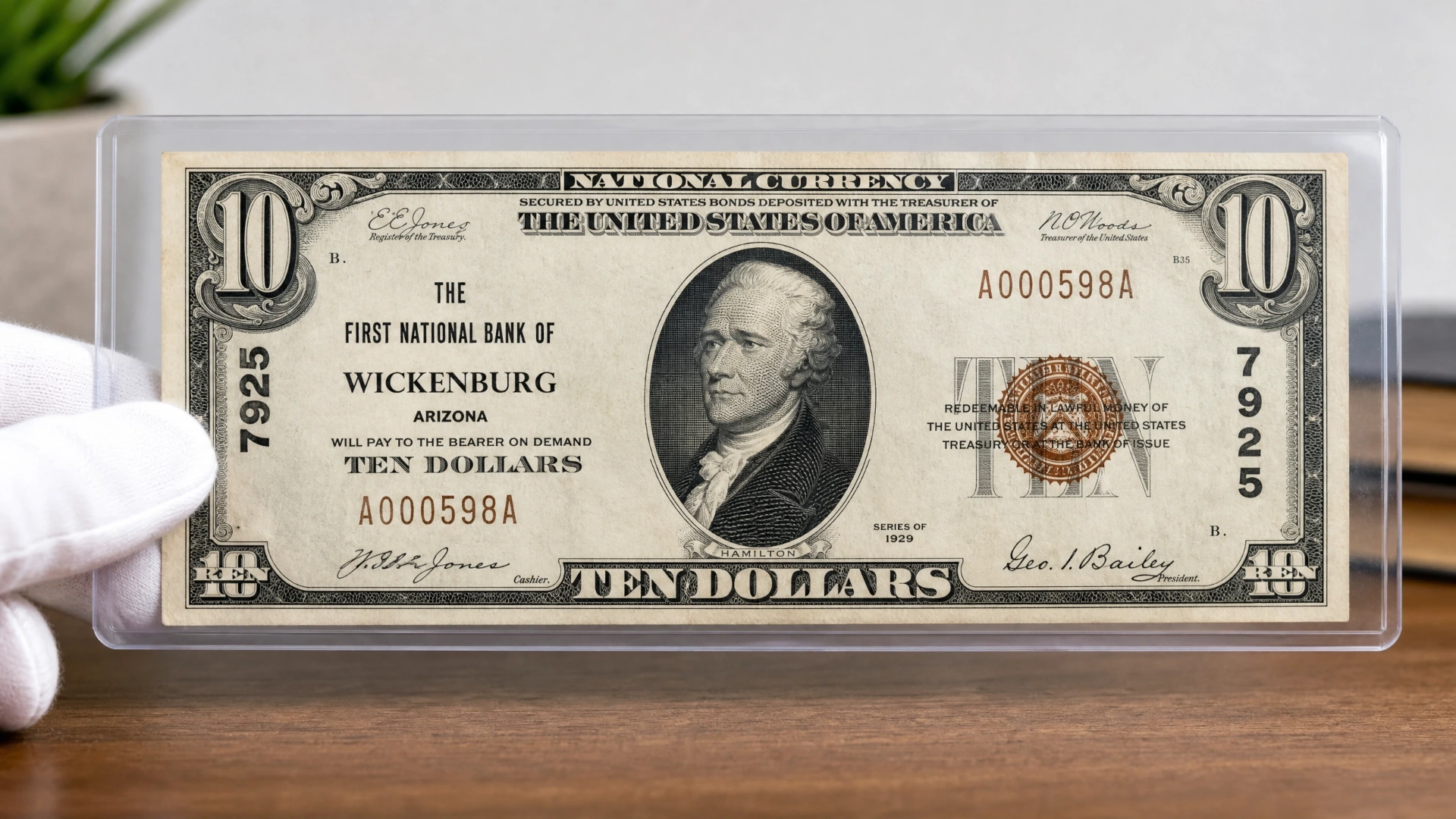
National bank notes are currency issued by nationally chartered banks between 1863 and 1935; each note shows the issuing bank's name, state, and charter number.
These notes are collectible for the issuing bank's rarity and survival rates; small-town banknotes from now-defunct banks can be surprisingly valuable.
Collectors often focus on specific states or cities, and Arizona national bank notes are a popular niche for Phoenix‑area collectors.
Copper State Coin & Bullion regularly helps clients identify obscure charter numbers and understand how a small‑town bank's history affects a note's desirability.
Silver and gold certificates
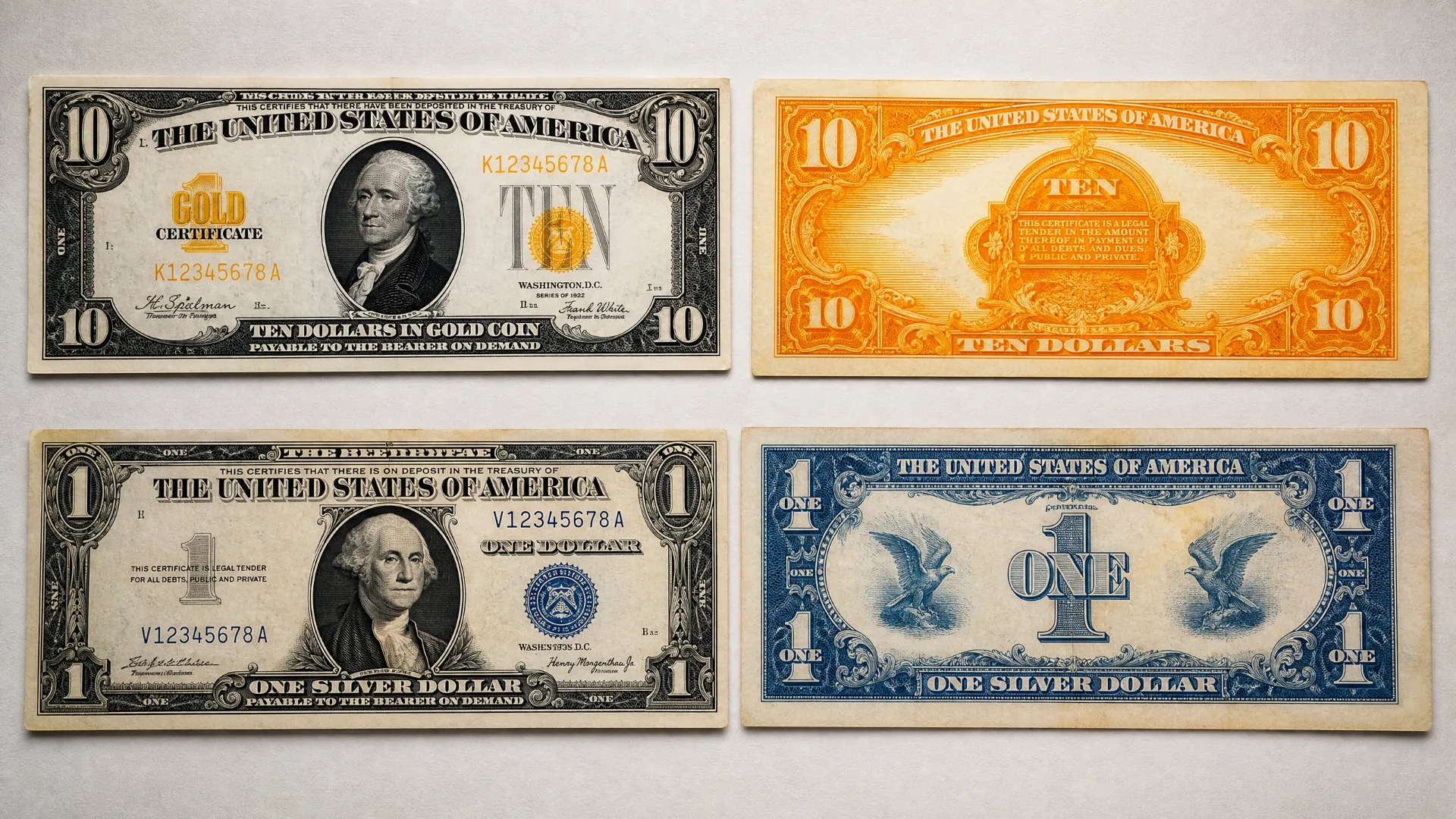
Silver and gold certificates are government-issued notes redeemable for silver or gold at the time they circulated.
Gold certificates (pre‑1933) and silver certificates attract collectors because they link paper money to precious metals and often feature distinctive portraits and colors.
Today, these notes trade purely as collectibles, not as redeemable claims on metal.
Condition and series (such as certain 1928 silver certificates) play a major role in value, and certified examples are common in the marketplace.
Federal Reserve notes & star notes
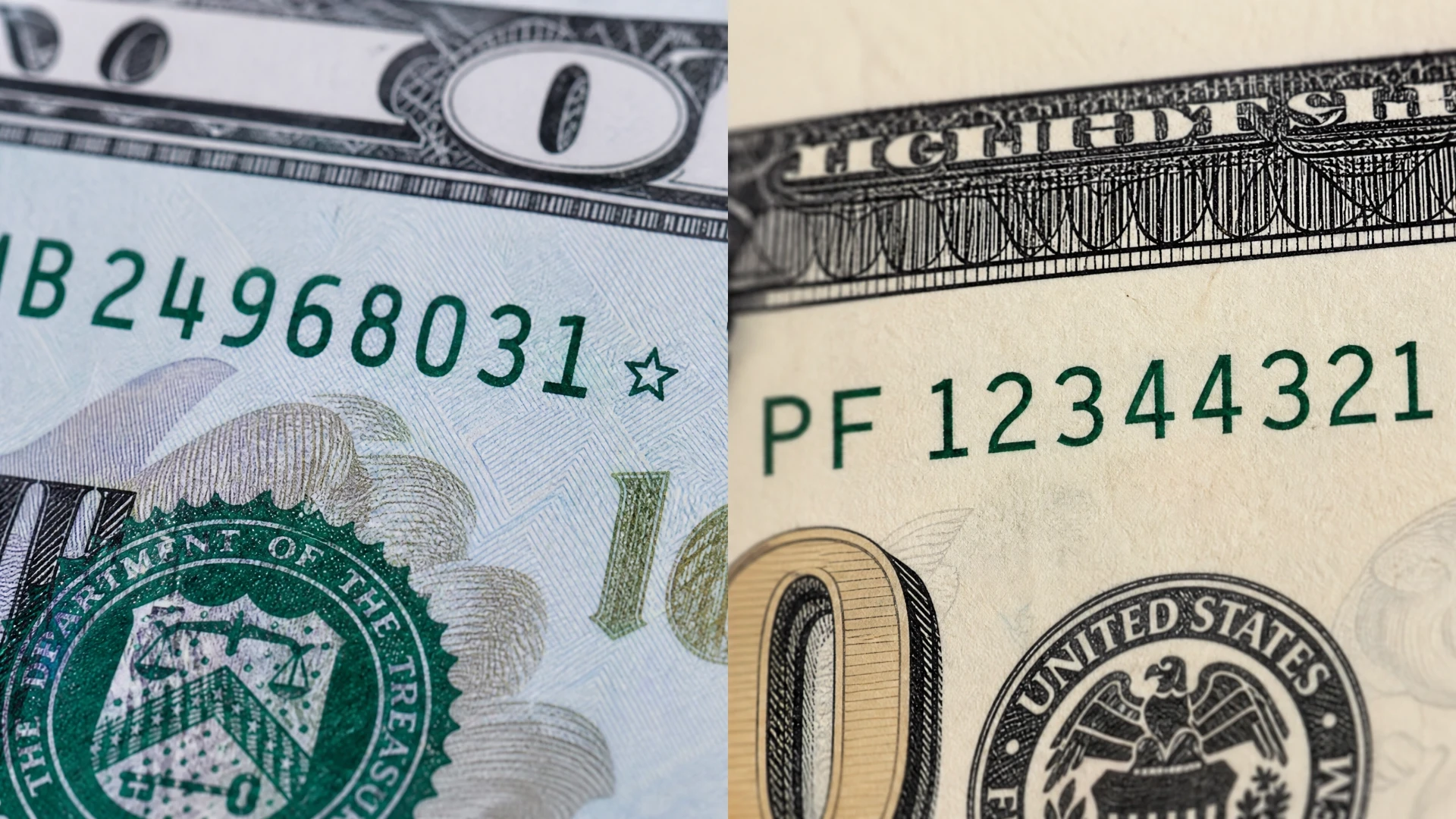
Modern Federal Reserve notes include collectible varieties such as star notes, which are replacement notes identified by a star in the serial number.
Star notes, low‑serial numbers, and fancy serial configurations (like repeaters or radars) can bring premiums over face value.
Error notes and scarce series can also carry premiums, especially in high grades.
Beginners should learn to distinguish genuine printing errors from post‑production damage, and resources from the Bureau of Engraving and Printing and the ANA (American Numismatic Association) are helpful here.
How paper money is graded and why condition matters
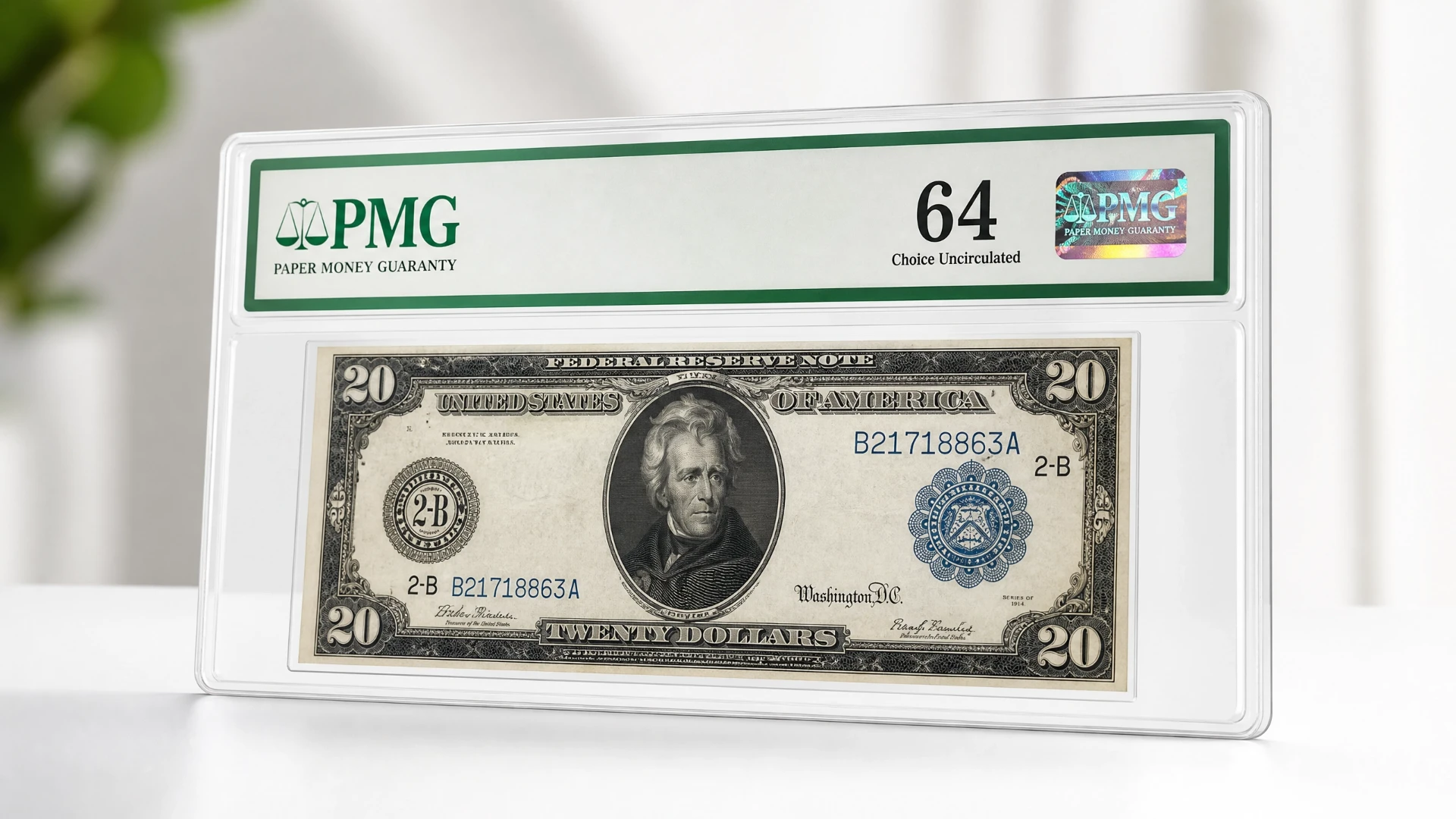
Grading is the assessment of a note's physical condition and authenticity, typically on a numeric or descriptive scale.
Third‑party grading companies (for paper money, PMG stands for Paper Money Guaranty) provide encapsulation and a certified grade that often increases market confidence and liquidity.
Collectors use both descriptive terms (uncirculated, very fine) and numeric systems; higher grades command higher prices, and visible damage such as folds, stains, or tape can drastically reduce value.
Certification by PMG or another respected grading service adds a recognized standard and can be especially important for rare or high-value notes, and Copper State Coin & Bullion frequently advises clients on when PMG grading makes sense for their currency.
How to examine and preserve notes
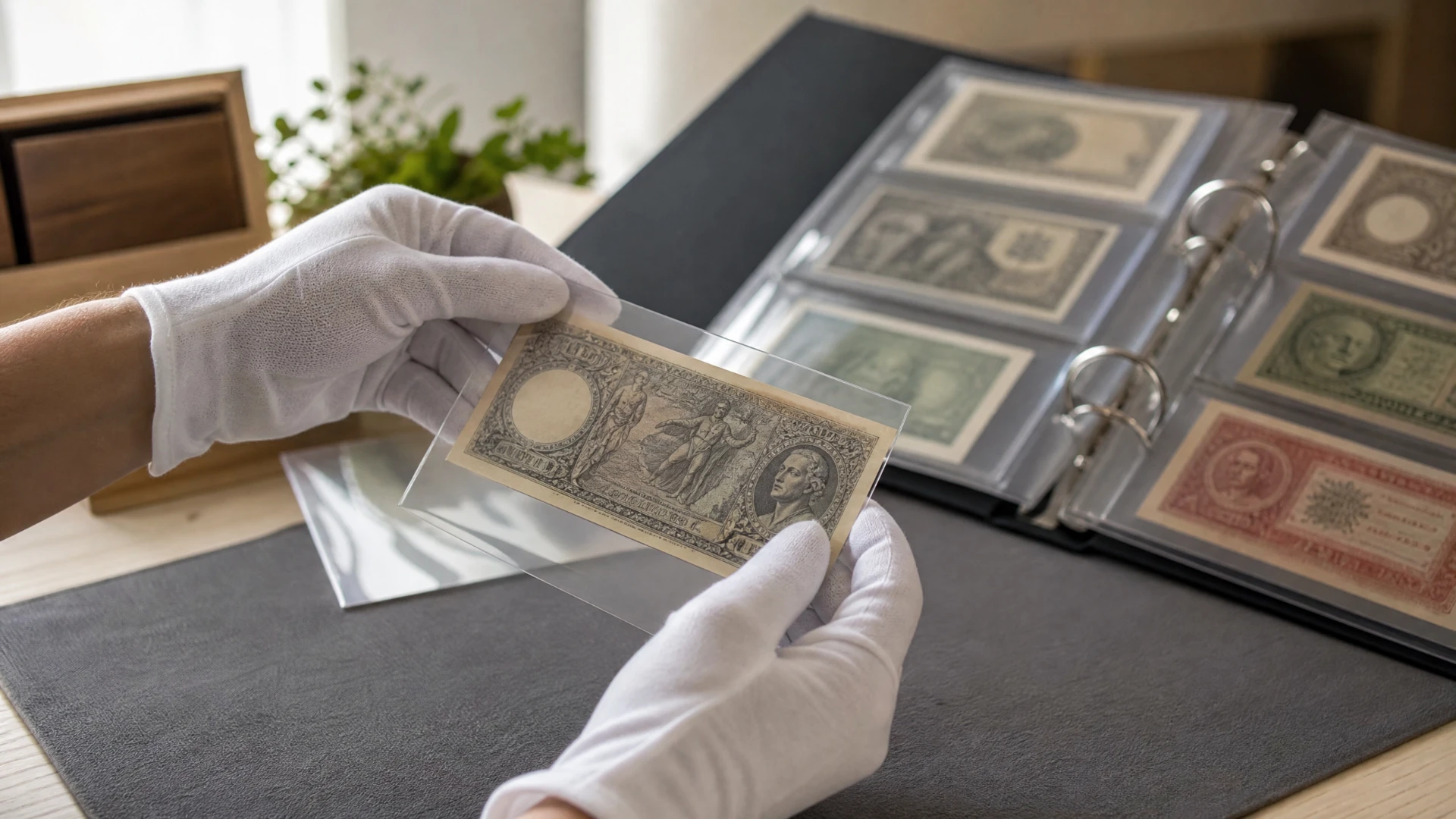
Examine notes by handling carefully; cotton gloves are optional, but avoid touching note faces with oily fingers.
Use adequate lighting and look for series, signatures, watermarks, serial numbers, and any stamps or cancellations that affect desirability.
Preserve notes in inert, archival materials such as polyester (Mylar) sleeves or acid‑free folders, and store them flat in a cool, dry place away from direct sunlight.
Do not attempt to remove tape, folds, or repairs yourself—improper cleaning can permanently harm a note and destroy value, and our team often sees well‑meaning but damaged notes that would have been worth more if left alone.
How values are determined
Value is determined by rarity, demand, condition (grade), provenance, and specific identifying features like bank charter numbers or plate positions.
Market trends and recent auction results provide the best guidance for current values, so consult reputable price guides and major auction records rather than informal forum opinions.
Remember that "face value" or historical redemption value is not the same as collector value; many common notes are worth only a small premium over face unless they are in exceptionally high condition or have special attributes.
Copper State Coin & Bullion uses over 40 years of numismatic and bullion experience to compare your notes against current market data, which helps avoid unrealistic expectations or rushed sales.
Where to buy vintage currency notes
The safest way to buy vintage currency notes is to use a mix of reputable dealers, established auction houses, and carefully vetted online sellers.
Each channel has pros and cons: online marketplaces provide breadth and convenience but require careful vetting; specialist dealers and local shops offer expertise and in-person inspection; auctions can produce high prices plus transparent sale records.
Vet dealers by checking certifications, references, and reviews.
Reputable grading firms and dealer memberships—such as ANA membership and recognition by PCGS Banknote, NGC, and PMG—are good quality indicators, and Copper State Coin & Bullion's perfect Google review score and licensed dealer status are trust signals many Phoenix‑metro collectors rely on.
Selling your old paper money (practical steps)
The best way to sell old paper money is to start with documentation and a realistic appraisal before choosing a selling channel.
Prepare notes for sale by documenting condition with clear photos and any provenance, such as family stories, envelopes, or old bank records.
Then compare options: in‑person sales to a local dealer are fast and convenient; consigning to an auction may bring higher returns for scarce notes; online listing can reach nationwide buyers but requires strong photos and accurate grading descriptions.
Copper State Coin & Bullion offers a complementary appraisal for clients considering a sale and can either buy outright or assist with more formal insurance appraisals when needed.
Appraisals, authentication, and grading services
A complementary appraisal typically gives a market‑range estimate and selling options; it's useful for initial valuation of collections or inherited notes.
An insurance appraisal is a formal, paid report that documents condition, provenance, and replacement value for coverage purposes.
Third‑party grading by PMG adds authentication and a stable grade; expect fees, submission time, and shipping costs.
Grading is most worthwhile for notes with potential high resale value or those likely to sell widely in the certified marketplace, and our Phoenix and Peoria team can help decide whether PMG submission is warranted for your specific notes.
Local options in the Phoenix metro (Peoria & Phoenix)
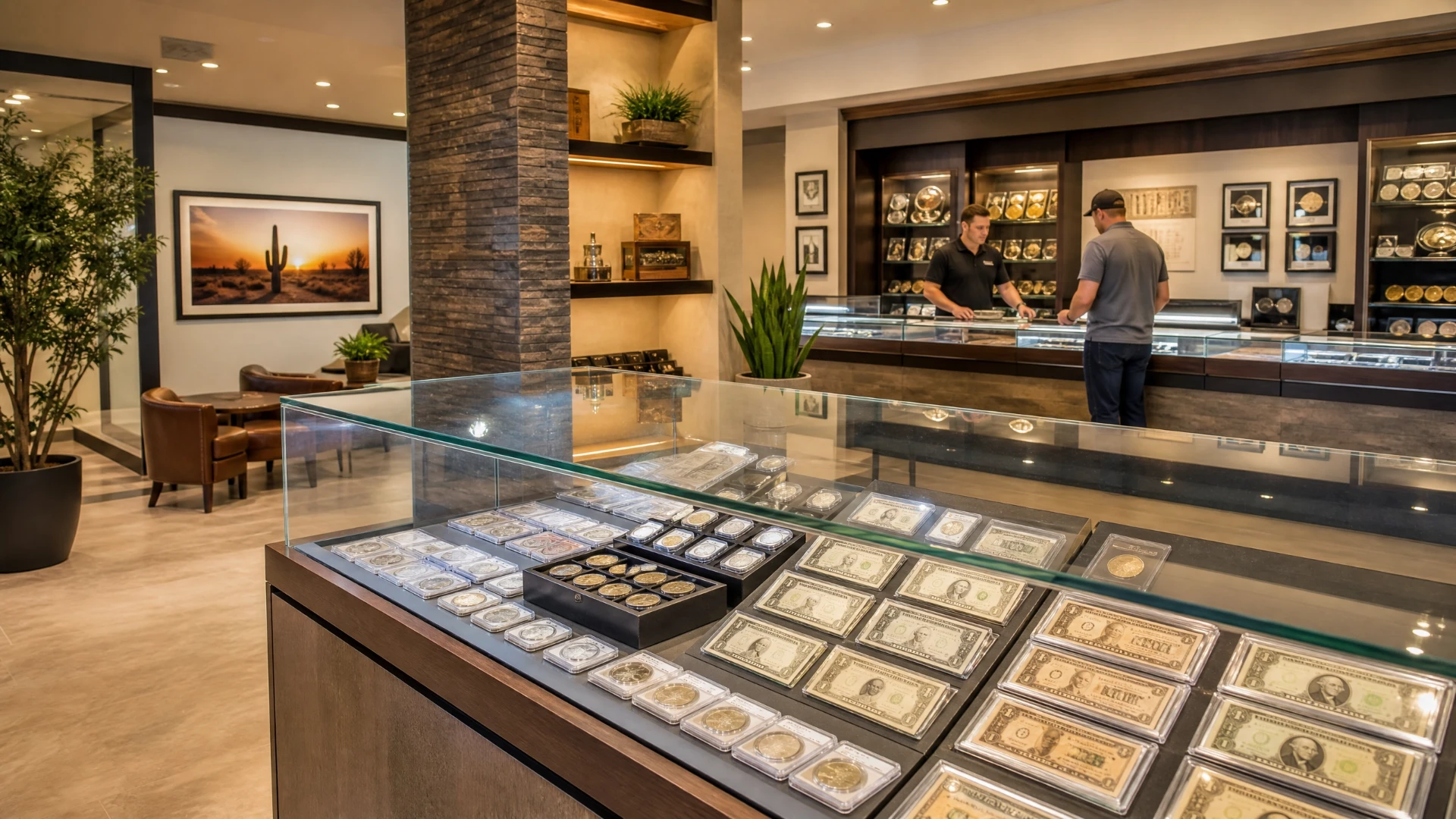
For hands‑on help in Arizona, visiting Copper State Coin & Bullion in the Phoenix metro is one of the most practical ways to get old paper money evaluated and sold.
Our Peoria and Phoenix locations provide complementary appraisals, a licensed dealer environment, and access to staff with deep experience in U.S. currency, national bank notes, and obsolete paper money.
Unlike pawn shops or non‑specialist buyers, Copper State takes time to explain grading, recent market comparables, and your selling options, and you're welcome to contact our Phoenix-metro team if you have questions before deciding whether to sell, insure, or keep certain notes.
If you prefer shipping or nationwide reach, our online store and numismatic deals page let you browse inventory, while our want list service allows collectors across the USA to request specific vintage notes that our team actively sources.
Common mistakes beginners make
Beginners often overpay on hobby marketplaces, neglect proper storage, or assume every old note is valuable.
Avoid common errors: don't attempt risky cleaning or repairs, don't rely on a single offer, and don't ignore the benefits of certification for scarcer items.
Another frequent mistake is selling to the first non‑specialist buyer who offers cash without understanding the note's rarity or local history.
Taking time to seek a complementary appraisal from a specialist like Copper State Coin & Bullion usually leads to better outcomes and fewer regrets.
Quick checklist for first-time buyers & sellers
The easiest way to stay organized as a beginner is to use a simple checklist for every buy or sell decision.
This keeps you focused on condition, documentation, and dealer quality instead of just emotional appeal.
- Bring all documentation and original enclosures for appraisal.
- Photograph front and back under natural, even light.
- Note series, signatures, and serial numbers in your records.
- Ask whether a note has been graded and by which service.
- Compare at least two valuation sources before selling.
Further reading and tools
The best educational resources for paper money collectors come from grading services, major numismatic organizations, and official government sites.
Use trusted references such as PMG, PCGS Currency, the American Numismatic Association (ANA), and the U.S. Bureau of Engraving and Printing for price trends, grading standards, and historical articles.
Price guides and census resources help track rarity and population counts for many note types.
Combining these tools with a local expert team like Copper State Coin & Bullion gives beginners a strong foundation for collecting old U.S. paper money confidently.
FAQ
Q: What is old U.S. paper money and what types exist?
A: Old U.S. paper money refers to currency issued historically by colonial authorities, state banks, national banks, and the federal government; types include colonial notes, national bank notes, silver and gold certificates, and older Federal Reserve notes.
Each type has unique identifying features—series dates, signatures, and issuing bank details—that affect collectibility.
Q: How much is my old paper money worth?
A: Value depends on condition (grade), rarity, demand, and provenance.
Common circulated notes may be worth only a modest premium, while rare series, low‑serial numbers, or certified high‑grade notes can sell for far more; consult recent auction records and a qualified appraisal for a specific estimate.
Q: How do I identify a rare U.S. banknote?
A: Look for unusual series years, low or repeating serial numbers, star replacements, unique bank charter numbers on national bank notes, and printing errors.
Rarity is often tied to the issuing bank's size and survival; reference guides and census data help confirm rarity.
Q: What does "graded" mean for paper money?
A: Graded means a third‑party service has authenticated and assigned a condition rating to a note, often encapsulating it in a protective holder.
Grading by firms like PMG increases buyer confidence and can improve marketability for higher-value notes.
Q: Should I get my notes graded by PMG?
A: Grading with PMG is recommended when a note potentially has significant resale value or is hard to value privately.
Consider grading costs, turnaround time, and whether the market recognizes the certification for that type of note; Copper State Coin & Bullion can help Phoenix‑metro clients decide when PMG grading is worthwhile.
Q: How do I store and preserve paper money?
A: Store notes flat in archival-quality sleeves or folders made from inert materials like polyester (Mylar), and keep them in a cool, dry, dark place.
Avoid lamination, tape, or adhesive repairs and minimize direct handling.
Q: Where can I buy vintage currency notes safely?
A: Buy from reputable dealers, established auction houses, or verified online sellers with clear return policies and documentation.
Cross‑check seller credentials, look for third‑party grading where relevant, and compare prices from multiple sources.
Q: Where can I sell old paper money in Phoenix or Peoria?
A: Copper State Coin & Bullion is a licensed dealer in Peoria and Phoenix that buys vintage U.S. currency and offers complementary appraisals for local clients.
You can visit either Arizona location with your notes for an in‑person evaluation and immediate offer options.
Q: Do you offer free appraisals or insurance appraisals?
A: Copper State Coin & Bullion provides a complementary appraisal service for clients looking to sell coins, currency, or bullion, and a paid insurance appraisal service for detailed documentation.
The free appraisal is ideal for deciding whether to sell, while the insurance appraisal supports coverage and claim needs.
Q: How do I photograph currency for online sale or appraisal?
A: Photograph notes flat with even, natural lighting; include full‑frame shots and close‑ups of serial numbers, signatures, and any damage.
Use a neutral background, avoid reflections from holders, and include scale or a ruler for reference.
Q: What are common currency errors and are they more valuable?
A: Common errors include misprints, double prints, misaligned plates, and incorrect signatures.
Some errors can be significantly more valuable due to rarity, but value varies by collectibility and market demand.
Q: How do I submit a want list or request a specific note?
A: Create a detailed list with series, denomination, desired grade, and price range, and submit it to specialist dealers or online want‑list services.
Copper State Coin & Bullion's want list service allows collectors nationwide to request specific notes that our team actively searches for across the market.
Call to action: visit, call, or browse online
If you're ready to have your old paper money evaluated, visit Copper State Coin & Bullion in Peoria or Phoenix for a complementary appraisal and straightforward guidance from a licensed dealer with over 40 years of numismatic expertise.
Our Arizona shops are open Monday–Friday 9:00 AM–5:00 PM and Saturday 9:00 AM–4:00 PM, closed Sunday, so you can plan a convenient visit.
Peoria store: 8360 W. Thunderbird Road C#103, Peoria, AZ 85381 — (623) 432‑3953.
Phoenix store: 4550 E Bell Road Suite 188, Phoenix, AZ 85032 — (602) 377‑1944.
Prefer to shop or sell from home? Explore Copper State Coin & Bullion's national online inventory and numismatic deals, or submit a want list so our team can help you build a collection of vintage U.S. currency tailored to your goals.